The Beautiful Mess of My Planning Evolution
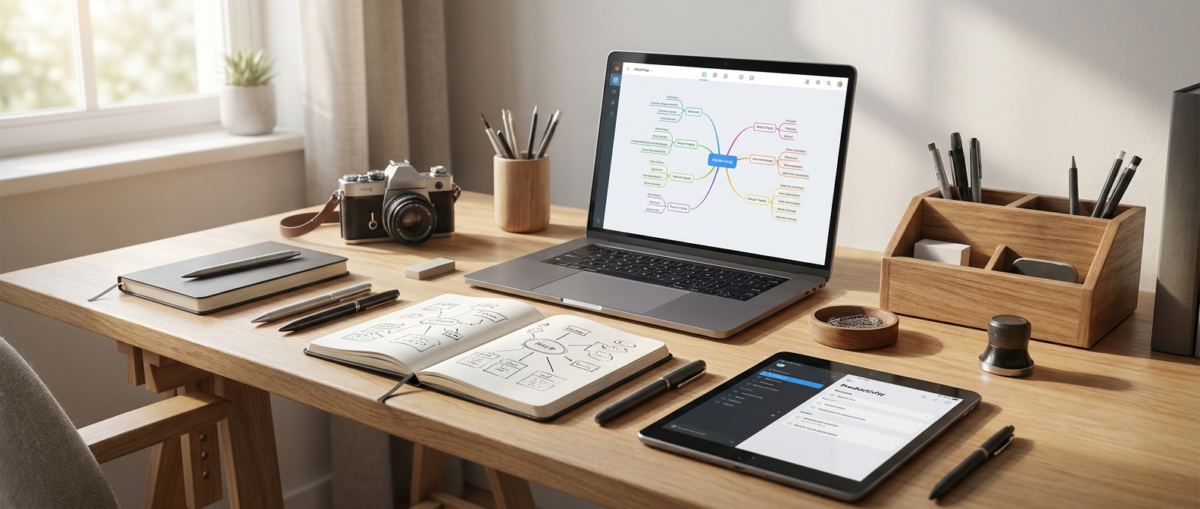
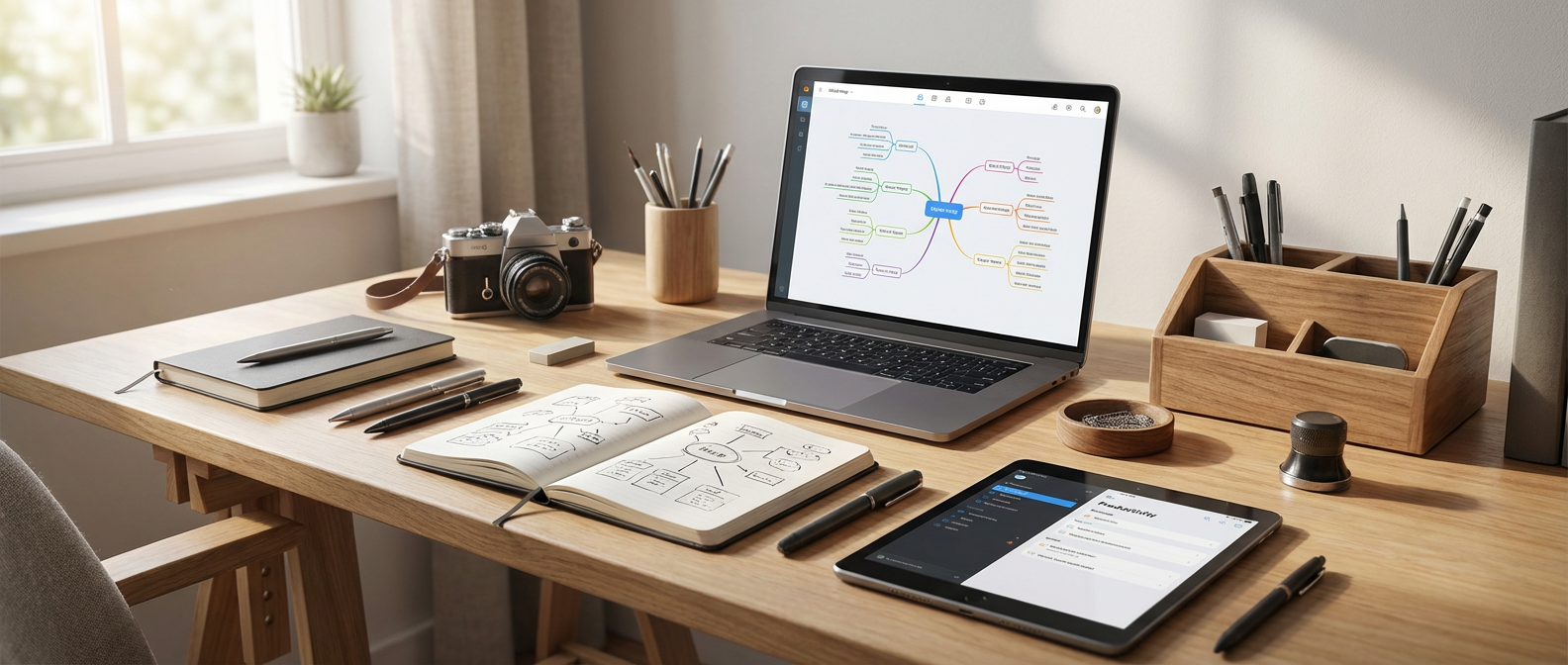
I’ve been staring at my desk for the past ten minutes, looking at three different planning systems scattered across it like archaeological layers of my productivity journey. There’s the leather-bound bullet journal from 2022, filled with elaborate habit trackers that I abandoned by February. Next to it sits my current digital task manager, which honestly works pretty well most days. And then there’s this weird hybrid notebook where I’ve been experimenting with something I can’t even name yet, part brain dump, part project tracker, part emotional processing space.
This mess got me thinking about something I’ve noticed after years of building and rebuilding personal systems. We spend so much time talking about the perfect productivity method, the ideal app, the optimal morning routine. What we don’t talk about enough is the thing that actually makes or breaks any system: the relationship you have with it.
I realized this when I was explaining my current setup to a friend last week. She asked me why I switched from my perfectly functional bullet journal to a digital system, and then why I started adding this paper component back in. As I tried to explain it, I discovered something interesting about how my needs had shifted. Not just practically, but emotionally.

The Invisible Relationship Layer
Every productivity system is actually a relationship. Think about it. You interact with your planning method multiple times a day, every day. You rely on it to hold your thoughts, track your commitments, and guide your decisions. Like any relationship, it changes based on how you both show up.
My bullet journal phase taught me this the hard way. I loved the Instagram-worthy spreads and the satisfaction of hand-lettering my monthly goals. But after a few months, I noticed something subtle happening. I was spending more time making my journal look good than actually using it to get things done. The system that was supposed to support me had become a performance I was putting on for myself.
The digital switch fixed that problem but created a new one. I could capture and organize thoughts quickly, but I lost something tactile and reflective about the handwriting process. More importantly, my relationship with the digital system felt more transactional. I input tasks, I checked them off, but there wasn’t much space for the messy, non-linear thinking that often leads to my best insights.
That’s when I started noticing how my actual work patterns differed from what any single system could accommodate. Some days I need rapid task capture and execution. Other days I need space to think through complex problems. Sometimes I need accountability structure, and sometimes I need creative freedom. The relationship I needed with my productivity system was more complex than I’d realized.
The Adaptation Paradox
Here’s where it gets interesting: the moment you find a system that works perfectly, you start changing. Not the system. You. Your work changes, your priorities shift, your energy patterns adapt. What worked beautifully six months ago might feel constraining or irrelevant today.
I used to see this as a failure of the system, but now I think it’s actually a sign of growth. The goal isn’t to find the one perfect method that will work forever. The goal is to develop enough self-awareness and flexibility to recognize when something isn’t working anymore, and enough courage to experiment with alternatives.
This shows up in small ways that are easy to miss. Maybe you notice you’re avoiding your weekly review. Or you find yourself creating the same type of task over and over without making progress. Or you realize you’re using your system to procrastinate rather than create clarity. These aren’t signs that you’re bad at productivity. They’re signals that your needs have changed.
The trick is learning to pay attention to these signals without judgment. I spent way too long trying to force myself to stick with systems that had stopped working, convinced that the problem was my lack of discipline rather than a mismatch between my current needs and my current tools.
Building Systems That Breathe
The best productivity approach I’ve found isn’t actually a system at all. It’s a framework for designing systems that can change with you. Instead of committing to specific tools or methods, I’ve started thinking about the core functions I need and staying flexible about how I meet those needs.
For me, those core functions are: capturing thoughts quickly, processing them thoughtfully, tracking progress on meaningful projects, and creating space for reflection. How I do each of these has changed multiple times. But identifying these underlying needs has helped me make more intentional choices about my tools and methods.
This might look like using different approaches for different types of work, or changing your system with the seasons, or even running small experiments to test new ideas before committing fully. The key is building in permission to adapt rather than treating change as failure.
Right now, my weird hybrid approach is working because it acknowledges that I have different kinds of thinking and different kinds of work that need different kinds of support. My digital system handles the logistics: deadlines, recurring tasks, project coordination. My paper notebook handles the exploration: working through complex ideas, processing emotions about work challenges, sketching out possibilities.
The Ongoing Experiment
What I’m discovering is that the most sustainable relationship with productivity isn’t about finding the perfect system. It’s about developing the skills to design and redesign systems as you grow. This means getting comfortable with experimentation, learning to recognize your own patterns and preferences, and accepting that what works will continue to change.
I’m currently three months into my hybrid experiment, and I can already feel it starting to shift again. I’m noticing that I want more visual organization for my projects, and I’m curious about whether there’s a way to better connect my daily tasks with my longer-term goals. Rather than seeing this as instability, I’m treating it as useful data about what I need next.
The productivity industry wants to sell us the fantasy of the perfect system that will solve all our organizational challenges forever. But real productivity is messier and more personal than that. It’s about building a practice of paying attention to what’s working and what isn’t, staying curious about new possibilities, and having the courage to change course when needed.
I’m curious about your own productivity evolution. What systems have you tried and abandoned? What patterns have you noticed in what works for you versus what doesn’t? And what experiments are you currently running with your own approach to getting things done?
