The Honeymoon Phase and the $349 Question
I bought the Oura Ring 4 in October 2024 with the kind of optimism that only someone who hasn’t yet confronted their own data can muster. The device had just launched with some genuinely interesting new features: cardiovascular age estimation and an updated resilience score that tracks how well your body bounces back from physical and emotional stress. The promise was elegant and simple. Wear this small piece of titanium on your finger. Let it quietly collect data while you sleep. Wake up to numbers that finally explain why you feel the way you feel. I liked that promise enough to spend $349 plus commit to a $5.99 monthly subscription for full access to the insights.
The first week was thrilling in that specific way that new technology can be. The app lit up with beautiful graphs and color-coded readiness scores. I learned the difference between REM sleep and deep sleep and light sleep. I discovered my actual sleep stages instead of just assuming I was getting eight hours because I spent eight hours in bed. The ring felt less like a commitment and more like having a secret about my own biology that nobody else had access to. Then I kept wearing it. Then the data started telling me things I didn’t want to hear.
When the Data Became Difficult to Ignore
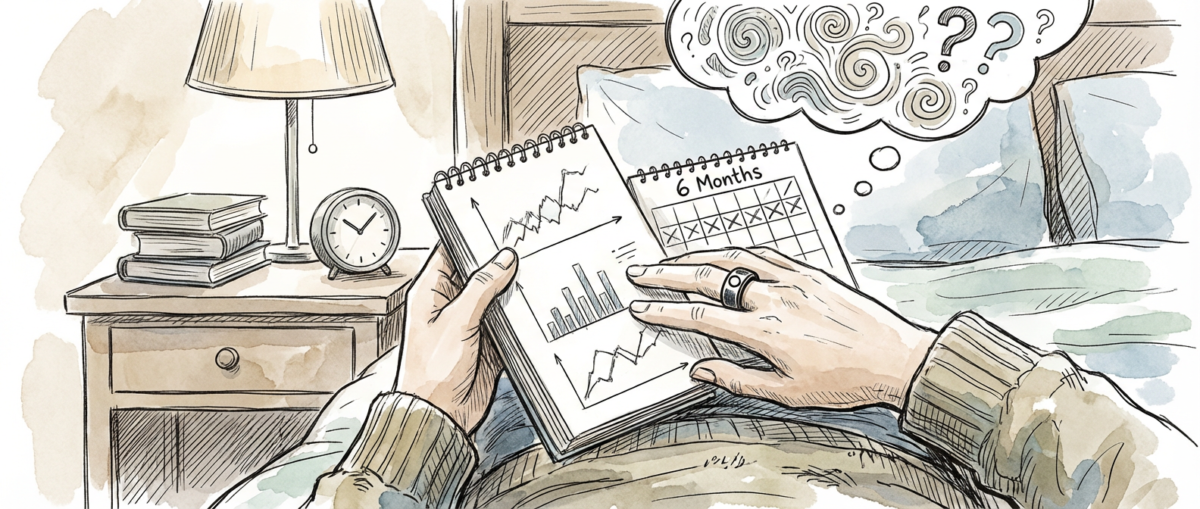
Here’s what six months of wearing the ring actually looks like: some nights are genuinely good. My readiness score hovers in the green. My sleep is unbroken. My heart rate variability suggests my nervous system is doing what it’s supposed to do. Those nights feel validating in a way that’s almost embarrassing to admit. I think about them the next day. I reference them in conversations. I feel like I’m doing something right, like the person who actually has their life together.
Then there are the other nights. The majority of nights, to be honest. Nights where my readiness score is orange or red. Nights where my sleep is fragmented across six different wake periods. Nights where my cardiovascular age, according to the ring’s estimation, has somehow aged me an entire year. The data doesn’t lie, and it doesn’t soften its findings for your feelings. I’ve now spent six months confronting something that the CDC reports affects one in three American adults regularly: getting less than the recommended seven hours of sleep. I’m part of that statistic. The ring made that fact impossible to ignore.
What struck me most wasn’t any single bad night. It was the pattern. The way my sleep on Sundays tends toward fragmentation. The way my resilience score tanks on days when I’ve had difficult conversations or high-stress work situations. The way I can predict with almost perfect accuracy which nights will feel like I’m running on fumes because I can see the pattern in weeks of data already collected. The ring doesn’t just measure sleep. It measures the consequences of your choices in real time.
The Numbers That Changed Things (Slightly)
Oura reported that users who actually engaged with their Readiness Score daily saw a measurable difference within 90 days. Those active users averaged 23 more minutes of sleep per night compared to people who just passively wore the device without looking at their data. That figure haunted me. Twenty-three minutes is almost a full sleep cycle. It’s the difference between waking up sharp and waking up feeling like you’re moving through water. And it’s not because the device itself does anything different. It’s because paying attention changes behavior.
I’ve noticed this happening to myself. On nights when I check my readiness score and see red, I’m more likely to turn down an evening commitment. I’m more likely to put my phone down earlier. I’m more conscious about the choices that got me here. But here’s what’s uncomfortable: I haven’t actually changed my sleep that much. My average is still hovering below seven hours. What’s changed is how aware I am of the gap between what I’m doing and what I should be doing. That awareness is not the same as solving the problem. Sometimes it just makes the problem feel more real and more impossible.
The Accuracy Question I Needed to Ask
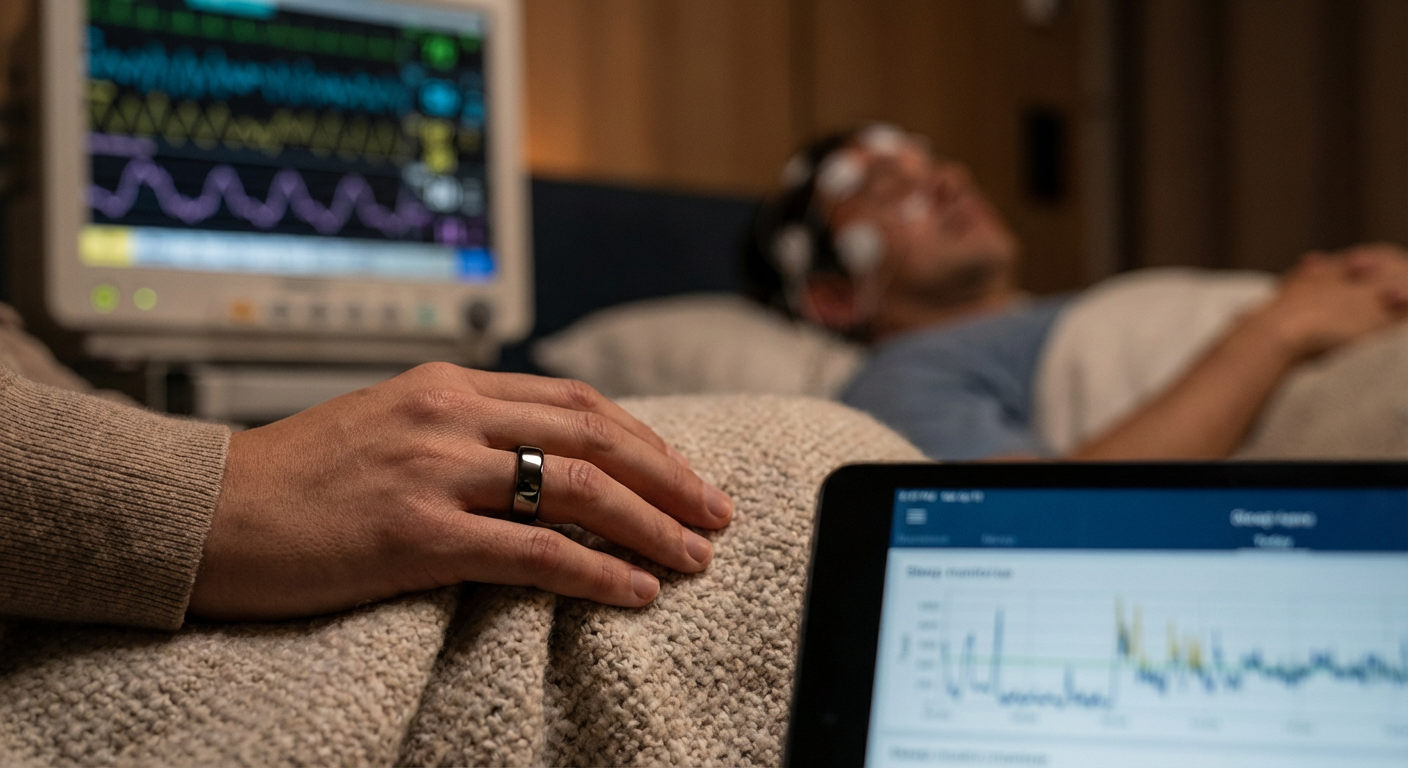
A 2025 study published in JAMA Internal Medicine validated consumer sleep trackers against the gold standard polysomnography test. The Oura Ring 4 achieved 79% accuracy in identifying sleep stages, the highest of any consumer device tested. That number is impressive until you do the math. It’s also wrong about what you’re experiencing one night out of every five. I think about this a lot. I wonder which nights the ring got wrong. I wonder if I should trust the data or trust my body.
The accuracy question led me down a longer rabbit hole about the other numbers on the screen. Cardiovascular age. Resting heart rate trends. HRV patterns. All of it draws from actual physiological measurements, but all of it is also being interpreted through algorithms and filtered through design choices that Oura made. The Oura Ring 4 Official Features Overview explains the technical details, but wearing it for six months has taught me that understanding how something works is different from understanding whether you should trust it with your emotional wellbeing.
What I’m Still Figuring Out
I’m not saying the ring is worthless. The data has been useful. It’s clarified some patterns I suspected and revealed others I didn’t see coming. It’s made me more conscious of how my sleep directly impacts how I think and feel and function. That’s not nothing. But I’m also not naive enough to pretend that wearing a ring for six months has solved anything fundamental. The CDC’s data on American sleep hasn’t budged meaningfully since 2016, despite a decade of wearable technology and wellness industry growth making promises that better measurement would lead to better sleep. We’re measuring more. We’re sleeping worse.
The harder truth I keep circling back to is that I probably already knew the core information. I knew I wasn’t sleeping enough. I knew my stress levels were affecting my rest. I knew I made choices that sacrificed sleep for other things I thought mattered more. The ring didn’t reveal any of that. It just gave me beautiful graphs to prove what I already understood. The real work has never been about the data. It’s been about being willing to make different choices, and that’s where most of us get stuck. Not because we don’t have enough information. Because we do.
I’m still wearing the ring. I’m still checking my readiness score most mornings. I’m still cycling between the weeks where I’m engaged with the data and making small improvements and the weeks where I ignore it completely and fall back into old patterns. If that sounds like a failed experiment to you, I’d understand. But I wonder if you’ve been in that same cycle with something. A fitness tracker that gathers dust. A meditation app you delete and reinstall. A commitment that feels real for seven weeks and then just becomes another thing on your wrist. If you have, I’d like to hear what changed things for you, if anything ever did. Or if we’re all just collecting data on our failures, waiting for some number to finally make us willing to do the work.
