The Moment I Changed My Mind
I’m not someone who jumps on diet trends. I’ve watched enough nutrition headlines come and go to know that most of them don’t hold up under scrutiny. But something about the PREDIMED-Plus trial results in The Lancet genuinely caught me off guard. A 24% reduction in major cardiovascular events over five years isn’t the kind of number you see very often in nutrition science. It wasn’t a modest improvement. It wasn’t a marginal gain buried in statistical noise. It was the kind of result that made me stop scrolling and actually read the paper.
What changed my mind wasn’t the marketing around it. It was the specificity of what they actually studied. They didn’t just tell people to eat Mediterranean food and hope for the best. They combined an energy-reduced Mediterranean diet with structured physical activity, monitored adherence carefully, and tracked real cardiovascular outcomes over years. That’s the opposite of most diet studies, which rely on people self-reporting what they ate and hoping it correlates with something meaningful.
I decided to try it. Not as a performance piece for the internet. Not to become a full convert to any ideology about food. But because I wanted to understand what the friction points would be in my actual life, and whether the science would hold up when it collided with reality.
Week 1 Through 3: The Honeymoon Phase and the First Crack
The first week was almost comically easy. I’d been reading about the Blue Zones 2025 research and dietary findings, which showed Sardinia and Nicoya maintaining above 70% of daily calories from whole plant foods. That number lodged in my head. Seventy percent. That seemed impossible at first, then almost elegant once I started seeing how many calories vegetables and legumes actually contain when you’re not treating them like side dishes.
I meal-prepped on Sunday. Lentil soup. Roasted vegetables with chickpeas. A simple tomato-based pasta with white beans instead of most of the pasta. I bought good olive oil because the research in early 2026 showed Americans importing 28% more of it, and I figured if the entire market was shifting, there was probably something to it. The olive oil was genuinely delicious. That part wasn’t a sacrifice.
By day three, though, I hit my first moment of real hunger. Not starvation, but that specific kind of frustration where you’re full enough not to be in pain, but not satisfied in the way your body expects to be satisfied. I’d gotten my vegetables up to about 35% of calories. Legumes added another 18%. But my brain kept looking for that density, that richness. I made the mistake of having a regular lunch at a cafe midweek, and the contrast was jarring. Everything tasted sharper and greasier than I remembered. But it also tasted better in some animal way I couldn’t fully deny.
Week two, I adjusted expectations. This wasn’t going to feel like abundance from day one. The research showing a 33% lower risk of depression in Mediterranean diet adherents didn’t mention how long that took to kick in, and I was honestly skeptical it would affect my baseline mood anyway. I was mostly just dealing with the texture of wanting more fat and salt than I was getting.
The Middle Weeks: The Data I Didn’t Expect
Around week four, something genuinely shifted. I’m not going to tell you it was spiritual or that I suddenly craved kale. That would be the kind of convenient narrative that makes you stop trusting what I’m saying. But the hunger became less insistent. My energy stayed stable through the afternoon. I stopped hitting that 3 p.m. wall where I used to reach for coffee and whatever was near my desk.
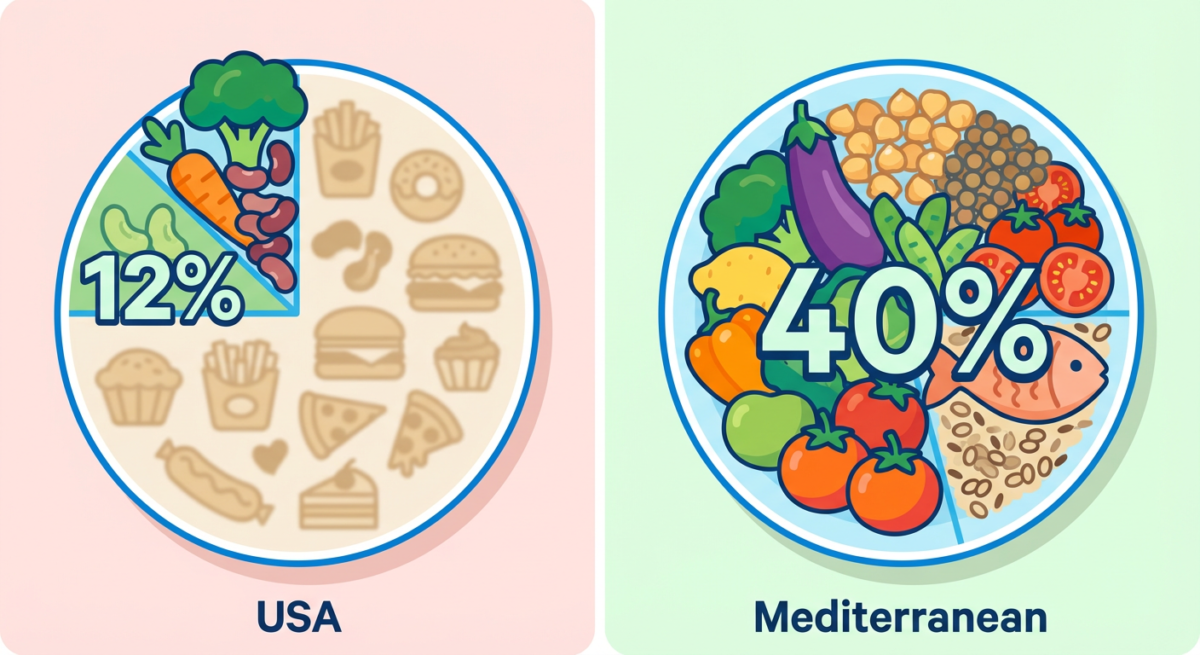
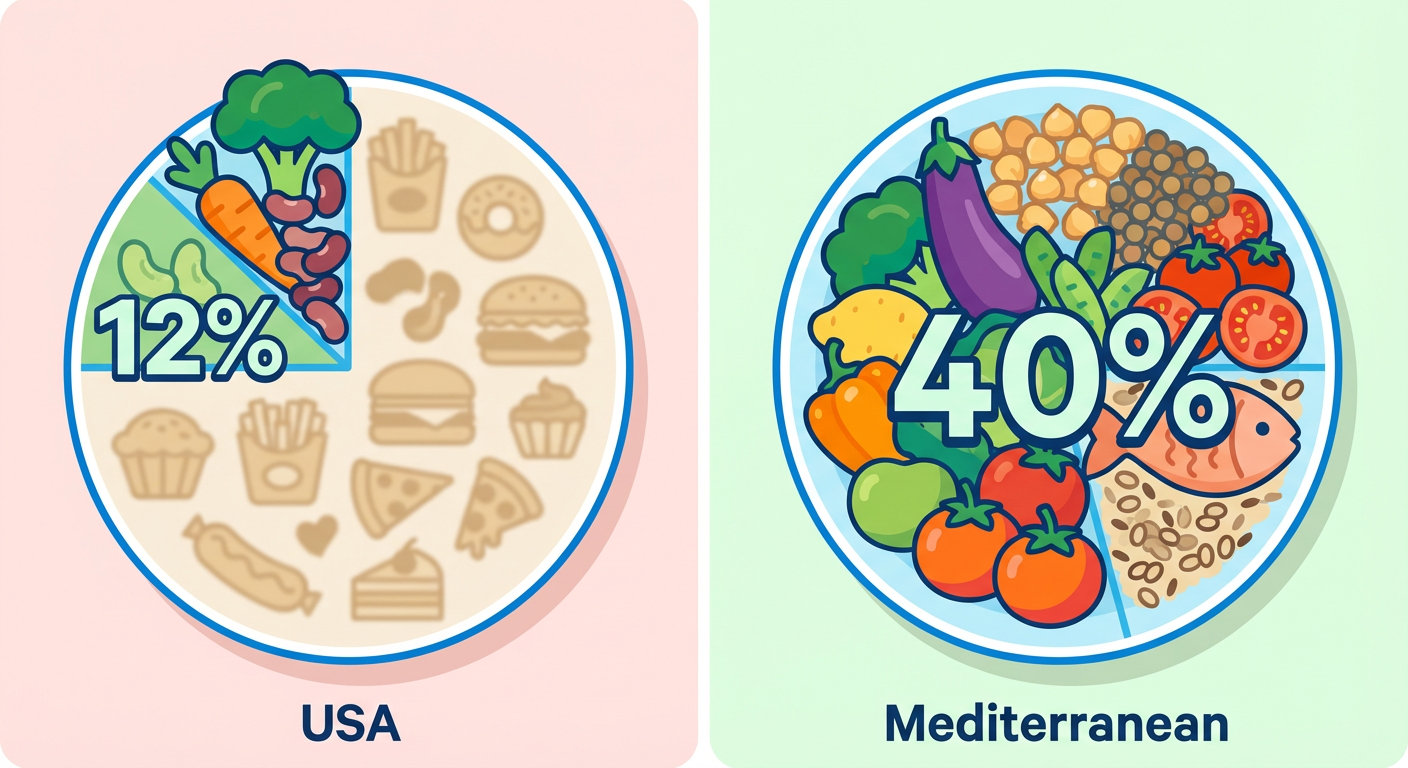
I started actually tracking what I was eating, and the numbers were interesting. The average American gets about 12% of daily calories from vegetables and legumes combined. I was hitting somewhere between 45% and 55% depending on the day. Not 70%, but a massive departure from where I’d started. The difference wasn’t subtle. My digestion improved. My skin looked clearer. These are the kinds of things people say about diets all the time, and I’ve never fully believed them before, but they were objectively happening in my case.
But here’s where I have to be honest about the incompleteness. I wasn’t maintaining perfect adherence. Week five, I went to dinner with friends and ordered fish and vegetables, sure, but I also had bread with butter and a glass of wine that probably contained more calories than I’d planned for. Week six, I had a genuinely delicious steak on a Friday night because I wanted it. And the protocol I was loosely following isn’t supposed to eliminate those things anyway. It’s supposed to make them less frequent, less the center of the meal, not forbidden.
The part I didn’t anticipate was how much the structure itself mattered. On the days when I stuck closer to the plan, my afternoon felt clearer. On the days I didn’t, I could actually feel the difference. Not because I’d become a believer in some mystical food energy. Just basic biochemistry playing out in real time. Stable blood sugar. Sustained energy. Less inflammation in my joints.
Weeks 7 and 8: What Actually Stuck
By the second month, I’d stopped calling it an experiment in my head. It had become more like a preference that I kept having to defend. My family kept asking when I was going back to “normal eating.” My coworkers who’d been skeptical in week one started noticing the changes and making comments. Mostly good ones, but some that felt weirdly personal.
The truth is, I didn’t sustain 70% plant calories. I didn’t maintain perfect adherence to what the PREDIMED-Plus researchers had actually structured. But I did something more useful, I think. I figured out what was actually sustainable for me. Somewhere between 50% and 60% of my daily calories from whole plants felt good, felt maintainable, and didn’t require me to become a different person with different priorities and different social obligations.
What I kept from those eight weeks, what I’m actually continuing, is the basic structure. Most meals centered on vegetables and legumes. Olive oil as the primary fat. Fish a couple times a week instead of red meat being the default. Nuts and whole grains filling the gaps. The specifics mattered less than the pattern.
The research was right, as far as I can tell. Not because it works like magic, but because it works on basic principles that actually hold up. You feed your body denser, more nutrient-rich foods. You move more consistently. Your cardiovascular system literally gets better. Your mood improves. Your joints don’t hurt as much. These are consequences of better fuel and regular use, not miracles.
The Honest Part: What I’d Tell You
I’m not here to tell you that you should do what I did. That’s not the point of this. The point is that I went in skeptical, found something that actually worked better than I expected, but also discovered that perfect adherence to a protocol isn’t as important as consistent movement in the right direction.
The 24% reduction in cardiovascular events in the trial matters because it’s real data from real people over real time. But so does the fact that most of those people probably weren’t perfect either. They probably had meals where they deviated. They probably had weeks where the structure slipped. What they did, and what I’ve tried to do, is make it the dominant pattern, not the exception.
If you’re considering this, know that it works better than I thought it would. But also know that it requires you to actually feel your way into it rather than forcing yourself into someone else’s ideal. Start with understanding why the research matters. Then move toward it gradually enough that you don’t hate the process. That’s where the real sustainability lives.
What’s been your experience with significant dietary changes? I’m genuinely interested in what stuck for you and what didn’t, because the honest version of this stuff is usually more complicated and more human than the headlines suggest.
