An apprenticeship is a contract between a person who can do something and a person who wants to learn how to do it. In the machine shops, garages, and mill floors of central Pennsylvania, that contract has always been about more than turning a wrench or reading a micrometer. It is about learning how to stand next to a machine that can kill you and still do your job. It is about learning how to read a foreman’s silence, how to buy time when a part is late, and how to tell a journeyman that his setup is wrong without getting a file thrown at your head. The technical skill is the easy part. The hard part is the culture that gets passed down with it.
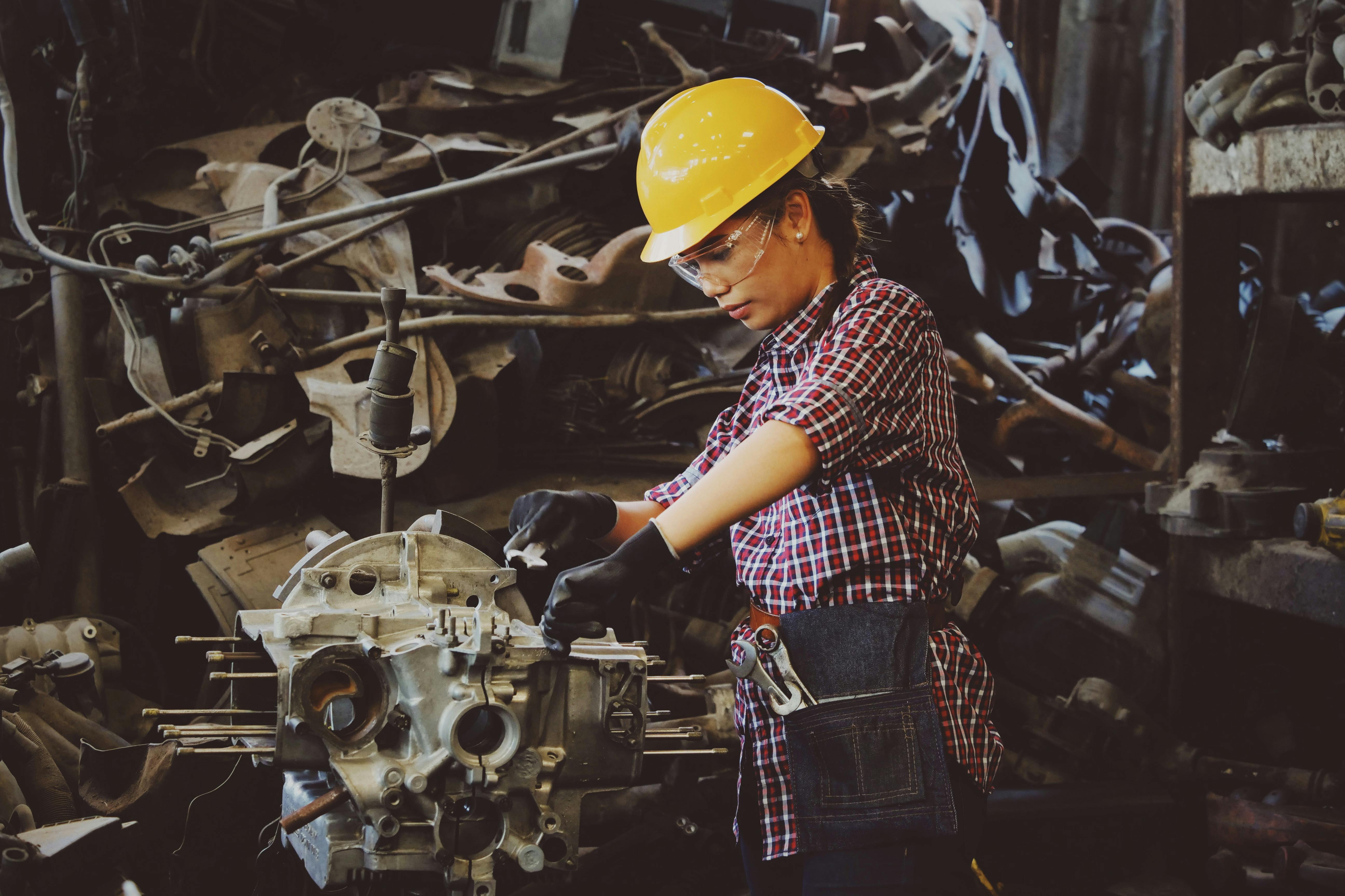
In the Juniata River Valley, the West Branch Susquehanna, and the Route 22 corridor between Harrisburg and Pittsburgh, apprenticeship was never a formal program for most people. It was a process. You got hired as a shop hand or a helper, and if you paid attention, you learned. The old heads called it “getting your eyes right.” It meant learning to see the difference between a good weld and a lucky one, between a bearing that is seated and one that is just stuck. It meant learning that the guy who talks the most about his skill usually has the least of it.
This article is about what apprenticeships actually build: not just technical skill, but judgment, identity, and a particular kind of patience that is in short supply. It is not a nostalgia piece. The old system had plenty of flaws, and I will name them. But if you want to understand why the trades still matter in this part of Pennsylvania, you have to understand what happens when a person is taught by another person, not by a screen.
The Apprenticeship Contract in the Trades
Formal apprenticeship programs have existed in the United States since at least the 1930s, when the Fitzgerald Act established national standards for registered apprenticeships. The U.S. Department of Labor still maintains a registry of approved programs, and many unions and large manufacturers use them. But in the small shops and family garages of central Pennsylvania, the formal contract was often just a handshake and a promise: “You show up, you don’t lie about what you broke, and I’ll teach you what I know.”
That informal contract had real teeth. If you wasted a journeyman’s time, you got moved to the broom. If you showed promise, you got more responsibility, often before you were ready. The best teachers I knew did not explain much. They would set up a job, point at it, and walk away. You learned by doing, and by doing it wrong, and by fixing your own mistakes. That is not a training method you can put in a manual. It is a social arrangement.
The formal programs have their place. They track hours, competencies, and wages. They give apprentices a credential that travels. But they can also create a false sense of completeness. A person can complete a registered apprenticeship and still not know how to read a room full of tired machinists on a Friday afternoon. The informal side of the contract is where the real education happens.
What the Old Heads Actually Taught
In the shops I worked in and around, the old heads taught three things that no classroom could. First, they taught you how to be wrong. You would set up a job, make a cut, and the part would come out scrap. The old head would look at it, say “Well, that’s one way to do it,” and then show you the right way. You learned that being wrong was not a sin. Hiding it was.
Second, they taught you how to wait. A machine has its own time. A bearing has to be warmed, a casting has to cool, a thread has to be chased by hand. If you rush, you break things. The old heads had a rhythm that came from years of working with metal, and they passed it on by example. You learned to listen to the machine, to feel the cut through the handle, to know when to back off. That kind of patience is not a soft skill. It is a survival skill.
Third, they taught you how to belong. A shop is a small society. It has its own jokes, its own grudges, its own rules about who gets the good jobs and who gets the shit jobs. Apprenticeship was how you earned your place in that society. You started as an outsider, and if you worked hard and did not complain too much, you became an insider. That transition mattered. It was not just about money. It was about identity.
The Toolbox as a Curriculum
Every apprentice in the trades learns that the toolbox is a kind of curriculum. You start with a few cheap wrenches and a hammer. Over time, you add tools as you need them. Each tool represents a job you did, a mistake you made, or a lesson you learned. The old heads could look at your toolbox and tell exactly where you were in your education. A guy with a full set of Snap-on sockets and no feeler gauges was a guy who spent money but not time.
In the shops along Route 22, the toolbox was also a social marker. It told people whether you were serious. A machinist who kept his mics in their wooden boxes, wiped down after every use, was a machinist you could trust. A guy who threw his tools in a bucket was a guy who would throw your parts in a bucket too. The toolbox was not just storage. It was a statement about how you approached the work.
Apprentices learned this by watching. No one sat you down and said, “Here is how to organize your toolbox.” You watched the old heads, and you copied them. That is how culture gets transmitted. It is not through lectures. It is through imitation, correction, and the occasional well-timed insult.

The Limits of the Old System
I do not want to make the old apprenticeship system sound like a golden age. It was not. It was often arbitrary, exclusionary, and cruel. If the old heads did not like you, you did not learn. If you were a woman, a person of color, or just someone who did not fit the shop’s idea of a “good hand,” the door stayed closed. The informal system had no accountability. It depended on the goodwill of people who did not always have goodwill to spare.
There was also a lot of bad teaching. Some old heads hoarded knowledge because they were afraid of being replaced. Some taught shortcuts that were dangerous. Some just did not know how to explain what they knew, so they yelled instead. The apprenticeship system was not a meritocracy. It was a social filter, and it filtered out a lot of good people for bad reasons.
Formal apprenticeship programs were supposed to fix some of that. They created standards, opened doors, and made the process more transparent. But they also lost something. The formal system can teach you how to run a lathe. It cannot teach you how to read a shop. That is the tradeoff. You gain consistency, but you lose the particular kind of knowledge that only comes from being in a specific place with specific people.
What Apprenticeship Builds in a Person
So what does an apprenticeship actually build? It builds judgment. Judgment is not the same as knowledge. Knowledge is knowing that a 1/2-13 thread has 13 threads per inch. Judgment is knowing that the bolt you are about to torque is going to strip because the hole was tapped by a guy who was in a hurry. Judgment comes from making mistakes and being corrected by someone who has made the same mistakes. It cannot be downloaded.
It builds identity. When you complete an apprenticeship, you are not just a person who can do a job. You are a machinist, a mechanic, a millwright. That identity matters. It shapes how you see yourself and how others see you. In a region like central Pennsylvania, where the old industrial jobs have been disappearing for decades, that identity is a kind of anchor. It says, “I know how to make things work, and that still matters.”
It builds a particular kind of patience. Not the patience of waiting in line, but the patience of working on a machine that was built before you were born and will still be running after you are dead. The old heads had that patience. They knew that a good job takes as long as it takes. They knew that rushing a repair is how you create a bigger repair. Apprenticeship was how they passed that patience on.
The Role of Failure
Failure is the core of apprenticeship. You cannot learn to run a lathe without scrapping a few parts. You cannot learn to weld without burning holes in things. The old heads understood this. They expected you to fail. What they did not tolerate was failing the same way twice. That was the line between a mistake and a character flaw.
In the shops I knew, failure was not hidden. It was examined. A scrapped part would be set on the bench, and the old head would walk you through what went wrong. Not to humiliate you, but to make sure you understood. That process was uncomfortable, but it was also generous. It said, “I am going to spend my time on you because I think you can learn.” That is a gift that no online course can replicate.
The fear of failure is what keeps a lot of people out of the trades. They are afraid of looking stupid. But apprenticeship is built on looking stupid. The only way to avoid it is to never try anything. And in a machine shop, the person who never tries anything is the most dangerous person in the room.
The Current State of Apprenticeship in Central Pennsylvania
The old industrial corridors of central Pennsylvania have changed. The big mills are mostly gone. The small shops that remain are often struggling to find people. The old apprenticeship pipeline, informal as it was, has been broken for a generation. Young people are not lining up to spend four years learning a trade that might not exist in twenty years. And the old heads are retiring, taking their knowledge with them.
There are efforts to rebuild the pipeline. Community colleges and technical schools have programs. Some employers have started their own apprenticeship initiatives. The state has put money into workforce development. But the cultural piece is harder to rebuild. You cannot just create a program and expect the old social contract to reappear. That contract was built over decades, in specific places, by specific people. When those people leave, the contract leaves with them.
What remains is a question: Can you build a new apprenticeship culture that keeps the good parts of the old system without the bad parts? I do not know the answer. But I know that the question matters. Because the trades are not just about making things. They are about making people who can make things. And that process, at its best, is a form of inheritance.
What a Good Apprenticeship Looks Like Now
A good apprenticeship now looks different than it did in 1975. It is more likely to be formal, more likely to be tracked, more likely to include classroom time. But the core is the same: a person who knows how to do something teaches a person who wants to learn. The best programs I have seen combine the formal structure with the informal culture. They give apprentices a clear path, but they also give them time with the old heads. They let the old heads be old heads, and they let the apprentices be apprentices.
That combination is rare. It requires an employer who understands that training is not just a cost. It requires old heads who are willing to teach, even when teaching is slower than doing. It requires apprentices who are willing to be patient, to take the shit jobs, to earn their place. None of that is easy. But when it works, it works better than anything else.
In the shops along Route 22, the best apprentices were the ones who asked questions but did not ask too many. They watched first, then asked. They made mistakes, owned them, and did not make them again. They understood that the old head’s time was valuable, and they did not waste it. That is not a skill you can put on a resume. It is a way of being.
The Difference Between Training and Apprenticeship
Training is about transferring information. Apprenticeship is about transferring identity. A training program can teach you how to read a blueprint. An apprenticeship teaches you how to be the kind of person who reads blueprints. The difference is subtle, but it is real. It is the difference between knowing how to do a job and knowing how to be in a job.
In the old shops, this distinction was understood. The old heads did not just teach you how to run a machine. They taught you how to be a machinist. That meant showing up on time, keeping your tools clean, not blaming the machine for your mistakes. It meant taking pride in work that no one would ever see. It meant understanding that the shop was a community, and you had a responsibility to it.
That kind of identity is hard to build in a classroom. It requires a social context. It requires other people who share the identity and can model it. That is why apprenticeship, for all its flaws, remains the best way to learn a trade. Because a trade is not just a set of skills. It is a way of being in the world.
What We Lose When Apprenticeship Dies
When apprenticeship dies, we lose more than a training method. We lose a way of passing on knowledge that cannot be written down. We lose the social bonds that held shops together. We lose the identity of the tradesperson, replaced by the identity of the “worker” or the “employee.” We lose the patience that comes from learning slowly, from making mistakes, from being corrected by someone who cares enough to correct you.
In central Pennsylvania, this loss is visible. The old shops are closing. The old heads are dying. The young people who might have learned from them are working in warehouses or driving trucks or leaving the region entirely. The knowledge that built the bridges, the mills, the machines that still run, is disappearing. Some of it is written down. Most of it is not.
This is not a call to bring back the old days. The old days had plenty of problems. But it is a call to pay attention to what is being lost. Because once it is gone, it is gone. You cannot rebuild a culture of apprenticeship with a grant or a program. You can only rebuild it with people, in places, over time. And that is the slowest, hardest kind of work there is.
Frequently Asked Questions
What is the difference between an apprenticeship and an internship?
An apprenticeship is a structured, long-term training arrangement in which a person learns a trade by working under a skilled practitioner. It typically lasts several years and leads to a recognized credential. An internship is usually shorter, less formal, and often focused on general exposure rather than mastery of a specific trade. In the machine shops of central Pennsylvania, the old informal apprenticeships were closer to the formal model than to an internship: you were expected to learn the trade, not just observe it.
Do you need a formal apprenticeship to become a machinist or mechanic?
No. Many machinists and mechanics learned informally, by working as helpers and picking up skills over time. Formal apprenticeships provide structure and a credential, but they are not the only path. The informal path requires more self-direction and a willingness to learn from people who may not be natural teachers. In the old shops, the informal path was the norm. Today, a combination of formal training and on-the-job learning is common.
Why did the old apprenticeship system decline in central Pennsylvania?
The decline was driven by deindustrialization. As the big mills and factories closed, the jobs that supported apprenticeship disappeared. The small shops that remained often could not afford to train apprentices. At the same time, the old heads retired or died, taking their knowledge with them. The cultural infrastructure of apprenticeship—the social networks, the expectations, the identity—eroded. Formal programs have tried to fill the gap, but they cannot fully replace the informal culture.
What can a young person do today to learn a trade in this region?
Start by finding a shop that still does real work. Look for small machine shops, repair garages, and fabrication shops. Ask if they need a helper. Be willing to sweep floors and run errands. Watch the old heads. Ask questions, but not too many. Make mistakes, own them, and do not make them twice. If a formal program is available, use it. But do not expect the program to teach you everything. The real learning happens on the floor, with people who have been doing the work for decades.
The Next Step
This article is part of a longer conversation about the material culture of repair and deindustrialization in central Pennsylvania. The next piece will look at the specific tools that defined the trades in this region—the micrometers, the dial indicators, the hand-scraped surfaces—and what they tell us about the people who used them. If you have a story about learning a trade from an old head, or about a shop that shaped you, I would like to hear it. The comments are open, and the coffee is usually cold.
