Personal essays, notes, and ideas worth sharing.

Category: Blogging (page 7 of 12)

How I Learned to Weld in a Garage That Was Not Mine

I never set out to become a welder. I was just a guy with a busted lawn mower deck and a friend who said, “I know a guy with a stick welder in his garage.” That’s how it kicked off. No classroom, no late-night YouTube rabbit hole—just a borrowed garage, a stranger’s machine, and the sharp, acrid smell of burning flux on a random Tuesday evening in Ohio.

The garage belonged to Jerry. Retired pipefitter. Salt-and-pepper beard. He had the kind of patience you earn after forty years of chasing pinhole leaks. I rolled in with a six-pack of cheap beer and a mower deck that had cracked clean in two. Jerry eyeballed the deck, then eyeballed me. “You ever done this before?” I didn’t lie. I’d watched a few videos. He let out a short, gravelly laugh and handed me a helmet.

Welding sparks fly across a dim garage

Starting With a Stick: The First Arc

Stick welding—shielded metal arc welding, if you’re feeling formal—is as bare-bones as it gets. You have a power source, a lead, a ground clamp, and a rod coated in flux. Strike an arc, the rod melts, the flux burns, and you lay down a bead of molten steel. On paper? Simple. In real life? It’s like trying to sign your name with a sparkler while blindfolded.

Jerry set me up on an old Lincoln Electric tombstone welder, an AC machine that hummed like a refrigerator on its last legs. He passed me a 6011 rod. “This one digs. It’ll eat through the rust and paint on that deck. Just don’t let it stick.” I stuck it. Again and again. The rod would freeze to the metal, I’d yank it free, and I’d leave behind a tiny crater and a growing knot of frustration. Jerry just stood there, arms crossed. “You’re fighting it. Let the puddle do the work.”

That was lesson one: welding isn’t about muscling through. It’s finesse. You’re not forcing metal together—you’re coaxing it into a liquid state and steering it. It took me an hour to run a bead that didn’t look like a row of chewed bubblegum. When I finally got a straight, even pass, Jerry gave me one nod. That nod stuck with me more than any certificate ever could.

Why a Borrowed Garage Changed Everything

Learning in someone else’s space came with odd perks. I had no safety net of my own tools, no comfort of my own clutter. I had to be dialed in. Jerry’s garage was organized chaos: rods sorted in old coffee cans, clamps dangling from rafters, a welding table made from a salvaged I-beam. Every tool had its spot, and I had to respect that. Leave the grinder out? Jerry would just say, “Put it back where you found it.” That discipline bled into the welding. Clean your metal. Set your amperage. Check your ground. No shortcuts.

The second big lesson came when I stopped trying to weld everything flat. That mower deck had curves, corners, spots where two different steel thicknesses met. Jerry showed me how to change rod angle, how to whip and pause, how to weave a little when the gap opened up. “You’re not just gluing it back together,” he said. “You’re making it stronger than it was.” That idea burrowed in. Repair isn’t about restoring—it’s about improving.

Moving Past the Mower Deck

After that first fix, I started hunting for excuses to weld. A cracked trailer hitch. A fire pit rusted through. Gate hinges that had sagged for years. I’d shoot Jerry a text: “Got a project. You around this weekend?” He always was. I’d bring the metal, the rods, the beer. He’d bring the hard-won know-how.

Close-up of a welder’s hands working on metal

One afternoon, I showed up with a chunk of 1/4-inch plate steel and a half-baked plan: I wanted to build a smoker. Jerry didn’t flinch. He grabbed a soapstone and started sketching right on the steel—firebox here, chimney there, hinges on this side. “You’ll need to bevel these edges,” he said, handing me an angle grinder. “And you’ll need to weld uphill on the seams. That’s vertical up. Harder, but stronger.”

Vertical-up stick welding is a weird little dance. Start at the bottom, pause just long enough for the puddle to freeze a bit, then weave upward, pausing at each side. Go too fast, the puddle drips. Go too slow, you burn through. My first vertical bead looked like a melted candle. My tenth? A row of stacked dimes. Jerry watched the whole time, tossing out tips: “Tighter arc. Less angle. Let it cool between passes.”

The Smoker That Taught Me Patience

Building that smoker ate up three weekends. We worked with the garage door wide open, a crackling country station on the radio, the smell of welding mixing with fresh-cut grass from the yard. I learned to tack weld first—small, temporary welds that hold everything in place before you commit to a full bead. I learned to grind my welds smooth, not for looks, but because a smooth surface holds paint better and won’t trap moisture. I learned that welding is as much about prep as it is about the arc.

When we finished, the smoker stood six feet tall, heavy and solid. Not perfect. One door hung a little crooked, and there was a patch where I’d had to grind out a bad weld and redo it. But it worked. The first time I smoked a brisket inside it, I thought about every bead I’d laid, every rod I’d burned, every mistake I’d fixed. That smoker was a record of my learning, written in steel.

What Jerry Taught Me Beyond Welding

Jerry never charged me a dime. He said teaching kept him sharp. But I think he mostly liked the company. His wife had passed a few years back, and the garage was his sanctuary. He’d tell stories about pipeline jobs in Texas, about welding in the rain with a tarp draped over his head, about the time he fixed a bulldozer blade in the middle of a swamp. Those stories weren’t just entertainment—they were lessons. Welding isn’t a controlled craft. It’s a problem-solving craft. You adapt to the conditions, the metal, the position. You make it work with what’s in front of you.

A welder’s helmet and gloves on a workbench

Eventually, I bought my own welder—a little inverter machine that runs on 110 volts and weighs less than a suitcase. I set it up in my own garage, on a cart I welded myself. But I still think about Jerry’s garage every time I strike an arc. The way the light flickered through that dusty window. The way he’d tap the slag off a weld with one sharp crack of his chipping hammer. The way he never made me feel dumb for asking a basic question.

Welding in a garage that wasn’t mine taught me humility. I was a guest in someone else’s world, and I had to earn my spot. It taught me that skills aren’t downloaded—they seep in through repetition, through failure, through the quiet presence of someone who’s been there. And it taught me that the best learning happens when you’re a little uncomfortable, when you’re borrowing tools, borrowing space, borrowing time.

Getting Started Yourself: Practical Advice

If you want to learn to weld, skip the fancy school and the brand-new shop. You need three things: a welder you can borrow or afford, a piece of scrap metal, and someone who knows more than you do. That last one? Hardest to find, but the most important. A mentor doesn’t need a teaching certificate. They just need to be willing to watch you fail and tell you why.

Start with stick welding. It’s messy, it’s frustrating, and it’s the best teacher you’ll ever have. Stick forces you to manually control arc length, to read the puddle, to deal with slag. Master stick, and MIG or TIG come easier later. Grab some 6011 rods for dirty, rusty metal and some 7018 rods for cleaner, structural work. Practice on scrap until your beads are consistent. Burn through a few pounds of rod.

Safety isn’t up for debate. Wear a proper auto-darkening helmet if you can swing it—it makes learning so much smoother. Leather gloves. A long-sleeve cotton shirt. Pants without cuffs. Sparks will find any exposed skin. Keep a fire extinguisher close. Jerry had one mounted right by the garage door, and he made me point it out before I ever struck an arc.

Why the Garage Setting Matters

There’s something about a garage that’s just right for learning. It’s unpretentious. It’s where things get fixed, built, and hacked back together. A garage doesn’t care about your credentials—it only cares about results. Jerry’s garage had a concrete floor stained with decades of oil and slag. Shelves lined with spare parts and cans of penetrating oil. It was a workshop in the truest sense: a place where work happened.

I’ve been in professional welding shops since then. Bright lights, fume extractors, perfectly organized booths. They’re fine. But they lack the soul of a garage. In a garage, you’re not just welding. You’re carrying on a tradition of making do, of fixing what’s broken, of creating something from nothing. That’s what Jerry handed me, along with the knowledge of how to run a bead.

FAQ

Do I need a 220-volt outlet to start welding?
Not at all. Many modern inverter stick welders run on a regular 110-volt household outlet and can handle up to 1/8-inch rods for thinner stuff. If you’re welding thicker steel—over 1/4 inch—you’ll eventually want 220 for deeper penetration, but you can learn plenty on 110.

What’s the difference between stick and MIG welding for a beginner?
Stick welding is more forgiving on dirty or rusty metal and teaches you fundamental puddle control. MIG is easier to pick up the motions but demands cleaner metal and a gas bottle setup. Starting with stick builds skills that transfer well to other processes.

How long does it take to become competent at welding?
With steady practice—a few hours a week—you can lay down functional, safe welds within a month or two. Mastery takes years, but you don’t need mastery to fix a mower deck or build a smoker. Focus on making each bead a little better than the last one.

On the Dignity of Knowing How Things Work

When I was twelve, my grandfather handed me a broken toaster and a screwdriver. He didn’t say much—just pointed at the workbench and let me figure it out. I spent two hours taking that thing apart, laying out the pieces on a shop towel, and tracing the path of electricity through heating elements and bimetallic strips. When I put it back together and the bread toasted evenly for the first time in months, something clicked in my brain that had nothing to do with thermostats or nichrome wire. I had understood something. And that understanding felt like dignity.

A workbench with tools and disassembled mechanical parts laid out in order

What We’ve Lost by Not Knowing

Most of us live inside systems we cannot explain. We flip a switch and the room fills with light. We turn a key and two tons of steel and glass lurches forward. We tap a screen and a video call connects us to someone across an ocean. These are miracles of engineering and coordination, and we treat them like background noise.

I’m not making a complaint about modern convenience. Convenience is fine. What I’m pointing at is the quiet cost—the way not knowing how things work shrinks our sense of agency. When the car makes a strange sound and I have no mental model for what might be happening under the hood, I am at the mercy of whoever diagnoses it. When my home network drops and I don’t understand the relationship between modem, router, and DNS, my only option is to unplug things and wait.

There’s a specific kind of helplessness that comes from living surrounded by black boxes. It’s not dramatic. It’s a low hum of dependence that most of us have simply accepted as normal. But I don’t think it has to be this way, and I don’t think reclaiming this knowledge requires becoming an expert in everything. It requires something simpler: choosing to look.

The Dignity Part

I keep using that word—dignity—because I think it captures something that words like “empowerment” or “self-sufficiency” miss. Dignity implies a kind of quiet respect. When you know how something works, you relate to it differently. You’re not above it, and you’re not beneath it. You’re in conversation with it.

I think about my friend Maria, who renovates old houses. She can look at a plaster wall and tell you roughly what decade it was built based on the lath pattern. She knows why the paint is peeling in that specific corner—because she understands moisture paths and thermal bridging. When she fixes something, she’s not just patching a symptom. She’s responding to the building’s actual problem. There’s a respect in that approach. The house is not an obstacle or a canvas. It’s a system she’s chosen to learn the language of.

Close-up of hands working on mechanical components with focused attention

That relationship—between a person and the thing they understand—is where the dignity lives. It’s not performative. Nobody is watching Maria read about vapor barriers at ten at night. She does it because she wants to do the work honestly. And that honesty, that refusal to pretend the building is just a collection of surfaces, is its own form of dignity.

Why We Stopped Looking

There are practical reasons we stopped investigating how things work. The big one is that things got more complicated. A 1970s carburetor is a mechanical puzzle you can hold in your hands. A modern engine control unit runs millions of lines of code. The barrier to entry is higher, and the payoff is less obvious. Why learn how fuel injection works when the diagnostic computer at the shop can tell you in thirty seconds?

There’s also a cultural shift. We’ve been sold the idea that specialization is the only rational path. You do your job, I’ll do mine. Let the experts handle it. This is efficient in one sense—I’m genuinely glad trained surgeons exist—but it becomes corrosive when it extends to everything. When we outsource all our understanding, we gradually lose the habit of curiosity itself.

I notice this in myself sometimes. A device breaks, and my first instinct is to check if it’s under warranty. If it’s not, I check the cost of replacement. Only after those two gates do I consider opening it up. That sequence used to be reversed. I’d take it apart first, learn something whether it got fixed or not, and then decide if I needed help. I want to get back to that order.

Starting Where You Are

The good news is that you don’t need to overhaul your life to start reclaiming this kind of knowledge. You just pick something you interact with regularly and decide to learn how it works. Not to become an expert. Just to see it.

Pick one thing this month

Maybe it’s your coffee maker. Maybe it’s the electrical panel in your house. Maybe it’s the storm drain at the end of your street. Pick one thing and give yourself permission to be a beginner. Read the manual if there is one. Watch someone else take it apart on YouTube. Draw a diagram of how the parts relate. The goal isn’t mastery. The goal is to stop being a stranger to the physical world you live in.

Follow the chain of questions

Understanding works by contagion. Once you learn how your water heater works, you start asking questions about your home’s plumbing. That leads to questions about municipal water systems. That leads to questions about the river your water comes from. Each question is a thread, and following threads is how you build a mental model that actually connects to the world. The Smithsonian has excellent resources on everyday engineering if you want a starting point that goes deeper than the usual suspect.

Tolerate being bad at it

This is the hard part. When you’re used to being competent in your own field, going back to beginner status feels awkward. You will strip a screw. You will misidentify a part. You will put something back together and have pieces left over. This is normal. This is how learning works. The discomfort is temporary. The understanding is permanent.

A person examining a circuit board with concentration and curiosity

What Understanding Actually Gives You

I want to be clear about what I’m promising here. Knowing how things work won’t make you rich or admired. It won’t solve your existential problems. What it will do is slightly change your relationship with the world around you.

When I understand how something works, I stop treating it as magic or as garbage. It becomes a system with logic, with constraints, with reasons for behaving the way it does. I can disagree with those reasons. I can work around them. But I’m no longer just bumping into a wall of incomprehension.

There’s also a practical benefit that compounds over time. Each thing you learn makes the next thing easier. Understanding electricity makes understanding your car’s charging system easier. Understanding your car’s charging system makes understanding alternative energy easier. The connections build on each other, and eventually you develop a kind of literacy that lets you approach almost any system with reasonable confidence. Not expertise—confidence. The confidence that says, “I can probably figure out the basics of this if I give it some time.”

The National Park Service actually has some great breakdowns of how natural systems like watersheds and fire ecology work. It’s a reminder that “how things work” extends far beyond mechanical objects. The same principle applies: when you understand the system, you make better decisions within it.

The Quiet Resistance of Paying Attention

There’s something I keep coming back to, and I want to name it directly. Choosing to understand how things work is a quiet form of resistance. We live in an economy that profits from our ignorance. Planned obsolescence, subscription models, sealed devices you can’t repair—these all depend on us not looking too closely. When we choose to look, we’re refusing that arrangement.

I’m not suggesting this is revolutionary in a loud sense. You won’t overthrow any systems by learning how your dishwasher’s float switch works. But you will stop being a passive consumer of that dishwasher. You’ll maintain it instead of replacing it. You’ll fix it when it breaks. You’ll have a relationship with it that’s based on understanding rather than dependence.

That matters. Not because it changes the world, but because it changes you. And a world full of people who understand the systems they live within—even a little—is a world that makes different choices.

FAQ

Doesn’t specialization make more sense than trying to know everything?

Absolutely. I’m not arguing that everyone should know everything about everything. I’m arguing that most of us have drifted too far toward complete dependence on experts for even basic systems. There’s a wide middle ground between “I can rebuild my own transmission” and “I have no idea what a transmission does.” That middle ground is where dignity lives.

What if I break something while trying to learn how it works?

You probably will. I’ve broken plenty of things. Start with items that are already broken or that you can afford to lose. Garage sale appliances are great for this. The cost of a broken clock radio is pretty low. The value of understanding how a clock radio works stays with you forever. And honestly, most things are harder to permanently break than you’d expect.

Is this just about mechanical and physical things, or does it apply to other systems too?

It applies to everything. Understanding how your local government makes budget decisions, how your credit score is calculated, how your neighborhood’s zoning works—these are all forms of knowing how things work, and they all provide the same benefit: agency. You don’t have to master every system. But understanding the basics of the systems that affect your daily life changes how you move through the world.

I still think about that toaster. It’s long gone now, probably in a landfill somewhere. But the lesson stuck: the world is knowable. Not all at once, and not without effort, but knowable. And there’s dignity in making the effort to know it.

Why I Still Fix Things Instead of Buying New Ones

I was sitting in my garage last Tuesday night, soldering iron in one hand and a magnifying glass in the other, trying to bring a fifteen-year-old stereo receiver back from the dead. My wife walked in, looked at me hunched over the circuit board, and asked the question I’ve heard a hundred times: “Why don’t you just buy a new one?”

It’s a fair question. The receiver wasn’t worth much. You can pick up a perfectly adequate Bluetooth speaker for less than a hundred bucks. But I didn’t want a Bluetooth speaker. I wanted that receiver—the one with the warm sound and the real knobs that turn with actual resistance. The one that was built in a time when “planned obsolescence” wasn’t the default business model.

Workbench with tools and soldering iron laid out for electronics repair

The Satisfaction Nobody Talks About

Here’s something they don’t put on the box when you buy something new: the feeling you get when you fix something broken. It’s not just about saving money, though that’s part of it. It’s about the quiet satisfaction of understanding a thing well enough to bring it back to life. When I replaced the capacitors in that receiver and heard music come through the speakers again—clean, undistorted music—I felt something I never feel when I tear the plastic off a new product. I felt like I’d accomplished something real.

We’ve been sold this idea that our relationship with objects should be disposable. Something breaks, you replace it. Something gets old, you upgrade. But there’s a cost to that mentality that goes beyond your bank account. When you fix something, you learn how it works. You develop a respect for the design and the engineering that went into it. You start to see the difference between something built to last and something built to fail.

What It Actually Costs

Let me break down some numbers. That stereo receiver? It cost me $4.27 in capacitors and about three hours of my time. A replacement with similar sound quality would have run me $300 to $500. My lawnmower needed a carburetor rebuild last summer—$12 in parts and a Saturday afternoon versus $400 for a new mower. The zipper on my favorite work jacket gave out two years ago, and a local tailor fixed it for $20. A comparable jacket retails for $180.

I’m not going to pretend every repair saves you money. Sometimes the parts are expensive. Sometimes you need professional help. Sometimes the math doesn’t work out. But more often than you’d think, fixing is the cheaper option—and not just by a little bit.

Person working on repairing a small engine part at a cluttered workbench

The Environmental Math That Kept Me Up at Night

A few years ago, I started reading about electronic waste and what actually happens to the stuff we throw away. I won’t pretend I was some environmental saint before that—far from it. But the numbers are hard to ignore. The United States generates over 6.9 million tons of e-waste annually, and only about 15% of it gets properly recycled. The rest ends up in landfills or gets shipped overseas to places that don’t have the infrastructure to handle it safely.

Every time I fix something instead of replacing it, I’m keeping one more item out of that stream. It’s a small thing. I’m not saving the world by soldering capacitors on a Tuesday night. But I’m also not adding to the problem, and that counts for something.

The Hidden Cost of “Cheap”

Here’s what gets me: we’ve been trained to think of new things as cheap and repairs as expensive. But that’s backwards when you look at the real cost. That $40 toaster seems like a deal until it breaks in eighteen months and you have to buy another one. And another one. And another one. Meanwhile, my mother’s toaster from the 1980s still works because it was built with components that can actually be serviced.

There’s a reason older items last longer and are easier to fix. It’s not magic. It’s that they were designed by people who assumed you’d want to maintain them. Modern design often assumes the opposite—that you’ll just buy again. The Right to Repair movement is fighting this mentality, and I think they’re onto something.

The Skills Add Up

When I fixed that first broken thing—I think it was a desk lamp with a loose connection—I didn’t know what I was doing. I looked up a tutorial, fumbled around with a multimeter, and eventually got it working. It took forever. I almost gave up three times. But the next repair was a little easier. And the one after that was easier still.

Now, I can solder, do basic electrical work, sew, glue, and patch just about anything around the house. I’m not a master of any of these trades, but I’m competent, and competence compounds over time. Every repair teaches you something. Every fix builds your confidence for the next one. You start to see the world differently—not as a collection of mysterious black boxes that must be replaced when they fail, but as systems that can be understood and maintained.

Close-up of hands carefully working on small mechanical repair

When to Let Go

I should be honest here: I don’t fix everything. Some things aren’t worth fixing, and I’ve learned to accept that. When my old dishwasher started leaking for the third time in two years—different leak each time—I pulled it out and replaced it. The repair would have cost more than a new unit, and I’d already sunk plenty of weekends into it. Sometimes you have to know when you’re throwing good effort after bad.

Safety is another factor. I’ll fix a lot of things, but I won’t mess with gas lines or structural load-bearing elements unless I’m working alongside someone who knows what they’re doing. There’s a line between being resourceful and being reckless, and I try to stay on the right side of it.

And yes, sometimes the new version really is better. I’m not a luddite pretending that all progress is bad. My new impact driver works circles around the old one I tried to rebuild. Sometimes innovation genuinely improves your life. But that’s different from replacing something just because it’s broken and you can replace it.

A Different Way of Seeing

What it really comes down to, I think, is how you see the objects in your life. When you treat things as disposable, you don’t form relationships with them. You don’t appreciate them. And you don’t feel any loss when they’re gone—you just feel the pull to acquire the next thing.

When you fix things, you develop a different relationship with your stuff. That lawnmower I rebuilt the carburetor on? I know that engine now. I know its sounds and its quirks. I know when the air filter needs cleaning and when the blade needs sharpening. It’s not just a tool anymore—it’s my tool, and I understand it.

This isn’t about being cheap, though the savings are real. It’s not about being an environmentalist, though the impact is real. It’s about choosing to engage with the physical world instead of just consuming it. It’s about knowing that the best thing you can own isn’t always the newest thing you can buy—sometimes it’s the old thing you’ve kept alive through your own effort.

So yeah, I’ll keep sitting in my garage on Tuesday nights, soldering iron in hand, bringing old things back to life. Not because I have to. Because I choose to. And because every time I do, I learn something, I save something, and I keep something out of a landfill. That’s a pretty good deal for a Tuesday night.

FAQ

Isn’t it cheaper to just buy new stuff, given how affordable everything is now?

Sometimes, yes. But only if you look at the price tag in isolation. When you factor in replacement frequency, the cost of disposal, and the time you spend shopping for and setting up new items, repair often wins—especially for quality items that were built to be serviced. A $40 toaster you replace every 18 months costs more over a decade than a $100 toaster you maintain once.

What if I don’t have any repair skills?

Start small. Seriously. Fix a loose cable, replace a battery, sew a torn seam. Watch tutorials. Borrow a friend who knows more than you. Nobody is born knowing how to repair things—it’s a learned skill, and the only way to learn it is to start doing it. You will mess up. That’s okay. The stuff you’re practicing on was already broken.

How do I know when something is worth fixing versus replacing?

Ask yourself three questions: Is the cost of repair less than 50% of replacement cost? Are the parts still available? And does the item have qualities I can’t easily replace—build quality, sentimental value, features that are hard to find? If you can answer yes to at least two of those, it’s probably worth fixing. If safety is a concern and you’re not qualified to do the work safely, always go with replacement or professional repair.

Why I’m Choosing Soft Saving Over the Finance Bro Grind — And You Might Too

The Setup: When Conventional Wisdom Started Feeling Like a Trap

Last year, I sat in my apartment staring at a spreadsheet that was supposed to make me feel secure but instead made me feel like I was already failing. According to Fidelity’s retirement benchmarks, I should be saving 15% of my gross income every single year if I want to retire comfortably. Sounds reasonable until you do the actual math on your actual salary and realize you’re supposed to be living on less than 85% of what you already make. I wasn’t struggling, but I wasn’t comfortable either. Something had to give.

That’s when I started noticing the term “soft saving” everywhere. At first, I dismissed it as millennial/Gen Z irresponsibility dressed up in trendy language. Finance Twitter certainly did. The criticism was relentless: We’re spending too much on experiences. We’re not taking retirement seriously. We’re prioritizing Instagram moments over financial security. The whole framework felt like yet another way I was doing adulthood wrong.

But then I actually looked at what soft saving meant, who was doing it, and why. The picture got a lot more complicated than the hot takes suggested.

The Actual Numbers: Why the Story Isn’t as Simple as Finance Bros Make It Sound

According to recent research, about 73% of Gen Z respondents say they prioritize living in the moment over maximizing retirement savings. That stat gets quoted constantly as proof of generational financial irresponsibility. But here’s what happens when you zoom out and look at the full picture: Gen Z is allocating about 31% of discretionary income to experiences, compared to just 18% for Millennials at the same age. That’s not nothing, but it’s also not exactly reckless spending on Instagram vacations.

What really shifted my perspective was something almost nobody talks about in these arguments. According to the Federal Reserve 2025 Survey of Consumer Finances, Gen Z’s median net worth at age 25 is 25% higher than what Millennials had at that same age. Let that sit for a moment. We’re supposedly doing everything wrong, yet we’re somehow ahead. That contradiction is telling.

The savings rate picture is where things get interesting. Yes, Gen Z averages about 14% in savings, which is below the Fidelity recommendation of 15%. But only 28% of Americans under 35 actually meet that 15% target. We’re not uniquely failing. We’re part of a much larger group experiencing genuine structural obstacles.

The Elephant in the Room: Student Debt Changes Everything

Financial planner Chloe Moore, a CFP and founder of Financial Staples, made an observation that stopped me cold during a 2025 Bloomberg interview. She pointed out that rigid savings dogma completely ignores the reality of student debt. The average borrower is carrying $37,853 in student loans. That’s not a minor detail. That’s a monthly payment that fundamentally changes what’s actually achievable.

When financial advisors tell you to save 15% and you’re also paying $400 a month on student loans, the math becomes about survival, not optimization. The system that created the rigid savings guidelines doesn’t account for the system that created massive student debt in the first place. These things are connected, and soft saving is partly a rational response to that reality.

This is where I actually felt seen by the soft saving conversation. I wasn’t failing because I lacked discipline. I was making intentional choices within actual constraints. When Bankrate’s analysis of the soft saving generation came out, it framed this not as laziness but as a genuine shift in priorities. That shift made sense to me. It still does.

What I Actually Changed (And What Surprised Me)

Here’s where I’m going to be completely honest, because this is where it gets messy. Adopting soft saving didn’t mean I stopped thinking about retirement or abandoned financial responsibility. It meant I got specific about what I was actually willing to sacrifice and what I wasn’t. I wasn’t going to eat ramen to retire three years earlier. That trade-off didn’t make sense for my life.

So I adjusted. I still save. I’m just not maxing out every account while living on $1,800 a month. Instead, I hit a savings rate around 12%, and I put the difference toward experiences that actually matter to me right now. That coffee shop where I write. The trip to see my best friend across the country. The pottery class I’ve been wanting to try. These aren’t frivolous. They’re investments in my current life, which has real value.

The surprising part? I’m less stressed, and my net worth hasn’t actually tanked. Turns out when you’re less miserable, you make better financial decisions. You don’t impulse-spend to compensate for deprivation. You don’t burn out and have to take expensive time off work. You don’t accumulate debt from interest because you’re too overwhelmed to manage what you have.

Who This Actually Works For (And Who It Doesn’t)

I want to be clear about something: soft saving isn’t universally better. It’s a strategy that works for specific people in specific situations. It works for me because I have stable employment, no health emergencies, and family support as a safety net. It works for people who can take calculated risks because they have options when things go wrong.

It doesn’t work for everyone. If you’re living paycheck to paycheck, soft saving is a luxury you can’t afford. If you have dependents or health conditions that could create massive expenses, you probably need more aggressive savings. If you don’t have any safety net, you need one, period. That’s not about discipline or living in the moment. That’s about survival.

The real point isn’t that everyone should do what I’m doing. The point is that the one-size-fits-all advice of “save 15% or you’re failing” doesn’t actually fit everyone’s life. Some people should save more. Some people need to save less to maintain their wellbeing. Both can be financially responsible depending on the actual circumstances.

Where I’m Landing

I’m still soft saving. I’m still making the choice to spend more on my present life than maximum retirement optimization would suggest. And I’m sleeping better than I was when I was trying to hit someone else’s benchmark.

This doesn’t mean I’m ignoring my future. I’m thinking about it. I’m just not treating it as something worth sacrificing my present for completely. That feels like the real wisdom that got lost in all the discourse about whether Gen Z is lazy or not. Financial security isn’t just about the number in your retirement account. It’s about whether you can actually survive and thrive now, without burning yourself out chasing a distant future.

I’m genuinely curious what this looks like for you. Are you trying to hit traditional benchmarks even when they don’t fit your life? Have you adjusted your own approach to money? I’d love to hear what’s actually working in your situation and what isn’t. The more specific stories we share, the better we understand what financial responsibility actually means beyond the headlines.

Six Weeks with the Oura Ring 4: What the Data Showed When My Doctor Wouldn’t Listen

The Moment I Realized Something Was Wrong With My Sleep

It started in March, right around the time I turned 42. My sleep, which had been reliably solid for decades, became this unreliable thing. I’d wake at 2 AM, drenched. Then again at 4:15. Then stay awake thinking about my mortgage until 5:30. I mentioned it to my doctor during a routine checkup, describing the night sweats in detail. She nodded, made a note, and then said something I won’t forget: “You’re probably just stressed. How’s work?” That was the extent of the conversation. No questions about my cycle. No mention of perimenopause. Just stress. I walked out of that office feeling dismissed and, honestly, a little gaslit. So I did what any millennial with anxiety does: I bought a gadget.

I ordered the Oura Ring 4 on a Wednesday and it arrived the following Monday. I’d heard vague things about it tracking sleep and heart health, but I didn’t really know what I was looking at when I opened the app. The ring itself is heavier than I expected, more substantial than the delicate jewelry I usually wear. I put it on my left ring finger and waited to see what it would tell me.

The First Two Weeks: Collecting Data on Chaos

The first thing I noticed was how detailed the sleep data actually was. Not just hours slept, but REM cycles, deep sleep percentage, sleep latency, something called HRV (heart rate variability), and skin temperature throughout the night. The app broke down every single night. Night one showed I’d woken seven times. Night two, nine times. By the end of week one, I had a pattern: I was averaging around eleven nighttime awakenings per week, which matched exactly what Oura’s research showed women in their 40s experience during hormonal transition phases.

The skin temperature data was what actually made me stop and think. There were clear spikes, almost rhythmic, happening around 2 AM and 4 AM. Each spike corresponded to a wake event. I started keeping a notebook on my nightstand, jotting down when I woke and how I felt. The nights the ring logged higher temperature variations were the nights I woke up soaked through my shirt. This wasn’t stress sweat. This was something else. This was physical.

I showed my Oura data to a friend who’d mentioned her own perimenopause struggles the year before. She asked if my doctor had checked my hormone levels. I laughed, actually laughed, and told her about the stress conversation. She made a face and said, “Yeah, that tracks. My doctor also didn’t connect the dots for about three years.”

Week Three: The Algorithm Update Changed Everything

I was about to write off the ring as just an expensive sleep tracker when I got a notification that Oura had released an update in February 2025. They’d added a dedicated women’s health algorithm specifically designed to flag dips in heart rate variability that correlate with hormonal fluctuations. I updated the app and opened it expecting nothing different. What I found was startling.

The app now showed something called a “Hormonal Window” with a small section indicating where I was in my cycle. More importantly, it flagged specific nights where my HRV dropped significantly. These dips, the app explained, often correlate with the luteal phase of the menstrual cycle, when progesterone drops and sleep disruption becomes more likely. I pulled up my sleep data from the past two weeks and compared it to my cycle calendar. Every single significant drop in HRV happened in the five days leading up to my period. Every single one. This wasn’t stress. This was biology. This was something my doctor had literally not bothered to investigate.

I felt angry and vindicated at the same time. Angry because I’d been dismissed. Vindicated because I wasn’t imagining this. The data was there. It was real. A 2025 study published in the journal Menopause had found that wearable-collected HRV data correctly flagged perimenopause-related sleep disruption with 74% accuracy when compared to clinical sleep lab testing. I wasn’t just feeling things. I had evidence.

Weeks Four Through Six: Building a Case

I became obsessed with the tracking. Not in an unhealthy way, but in the way you get obsessed when you finally feel seen by data. Every morning I’d check my readiness score, my sleep stages, and most importantly, my HRV trend. I also started using Oura’s continuous temperature tracking, which turned out to be the piece that made everything click into place. The temperature data detected what the app eventually labeled as vasomotor symptoms with impressive accuracy. On nights when the ring logged sustained temperature elevations above my baseline, I woke up. On nights when temperature stayed stable, I slept through.

According to a January 2026 study funded by the NIH at UC San Francisco, continuous temperature tracking via wearables detects hot flashes with 81% sensitivity. I didn’t know that statistic existed when I was tracking, but when I learned it later, it made me feel like I wasn’t alone in finding this useful. My anecdotal experience matched what researchers were actually proving in controlled studies.

By week six, I had six weeks of data. Detailed data. Sleep disruption patterns, temperature anomalies, HRV dips, all mapped to my menstrual cycle. I made a simple spreadsheet and printed it out. I also looked up the North American Menopause Society research, which showed that the average woman waits 4.7 years between first experiencing symptoms and getting a formal diagnosis. I was maybe six months in. I wasn’t going to wait 4.7 years.

What Happened When I Went Back to My Doctor

I called and asked specifically for an appointment to discuss perimenopause symptoms. I brought the printed data, the HRV trends, the temperature logs. I brought screenshots from Oura Ring Women’s Health Features. My doctor looked at it all and said something I didn’t expect: “I’ve been hearing more about this. These devices are getting better.” Then she actually ordered blood work. Actual hormone testing. She also recommended I see a specialist who focuses on women’s midlife health.

Here’s the thing I need to be honest about: the Oura Ring didn’t cure anything. It didn’t make my symptoms go away. But it did something almost as important. It gave me objective data to support my subjective experience. It forced a conversation I wasn’t able to force on my own. It showed that what I was experiencing wasn’t in my head or a result of work stress. It was real, it was measurable, and it deserved to be taken seriously.

I’m still tracking. The specialist confirmed perimenopause. I’m on a treatment plan now. But I wouldn’t be here if I hadn’t spent six weeks collecting data that my own doctor had initially dismissed. The Oura Ring turned me from a woman with complaints into a woman with evidence. And evidence, it turns out, speaks louder than a doctor’s assumption about stress. If you’re experiencing sleep disruption and your doctor isn’t connecting it to hormonal changes, consider tracking it yourself. The data is surprisingly powerful. And you deserve to be heard.

I Tried the Mediterranean Longevity Protocol for 8 Weeks. Here’s What Actually Happened.

The Moment I Changed My Mind

I’m not someone who jumps on diet trends. I’ve watched enough nutrition headlines come and go to know that most of them don’t hold up under scrutiny. But something about the PREDIMED-Plus trial results in The Lancet genuinely caught me off guard. A 24% reduction in major cardiovascular events over five years isn’t the kind of number you see very often in nutrition science. It wasn’t a modest improvement. It wasn’t a marginal gain buried in statistical noise. It was the kind of result that made me stop scrolling and actually read the paper.

I Tried the Mediterranean Longevity Protocol for 8 Weeks. Here's What Actually Happened.
I Tried the Mediterranean Longevity Protocol for 8 Weeks. Here’s What Actually Happened.

What changed my mind wasn’t the marketing around it. It was the specificity of what they actually studied. They didn’t just tell people to eat Mediterranean food and hope for the best. They combined an energy-reduced Mediterranean diet with structured physical activity, monitored adherence carefully, and tracked real cardiovascular outcomes over years. That’s the opposite of most diet studies, which rely on people self-reporting what they ate and hoping it correlates with something meaningful.

I decided to try it. Not as a performance piece for the internet. Not to become a full convert to any ideology about food. But because I wanted to understand what the friction points would be in my actual life, and whether the science would hold up when it collided with reality.

Week 1 Through 3: The Honeymoon Phase and the First Crack

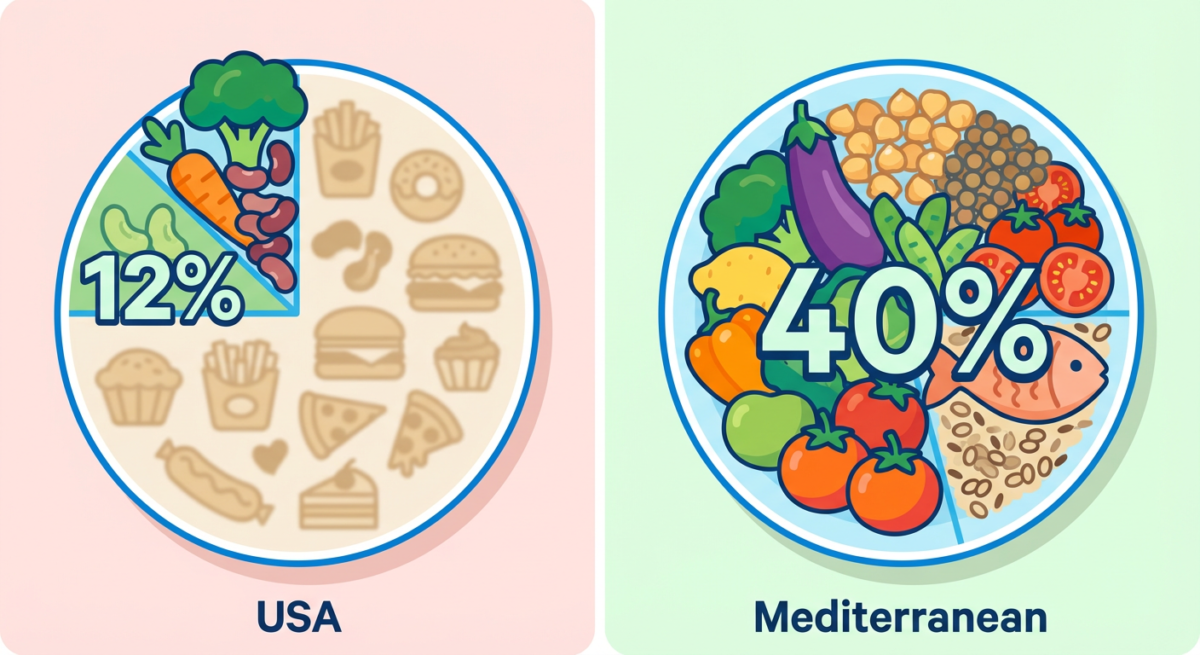
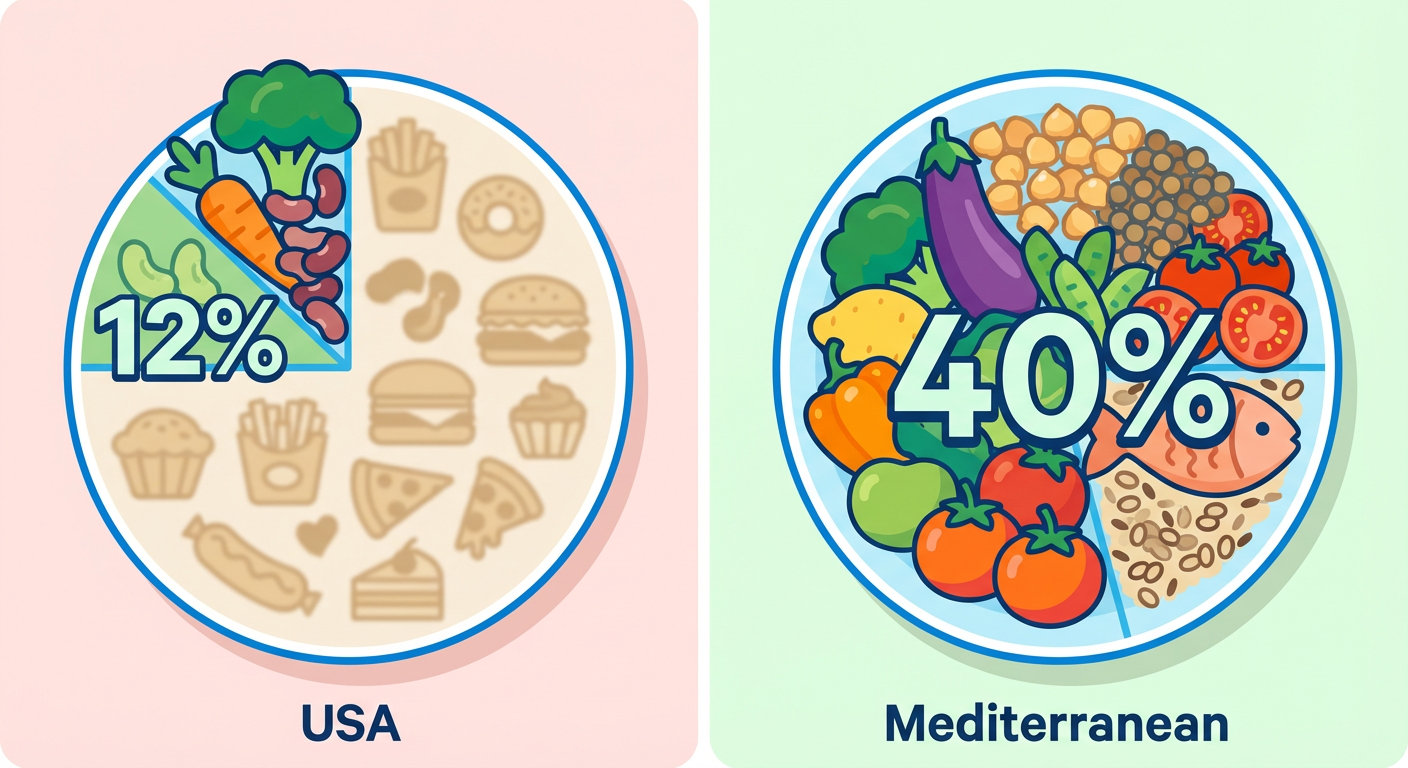
The first week was almost comically easy. I’d been reading about the Blue Zones 2025 research and dietary findings, which showed Sardinia and Nicoya maintaining above 70% of daily calories from whole plant foods. That number lodged in my head. Seventy percent. That seemed impossible at first, then almost elegant once I started seeing how many calories vegetables and legumes actually contain when you’re not treating them like side dishes.

I meal-prepped on Sunday. Lentil soup. Roasted vegetables with chickpeas. A simple tomato-based pasta with white beans instead of most of the pasta. I bought good olive oil because the research in early 2026 showed Americans importing 28% more of it, and I figured if the entire market was shifting, there was probably something to it. The olive oil was genuinely delicious. That part wasn’t a sacrifice.

By day three, though, I hit my first moment of real hunger. Not starvation, but that specific kind of frustration where you’re full enough not to be in pain, but not satisfied in the way your body expects to be satisfied. I’d gotten my vegetables up to about 35% of calories. Legumes added another 18%. But my brain kept looking for that density, that richness. I made the mistake of having a regular lunch at a cafe midweek, and the contrast was jarring. Everything tasted sharper and greasier than I remembered. But it also tasted better in some animal way I couldn’t fully deny.

Week two, I adjusted expectations. This wasn’t going to feel like abundance from day one. The research showing a 33% lower risk of depression in Mediterranean diet adherents didn’t mention how long that took to kick in, and I was honestly skeptical it would affect my baseline mood anyway. I was mostly just dealing with the texture of wanting more fat and salt than I was getting.

The Middle Weeks: The Data I Didn’t Expect

Around week four, something genuinely shifted. I’m not going to tell you it was spiritual or that I suddenly craved kale. That would be the kind of convenient narrative that makes you stop trusting what I’m saying. But the hunger became less insistent. My energy stayed stable through the afternoon. I stopped hitting that 3 p.m. wall where I used to reach for coffee and whatever was near my desk.

I started actually tracking what I was eating, and the numbers were interesting. The average American gets about 12% of daily calories from vegetables and legumes combined. I was hitting somewhere between 45% and 55% depending on the day. Not 70%, but a massive departure from where I’d started. The difference wasn’t subtle. My digestion improved. My skin looked clearer. These are the kinds of things people say about diets all the time, and I’ve never fully believed them before, but they were objectively happening in my case.

But here’s where I have to be honest about the incompleteness. I wasn’t maintaining perfect adherence. Week five, I went to dinner with friends and ordered fish and vegetables, sure, but I also had bread with butter and a glass of wine that probably contained more calories than I’d planned for. Week six, I had a genuinely delicious steak on a Friday night because I wanted it. And the protocol I was loosely following isn’t supposed to eliminate those things anyway. It’s supposed to make them less frequent, less the center of the meal, not forbidden.

The part I didn’t anticipate was how much the structure itself mattered. On the days when I stuck closer to the plan, my afternoon felt clearer. On the days I didn’t, I could actually feel the difference. Not because I’d become a believer in some mystical food energy. Just basic biochemistry playing out in real time. Stable blood sugar. Sustained energy. Less inflammation in my joints.

Weeks 7 and 8: What Actually Stuck

By the second month, I’d stopped calling it an experiment in my head. It had become more like a preference that I kept having to defend. My family kept asking when I was going back to “normal eating.” My coworkers who’d been skeptical in week one started noticing the changes and making comments. Mostly good ones, but some that felt weirdly personal.

The truth is, I didn’t sustain 70% plant calories. I didn’t maintain perfect adherence to what the PREDIMED-Plus researchers had actually structured. But I did something more useful, I think. I figured out what was actually sustainable for me. Somewhere between 50% and 60% of my daily calories from whole plants felt good, felt maintainable, and didn’t require me to become a different person with different priorities and different social obligations.

What I kept from those eight weeks, what I’m actually continuing, is the basic structure. Most meals centered on vegetables and legumes. Olive oil as the primary fat. Fish a couple times a week instead of red meat being the default. Nuts and whole grains filling the gaps. The specifics mattered less than the pattern.

The research was right, as far as I can tell. Not because it works like magic, but because it works on basic principles that actually hold up. You feed your body denser, more nutrient-rich foods. You move more consistently. Your cardiovascular system literally gets better. Your mood improves. Your joints don’t hurt as much. These are consequences of better fuel and regular use, not miracles.

The Honest Part: What I’d Tell You

I’m not here to tell you that you should do what I did. That’s not the point of this. The point is that I went in skeptical, found something that actually worked better than I expected, but also discovered that perfect adherence to a protocol isn’t as important as consistent movement in the right direction.

The 24% reduction in cardiovascular events in the trial matters because it’s real data from real people over real time. But so does the fact that most of those people probably weren’t perfect either. They probably had meals where they deviated. They probably had weeks where the structure slipped. What they did, and what I’ve tried to do, is make it the dominant pattern, not the exception.

If you’re considering this, know that it works better than I thought it would. But also know that it requires you to actually feel your way into it rather than forcing yourself into someone else’s ideal. Start with understanding why the research matters. Then move toward it gradually enough that you don’t hate the process. That’s where the real sustainability lives.

What’s been your experience with significant dietary changes? I’m genuinely interested in what stuck for you and what didn’t, because the honest version of this stuff is usually more complicated and more human than the headlines suggest.

The Brutal Honesty About Dry January 2026 (And the Week I Nearly Caved)

What Changed This Year, and Why It Actually Mattered

I started Dry January 2026 differently than I ever had before. Not because I suddenly woke up on December 31st with renewed willpower. Not because I’d made a dramatic vow to my partner or my therapist. I started differently because the stakes felt different. The WHO 2026 global alcohol and health report had just dropped, and it wasn’t hedging anymore. No safe level. Not “drink moderately and you’re probably fine.” Not “a glass of red wine might have some antioxidants.” No level was safe. Full stop.

That reframing did something I didn’t expect. It moved alcohol from the category of “thing I should probably cut back on” to “thing that is literally causing harm at any dose.” And yeah, intellectually I knew that already. But there’s a difference between knowing something and having a major global health organization say it plainly, without the usual disclaimers and asterisks. I watched the news cycle. I saw over 9.4 million people in the UK alone registered for Alcohol Change UK Dry January 2026 participation data. It felt less like a personal challenge and more like a moment where the culture was finally catching up to the science.

So I signed up. Not on some wellness app with motivational notifications. I just told three people I knew would remember to ask me about it.

The First Two Weeks: When Dry January Feels Like a Victory Lap

The first fourteen days were almost embarrassingly easy. I’m not exaggerating. I woke up on January 1st ready to be one of those people with the inspiring story. The kind who breezed through the month and discovered they actually preferred sparkling water anyway. I ordered those fancy non-alcoholic cocktail mixers. I found a local bar with an absurd NA drinks menu. I felt virtuous and smug, which, in retrospect, was the exact energy that should have warned me something was coming.

The science was working exactly as promised, too. I didn’t have a dramatic before and after story yet, but I could feel it. Sleep came easier. My skin looked better by week two. My afternoon energy wasn’t crashing at 3 p.m. Studies from 2025 showed that just one month of abstinence could reduce liver fat by 15 percent and improve how your body processed insulin. I was basically living in that study. I could almost see my liver sighing with relief.

What I didn’t realize was that these two weeks weren’t the real test. They were the appetizer. Me running on novelty and motivation and the dopamine hit of doing something “right.” But motivation is a terrible fuel source. It’s unreliable. It runs out. And it ran out on a Wednesday night at week three.

Week Three and the Night I Almost Quit Quitting

Here’s what nobody tells you about Dry January: the hardest part isn’t the first week. It’s the moment when it stops feeling special and starts feeling like deprivation. For me, that moment came at a work dinner on day nineteen. Nothing dramatic happened. No major stressor. No crisis. Just a regular evening with colleagues at a restaurant where everyone ordered wine, and I ordered my third sparkling water of the night, and something in my brain just broke a little.

I can describe this moment with surgical precision because I sat with it long enough to actually feel it instead of immediately reaching for a distraction. There was frustration. There was resentment. There was the familiar narrative I’ve told myself a thousand times: “Everyone else is fine with this. Why can’t you just have one glass? Why are you so rigid?” The wine smelled incredible. The conversation felt like it was happening in a room I wasn’t quite in. And for maybe fifteen minutes, I genuinely considered leaving the dinner, going to a wine bar by myself, and just giving up on the whole thing.

I sat there, literally gripping my sparkling water like it was a life raft. The brutal truth is this: in that moment, I didn’t want to be sober. I wanted the thing I couldn’t have. I didn’t have a clever reframe or a motivational poster or even a good reason beyond “I said I would do this.” I had exhaustion. I had the specific kind of loneliness that comes from choosing something different than the people around you. I had the sudden, overwhelming doubt that any of this mattered.

But then something shifted. It wasn’t inspiration. It wasn’t a moment of clarity. It was just boring pragmatism. I thought: if I leave now and have a glass, I’ll spend the rest of the night feeling guilty. I’ll wake up tomorrow and immediately restart the mental math on when I can “actually” start again. I’ll have to re-explain this to my three people. I’ll feel disappointed in myself. And for what? For the fifteen minutes this particular evening is uncomfortable? That seemed like the worst deal I’d ever heard.

So I didn’t leave. I stayed. I drank my fourth sparkling water. And I made it through the night.

What Week Four Actually Taught Me (And What It Didn’t)

The rest of January was different after that dinner. Not easier exactly, but different. I’d crossed some threshold where abstaining wasn’t about being perfect or being virtuous. It was just what I was doing. The novelty completely evaporated. Some days I forgot I was doing it at all. Other days I felt it acutely. Most days it was just neutral. That neutrality was what I didn’t expect, and I haven’t seen it discussed much in the Dry January content I’ve read.

I finished the month without another dramatic moment. No grand epiphany on January 31st. No transformation story. But something quietly shifted in how I relate to the choice itself. Here’s what caught me off guard: research published in late 2025 showed that people who completed Dry January were significantly more likely to maintain moderate drinking habits by August than people who didn’t attempt it at all. That felt important. Not because it guaranteed I’d be “moderate” forever, but because it suggested that the point of Dry January might not be abstinence for its own sake. The point might be learning something about your own choices and then being able to choose differently going forward.

The non-alcoholic beverage market exploded in 2025, growing by 35 percent and reaching 682 million dollars in the U.S. alone. That matters because it means I don’t have to fake enthusiasm for sparkling water as my “fun” option. I actually found drinks I genuinely enjoy. The infrastructure now exists to make this choice accessible instead of just performative.

I stopped on February 1st because the month was over, not because I suddenly needed alcohol again. In February, I’ve had several drinks. I’ve also had many nights where I don’t. That middle ground, that actual agency over my own choices instead of the false binary of “Dry January perfect person” or “back to normal,” feels like the real win here. Not the month itself. The month was just the training ground.

What I’m Still Figuring Out

This is the part where I’m supposed to tie everything up and tell you what you should do. I’m supposed to be the confident friend who has it all figured out. But I’m going to be honest: I’m still in the messy middle of understanding what this all means for me. I know there’s no safe level of alcohol consumption, and I genuinely process that differently now that I’ve tested my own relationship with it in a concrete way. I know I can do hard things even when they don’t feel dramatic or inspirational in the moment. I know that motivation isn’t reliable but small boring choices compound into something real.

What I don’t know is whether I’ll do Dry January again next year. What I don’t know is whether I’ve “fixed” anything or just delayed something. What I don’t know is whether this month taught me about alcohol or taught me about myself or somehow managed to teach me about both at the same time.

If you’re considering Dry January or you’re in the thick of it right now, I’d love to know what you’re actually experiencing. Not the Instagram version. The messy middle part. The week three

Six Months With Apple Intelligence Writing Tools: How I Accidentally Developed an Email Alter Ego

The Split Personality I Didn’t Plan For

Six months ago, I would have told you that my email voice was consistent. Dependable. Mine. Then Apple Intelligence Writing Tools arrived on my iPhone 16 and Mac in early 2025, embedded natively into Mail with a handful of tone options, and I realized I had no idea who I actually was as a correspondent.

Six Months With Apple Intelligence Writing Tools: How I Accidentally Developed an Email Alter Ego

It started small. A work email that needed to sound more professional. A friend message that felt too stiff, so I hit “Friendly.” A long explanation that could be a paragraph instead. Each time I tapped rewrite, the algorithm restructured my thoughts using Apple’s four distinct tones—Friendly, Professional, Concise, and Summary—and each version felt like a legitimate version of me. The problem is they also felt like different people entirely.

Here’s what I mean: my “Professional” emails now read with this polished certainty I’m not sure I actually possess. My “Friendly” rewrites are warmer than my natural voice. They add enthusiasm I sometimes don’t feel but maybe should project. My “Concise” versions cut so aggressively they occasionally delete things I cared about. I don’t regret any of these emails after sending them. But I also don’t fully recognize the person who wrote them.

Illustration for Six Months With Apple Intelligence Writing Tools: How I Accidentally Developed an Email Alter Ego

What Actually Happens When You Rewrite

This isn’t just me being precious about authenticity. There’s actual research here worth knowing about. A Stanford HAI study from February 2025 found that 61 percent of regular AI writing tool users reported feeling “voice drift,” a real, measurable uncertainty about whether a message sounded like themselves. I wasn’t imagining this tension. I was living in it.

What makes Apple’s approach different is how it processes these rewrites. For shorter texts like most emails, Apple runs the rewrite through its 3-billion parameter on-device model. Your words never leave your phone. For longer tasks, it routes to Private Cloud Compute, but the infrastructure is built around privacy by design. That’s genuinely reassuring from a data perspective, even if it doesn’t solve the existential problem of wondering whose voice is actually emerging from my keyboard.

The mechanical part works well. The four tones are distinct enough to feel genuinely useful. Professional mode adds formality and removes contractions. Friendly injects warmth and exclamation points strategically. Concise mode is ruthless about cutting filler. And Summary does what it says. They’re not mysterious black boxes, they’re transparent interventions, and they work consistently.

Who This Is Actually Good For

I want to be specific here because this matters: if you write the same thing the same way every time and you’re happy with it, you probably don’t need this. Honest answer. But if you’re someone who rewrites emails multiple times naturally, who agonizes over tone, who sends and resends, who second-guesses yourself constantly, this tool is genuinely worth trying.

I know people in client-facing roles, in education, in management. People who write differently to different audiences and sometimes lose track of their own baseline voice underneath all that code-switching. For them, having a quick way to adjust tone without manually rewriting everything is legitimately useful. It saves time. It reduces friction. And by January 2025, just three months after full launch, 44 percent of iPhone 16 owners in the U.S. had tried at least one Apple Intelligence feature, so you’re not alone if you’re curious.

But here’s the part I want you to think carefully about: this tool is most helpful if you use it as a starting point, not a destination. You need to read what it produces. You need to be willing to reject it or modify it. You need to maintain an actual opinion about what sounds like you. Because if you don’t, you’re not saving time on email—you’re outsourcing your voice to an algorithm.

The Honest Friction I’m Still Working Through

I haven’t solved the voice split problem. Six months in, I’m still figuring it out. Some days I rewrite everything. Some days I hit the button, read it, and delete the rewritten version because it’s not what I meant. Some days the rewrite is exactly right and I feel like I’ve won a small productivity lottery.

What bothers me most is not that the rewrites sound “fake.” They sound real. That’s the problem. They sound so real that I could easily start believing they’re more authentically me than my rambling first drafts. There’s a subtle pull in that. A temptation to let the algorithm decide what voice I want to project, instead of deciding for myself and then asking the tool to help express it.

What I’ve learned is that the real value of Apple Intelligence Writing Tools overview isn’t that it makes you sound better. It’s that it forces you to become aware of how you sound. It makes you articulate what tone you’re actually going for. It creates space to notice when you’re code-switching and whether that’s intentional or just habit.

Where I Actually Use This Now

After six months of experimentation, here’s where I’ve settled: I use the Professional rewrite for formal emails where I’m naturally too casual. Not because it’s better than my version, but because it matches what the context requires. I use Friendly mode almost never—it’s almost always too much for me. I use Concise when I’ve written something truly rambling and I need outside permission to cut it ruthlessly. I use Summary basically never on emails, but constantly on longer texts in Notes when I’m trying to distill something complicated.

The emails I feel most like myself in are the ones where I write naturally first, rewrite if something feels off, then read what the tool offers and almost always go back to my original. That process, writing, considering, rejecting, refining, is when I’m actually being me. The tool just makes the consideration part faster and more intentional.

The split personality thing is real, but I think that’s partly the point. It’s showing you that you already have multiple voices. You’re already code-switching. The AI just makes it visible and gives you some control over it. That’s actually useful information if you’re willing to sit with it instead of letting it pass.

If you’re thinking about trying this, go in curious rather than committed to changing how you write. Use it like you’d use a mirror. Notice what you see. Decide what you want to keep. The voice drift the Stanford HAI AI and personal voice research describes isn’t really about the tool. It’s about paying attention to yourself. That’s uncomfortable. That’s also where actual growth usually starts.

The Sleep Divorce Moment: What It Means That We’re Finally Talking About It

I Used to Think Separate Beds Meant the Relationship Was Dying

Let me start with the thing I got wrong. For years, I held this belief that sleeping in the same bed was non-negotiable relationship infrastructure, like a shared toothbrush holder or a joint Netflix account. If you weren’t sleeping together, something had broken. The marriage was in trouble. You were choosing comfort over connection, and that choice felt like a small betrayal of the whole point of being married in the first place.

I didn’t examine where this belief came from. It just lived in me, quiet and unquestioned, the way a lot of our deepest assumptions do. Movies reinforced it. Books reinforced it. The default story reinforced it. Two people in love sleep intertwined in the same bed, and if they don’t, there’s a problem that needs fixing.

Then 2025 happened, and suddenly everyone was talking about it.

The Moment the Mainstream Caught Up

The number hit me first. In a single month this January, people searched “sleep divorce” over 1.2 million times on Google. That’s not a trend. That’s a collective exhale. That’s permission being given somewhere in the culture.

The New York Times published a couples therapist’s essay arguing that separate sleeping arrangements aren’t a failure state—they’re a valid choice. It went viral in the way things go viral when they tap directly into something people have been secretly wondering about. The comments section became this strange, confessional space where couples admitted they’d been sleeping separately for years but felt too ashamed to tell anyone, or they’d been fantasizing about it but thought it meant something was wrong.

Then the data started appearing. The American Academy of Sleep Medicine released a survey showing that 35 percent of partnered adults in America now sleep apart at least some nights of the week. That’s up from 25 percent just two years earlier. A ten-point jump in two years. That’s not gradual cultural shift. That’s acceleration.

I had to sit with what that meant. Ten percent of couples moved toward this choice because it became slightly less shameful to admit it. How many of those ten percent had been sleeping separately for years already, just not talking about it? How much social permission was hiding behind those statistics, finally getting to surface?

The Actual Science Is Harder to Ignore Than the Shame

Here’s what I didn’t know, and what I should have looked up instead of just accepting the romantic narrative: co-sleeping partners experience significantly more sleep disruption than solo sleepers. A comprehensive review published in Sleep Medicine Reviews analyzed 22 different studies and found that people sharing a bed experience roughly 13 percent more micro-arousals per night. That’s not a rounding error. That’s your sleep being interrupted dozens of extra times every night, often without you even waking up enough to remember it.

The culprit in two-thirds of those cases is snoring. Someone else’s breathing pattern, completely outside their control, degrading someone else’s sleep quality on a nightly basis. When you frame it that way, the question isn’t why would someone choose to sleep separately. The question becomes why would we expect someone not to.

The mattress industry noticed this shift before most of us did. The global mattress market is worth 56 billion dollars now, and the fastest-growing section isn’t memory foam or firmness innovations. It’s dual-zone and customizable split mattresses, growing at 11 percent annually. Companies like Eight Sleep built entire product lines around tracking sleep data for two people with different temperature needs. Their latest product report shows couples using dual-zone temperature control reported 19 percent fewer sleep conflicts. Someone engineered solutions to a problem we weren’t supposed to have.

When the data gets this specific, the shame starts looking less like principle and more like just habit.

What Changed in My Head, and Why It Matters That I’m Telling You

I’m telling you about my outdated belief because I think I’m not alone in it, and because watching myself hold onto something that didn’t actually stand up to scrutiny taught me something about how we all work.

I believed separate beds meant relationship failure because that story made intuitive sense to me. It felt connected to other things I valued about intimacy and partnership. But I never actually tested the belief. I never asked whether the story matched the reality. And more importantly, I never noticed that my discomfort with the idea had nothing to do with what was actually best for the people in the relationship.

That’s the thing I keep coming back to about the sleep divorce conversation going mainstream in 2025. It’s not really about sleep at all. It’s about whether we’re willing to choose what actually works over what we’re supposed to want. It’s about whether we trust our own experience or whether we outsource our judgment to stories we inherited.

The couples therapist in that viral essay wasn’t arguing that everyone should sleep separately. She was arguing that sleeping separately should be a conversation option, not a failure state. She was arguing for choice with curiosity instead of choice with shame.

The Harder Question Underneath

I’ve been thinking about what this mainstream moment really signals. It’s partly about sleep science becoming accessible enough that we can’t ignore it anymore. It’s partly about mattress companies making separate sleeping infrastructure so normal and frictionless that the logistical argument dissolves. It’s partly about one couples therapist’s essay and a viral moment and permission cascading through social media.

But I think it’s mostly about people being tired enough, literally and figuratively, to question what they’ve been told they should want.

The 35 percent of couples sleeping apart at least some nights, up from 25 percent two years ago. Those are real people making real choices about their own lives. Some of them probably fought the choice first, exactly the way I fought the idea of it. Some of them are probably still a little bit ashamed, even though statistically they’re in increasingly good company. Some of them slept in the same bed for years, miserable, because they thought that’s what you were supposed to do.

And now they have permission to try something else.

If you’re wondering about your own sleep situation, or your partner’s, or whether separate beds means something about your relationship, I’d actually encourage you to look at the resources from the American Academy of Sleep Medicine sleep health resources and check out the actual data about what co-sleeping does to sleep architecture. And if you want to see what options exist now that this conversation has opened up, Eight Sleep Pod 4 sleep tracking data overview shows what the technology side of this conversation looks like.

But more than that, I’m curious what you think this moment means. Are you relieved that it’s finally acceptable to talk about? Are you still convinced it’s not for you? Have you been sleeping separately for years and wondering what everyone else was waiting for? I’d genuinely like to know what this shift looks like from where you’re standing.

I Made a Dopamine Menu and Discovered I’ve Been Lying to Myself About What I Actually Enjoy

Why I Joined the 800 Million View Club

If you’ve spent any time on TikTok in the last six months, you’ve probably seen someone arranging their life into color-coded boxes. The dopamine menu trend has officially taken over, and by March 2025, the hashtag had accumulated over 800 million views. It’s the kind of viral wellness thing that makes you skeptical at first, honestly. Another productivity hack? Another framework that promises to fix your brain if you just organize your leisure activities the right way?

I Made a Dopamine Menu and Discovered I've Been Lying to Myself About What I Actually Enjoy
I Made a Dopamine Menu and Discovered I’ve Been Lying to Myself About What I Actually Enjoy

But here’s why I decided to actually try it: I was tired. Not the normal tired. I was the kind of tired where scrolling through your phone for forty-five minutes counts as your entire evening because making a decision about what to do felt impossibly hard. I work in a field that demands constant decision-making, and by the time I got home, my brain had completely checked out. The dopamine menu concept grabbed me because it wasn’t asking me to become a different person. It was just asking me to make a list when I could actually think clearly, so I wouldn’t have to think clearly when I couldn’t.

Illustration for I Made a Dopamine Menu and Discovered I've Been Lying to Myself About What I Actually Enjoy
Illustration for I Made a Dopamine Menu and Discovered I’ve Been Lying to Myself About What I Actually Enjoy

What a Dopamine Menu Actually Is

In case you’ve somehow avoided this corner of the internet, the dopamine menu is a structured list of activities organized by how much effort they require and how much reward they give you. Low effort, low reward activities live in one category, medium effort with medium reward in another, and so on. The clever part is that it’s designed specifically to address decision fatigue and the particular way that ADHD brains struggle with dopamine regulation. You’re not creating this list in the moment when your executive function is offline. You’re creating it on a day when you can actually think, then trusting that list when your brain won’t cooperate.

The concept isn’t brand new to psychiatry, though. Dr. Ned Hallowell, who co-authored ADHD 2.0, described this approach as “CBT in meme form” in a recent interview about the trend. The underlying principles come from behavioral activation therapy, which is legitimate clinical stuff. What’s different now is that people are actually doing it, and sharing it, because it showed up as a TikTok trend rather than in their psychiatrist’s office. According to a 2025 CHADD survey of over 3,200 adults, 44 percent of respondents tried some form of structured leisure planning specifically because they saw it on social media. Of those who tried it, 61 percent reported measurable reductions in decision fatigue. Those numbers matter because they suggest this isn’t just feel-good vibes. It’s actually helping people function better.

Eight Weeks In: Where the Embarrassing Part Comes In

I made my dopamine menu on a Sunday afternoon with an embarrassing amount of enthusiasm. I grabbed my laptop, opened a Notion template (Notion reported that dopamine menu templates became the second most downloaded wellness template in late 2024, right behind habit trackers), and started listing everything I could think of that brought me even a small amount of joy.

Low effort, low reward: scrolling, watching TikTok, standing in the kitchen eating things directly from containers. Medium effort, medium reward: calling a friend, taking a walk, listening to a podcast I actually care about. High effort, high reward: painting, cooking something ambitious, writing something just for myself. I felt so smart. I felt so organized. I felt ready to finally understand what I actually wanted to do with my free time.

Then I started using it. And here’s where I learned something that genuinely embarrassed me: almost nothing I listed actually showed up in my real life. I kept reaching for the low effort stuff, obviously, because that’s what decision-fatigued brains do. But what shocked me was how rarely I actually wanted to do the medium and high effort things. I’d look at my menu and think, “I could call someone,” and then I wouldn’t. I’d consider painting and feel this weird resistance that I didn’t expect. I’d scroll instead. Always scroll.

After about three weeks of this, I realized my dopamine menu wasn’t a reflection of what I actually enjoy. It was a reflection of what I think I should enjoy, what I believe a person like me is supposed to want to do. That’s the embarrassing part. I’d created an idealized version of my own leisure preferences and then felt like a failure when I didn’t want to live up to it.

What Actually Changed After I Fixed It

So I started over. This time, I tracked what I actually reached for over a week without judgment. The real list was messier. It included more phone time, more passive entertainment, more sitting in my apartment doing very little. It also included some things I hadn’t put in the first version because they felt too small or too silly: organizing things in my closet, making spreadsheets about random topics, watching the same comfort shows I’ve watched a hundred times. These things weren’t aspirational. They were just what I actually wanted.

When I restructured my menu to match reality instead of my self-image, something shifted. I stopped feeling like I was failing at leisure. The menu became genuinely useful because it wasn’t asking me to be someone else. On a bad day when my executive function was completely offline, I could look at my realistic low-effort list and actually do something from it. On a better day, I wasn’t surprised that I wanted the medium-effort stuff because I’d finally admitted to myself what I actually enjoyed. The high-effort category became less about things I “should” do and more about things I actually cared about enough to spend energy on.

Eight weeks in, the real benefit of the dopamine menu for me wasn’t that it magically fixed my brain or made me more productive. It was that it forced me to be honest about myself. That’s not very trendy. That’s not the kind of thing that gets 800 million views because it’s not particularly fun to admit that you’ve been lying to yourself about your own preferences for years. But it’s true.

Who Should Actually Do This

Here’s my genuine recommendation: if you struggle with decision fatigue, this is worth trying. If you have ADHD or suspect you might, this could legitimately help. If you’re exhausted by the end of your workday and can’t figure out what to do with yourself, this addresses that directly. The Lancet Psychiatry ADHD prevalence meta-analysis estimated that about 366 million adults globally have ADHD in 2025, and most of them didn’t get diagnosed until recently. If you’re part of that group discovering this about yourself later in life, structured planning tools like this can actually feel revolutionary because nobody taught you these strategies when you were supposed to be learning them.

But go in knowing that the real work isn’t in the organizing. It’s in being honest about what you actually want, not what you think you’re supposed to want. That’s harder than making a pretty template, and it takes longer than eight weeks probably should take. Still worth doing. You can read more about the clinical backing for this in ADDitude Magazine on dopamine menus, where actual experts discuss how this connects to real behavioral science.

Have you tried making a dopamine menu? I’m genuinely curious what you discovered about yourself when you actually did it, especially if you had the same awkward realization I did. Share your messy truth in the comments. That’s what this corner should be for.