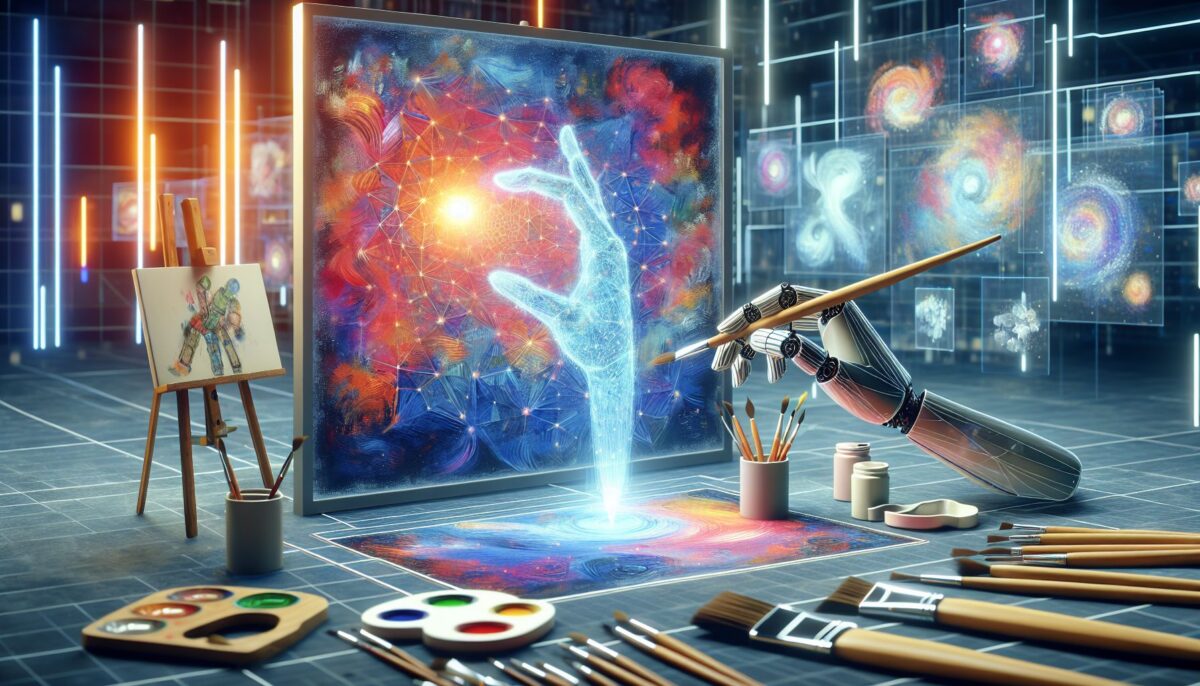
Hey tech enthusiasts! If you’ve ever watched an AI create artwork or compose music that actually moves you, you’re not alone. I’ve been thinking a lot about one of the most interesting developments in tech: how Artificial Intelligence is changing creative arts. We’re in this weird new world where machines aren’t just helping us out, they’re actually making art alongside us. Grab a comfy chair and let’s dig into this.
The Renaissance of AI in Arts
AI: The New Da Vinci?
About a decade ago, the idea of a computer creating art seemed like science fiction or, at best, a weird experiment. Fast forward to today, and we’ve got AI models producing paintings that sell for crazy money in prestigious galleries. Remember that AI-generated portrait that sold for $432,500 at Christie’s? That was just the beginning.
AI’s journey into the art world is like watching an eager apprentice. At first, it was all about copying existing styles. But now AI has developed its own approach, thanks to advanced machine learning algorithms. Models like OpenAI’s DALL-E and Google’s DeepDream aren’t just copying artistic styles anymore. They’re creating entirely new ones.
Why Does AI Make Art?
Okay, let’s get philosophical for a sec. AI doesn’t “want” to create art, at least not in the way a human does. It’s all zeros and ones for these systems. They have no hopes, dreams, or existential crises at 3 AM. But they process and analyze enormous datasets, learning patterns that let them generate new, often surprising, pieces of art. The key is still the human touch that programs these models and curates what comes out.
In many ways, AI works like a collaborator. It doesn’t replace the human artist but opens up creative possibilities that stretch human imagination in new directions.
The Impact of AI on Various Art Forms
Music That Strikes a Chord
If you think AI can’t rock a guitar solo, think again! AI is composing music that ranges from symphonic pieces to catchy pop tunes. Applications like Amper Music and AIVA let artists and even non-musicians create complex scores with a few clicks.
When AI gets in a groove, it analyzes patterns in music, learns about structures, and then gives new meaning to “playing it by ear.” This isn’t about replacing your favorite musician. It’s offering a completely new way to approach making music.
The Written Word
Don’t you just love a good story? Turns out, so do algorithms. AI isn’t just trying visual or musical arts. It’s also getting really good with words. OpenAI’s GPT-3 can write essays, stories, and even poetry that actually feels engaging. Publishing companies and indie blogging platforms are increasingly turning to AI for fresh content ideas.
But don’t worry, Shakespeare’s quill isn’t going anywhere. AI writing is a useful tool for brainstorming and refining ideas, working alongside human capacity for nuanced storytelling and emotional depth.
Opportunities & Challenges
Expanding Accessibility
One thing I really like about AI in creative arts is how it opens up who gets to be an artist. With AI making artistic tools more accessible, creating compelling art is no longer just for people who’ve spent years mastering a craft. Now, even someone like me with zero painting skills can take a shot and maybe, just maybe, create something worth hanging in the hallway.
The Ethical Quandaries
Before you get too excited about AI-generated art, there are some tricky ethical questions to work through. Who owns the copyright to an AI-generated masterpiece? The programmer, the AI, or the data it learned from? These are questions we’re all still figuring out, and honestly, the conversation is just getting started.
There’s also this lingering fear among artists of being replaced or undercut by algorithms. Here’s the thing though: human creativity can’t be replicated. AI is a tool, not a replacement.
Looking Ahead: The Bridge to a New Artistic Era
So, what’s next for AI and creative arts? I picture a world where artists and AI work together, where anyone can tap into their inner Picasso or Mozart with help from technology. It’s kind of an artistic dream scenario, and it feels like it’s actually happening.
We shouldn’t be afraid of this tech. Let’s embrace it instead. It offers so many unexplored creative possibilities. In my ideal world (and this is totally just speculation), we’ll see art exhibitions with human-AI collaborations, where you can walk through the gallery and wonder, “Was this made by a person or a machine?”
In the end, AI might not create art with the same emotional depth as humans, but it opens doors to completely new forms of expression. It’s like an artistic renaissance powered by silicon and human imagination.
That’s all for today’s look at AI and creative arts. Keep dreaming, keep creating, and don’t forget to share your thoughts in the comments below. Until next time, stay curious!
Further Musings
If you’re as excited as I am about this topic, stay tuned! I’ll keep documenting this artistic shift with stories, interviews, and maybe even some AI-generated art. Who knows? We might just discover the next big thing in technology and creativity. Cheers!
