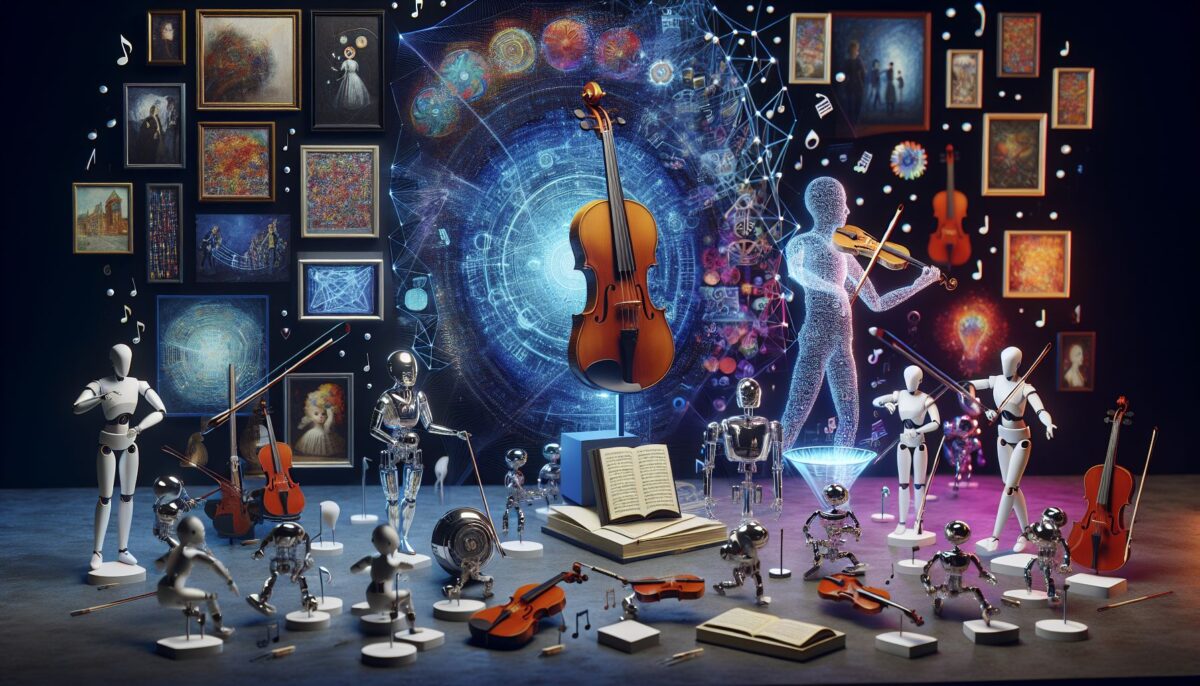
Howdy, fellow tech buffs and digital dreamers! Pull up a chair, grab yourself a mug of steaming coffee, and let’s talk about one of the most disruptive trends of our time: Artificial Intelligence in creative arts. Yep, you heard it right. We’re talking about machines that are painting canvases, writing symphonies, and even penning novels. It’s like having a mechanical muse that never sleeps.
The Rise of Creative Machines
Once upon a time, the idea of a computer creating art was something ripped straight from the pages of a science fiction novel. Fast forward to today, and it’s as real as that cat video your friend just sent you. Ever since OpenAI’s DALL-E started generating images from text descriptions, we’ve been watching an artistic shift happen in real time.
With a little bit of AI magic, anyone can now produce artwork that looks like it was crafted by a seasoned artist. It’s like Bob Ross meets The Matrix. Whether it’s generating Van Gogh-style sunflowers or a futuristic cityscape, AI is turning the art world on its head, and I’m here for it. AI-generated art is raising fascinating questions about creativity and authorship too. Suddenly, “artist” isn’t a title reserved for humans alone.
AI Hits the Right Notes
And it’s not just visual art. Our digital maestros are hard at work in the world of music too. AI composers are crafting symphonies that, while maybe a bit off-key now and then, are pretty impressive. Take Jukedeck as an example. This startup created an AI that composes royalty-free music.
Imagine this: you’ve got a vlog that needs some snazzy background music, but your budget is tighter than skinny jeans. Enter our friendly neighborhood AI, ready to churn out a groovy tune or a haunting melody, tailored just for you. It’s a game-changer for content creators looking to add a unique musical layer to their projects without breaking the bank. Even the legendary musician Brian Eno, himself a proponent of generative music, once hinted at AI’s potential to revolutionize composition.
Writers’ New Toolkit
Writers, listen up! You might want to put down that pen and notepad for a sec, because AI is here to lend a digital hand in the narrative department. I’m talking about tools like Sudowrite and Grammarly’s advanced AI writing assistant. They’re not just spelling and grammar checkers, folks. They’re like having a co-writer who’s fueled by silicon and caffeine.
These platforms can help punch up your prose, brainstorm plot twists, or even generate entire articles based on your prompts. It’s like having Shakespeare as your ghostwriter, only without the ruffled collar. We’re not exactly on the brink of replacing J.K. Rowling or Margaret Atwood, but these AIs can certainly help us mere mortals enhance our writing and kick-start creativity.
The Artists’ Perspective
Now, before you toss your art supplies out the window, breathe easy. Most artists I know aren’t exactly running scared. Instead, they’re embracing AI as a new brush in their digital palette. It’s a tool, another avenue for expression. Sure, an AI can replicate techniques, but the soul of art comes from the human experience. Machines still have a lot to learn about heart and soul, and that’s where we still lead the charge.
By taking the grunt work out of creating, AI can free artists to focus on the more nuanced aspects of their craft. Imagine an illustrator who doesn’t have to worry about drawing backgrounds, thanks to our techno-savvy assistants. They can channel all their energy into crafting characters with real depth instead.
Challenges and Ethical Concerns
Of course, it’s not all rainbows and paintbrushes. The introduction of AI into creative fields has sparked some serious debates. Who owns the rights to AI-generated art? Is it the programmer, the user, or the computer itself? And what about bias in AI algorithms? If it’s trained with existing data, AI could inadvertently perpetuate existing stereotypes or overlook emerging artistic styles altogether.
Then there’s the fear that AI could devalue human creativity. But let’s not sound the alarm just yet. Historically, every technological advancement in art has faced its share of skepticism. The camera was supposed to kill painting. Digital tools were going to ruin “real” art. Yet here we are, with more ways to create than ever before.
Looking Ahead
I find myself wildly optimistic about what’s coming next. AI, when regarded as a creative companion rather than a competitor, opens up new realms of possibility. Picture a future where anyone can create high-quality art or music with just a keyboard and a dream. Who knows, the next Picasso might not only wield a brush but also command a code.
In the words of the great poet David Bowie, who foresaw the merging of man and machine, “Tomorrow belongs to those who can hear it coming.” I don’t know about you, but I can’t wait to see where this creative evolution takes us next. Whether you’re a skeptic or a fan, one thing’s for sure: AI in the arts is a wild chapter still being written.
Until next time, keep creating and embracing the digital wonderland at our fingertips. Cheers to the mesh of human ingenuity and artificial intelligence, and the art that this combination makes possible.
