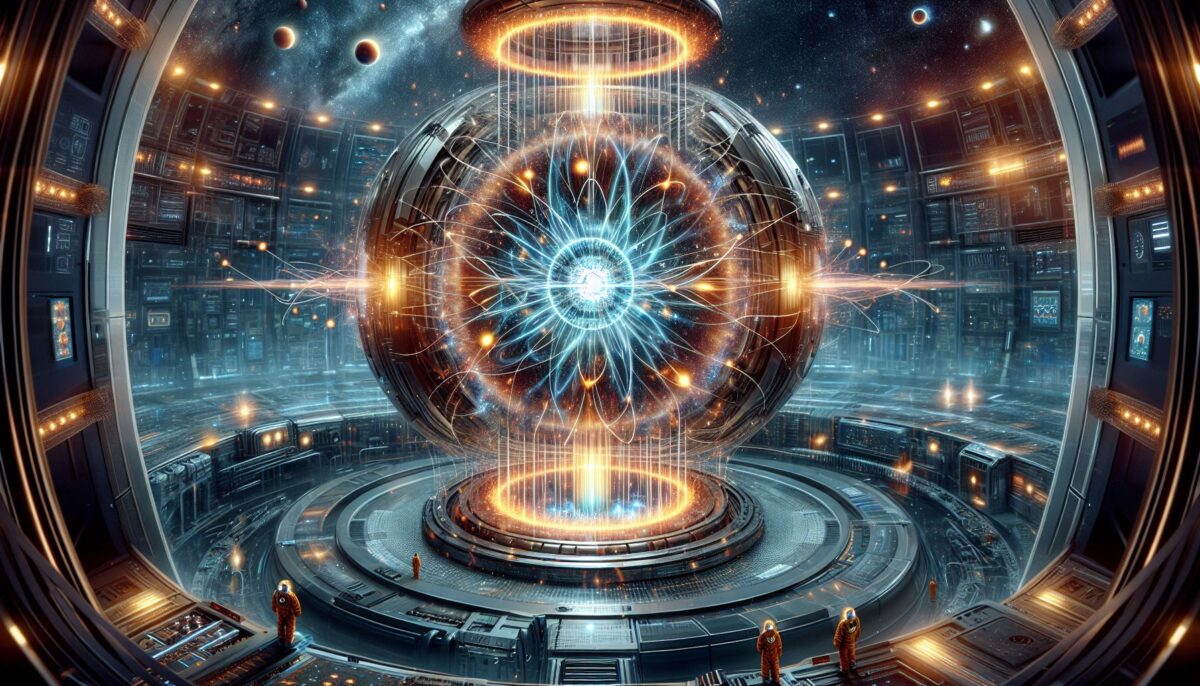
Hey folks! Buckle up, because today we’re diving into the electrifying world of nuclear fusion, where science fiction inches closer to science fact every day! As someone who’s followed the rollercoaster journey of fusion energy for years, I couldn’t help but feel a surge of excitement (pun intended) when I learned about the latest advancements in this field. Fusion energy isn’t just another futuristic concept, it’s the Holy Grail of sustainable energy. Imagine a world where our power is as limitless as our dreams. Too utopian? Let’s see!
What’s the Buzz About Nuclear Fusion?
First things first, why all the hype around fusion when we already have nuclear fission plants? Well, the main difference is how they generate energy. Fission splits heavy atoms (like uranium) apart, and while it’s effective, it comes with the not-so-ideal baggage of radioactive waste and potential for meltdowns. Fusion, on the other hand, fuses light atoms (think hydrogen) to form a heavier nucleus. This process occurs naturally in the heart of stars, including our Sun, and is what gives them their stellar energy (see what I did there?).
So why are scientists tirelessly chasing this sun in a bottle? The answer is simple: fusion could provide virtually unlimited, clean energy without the pesky long-lived radioactive waste. The fuel is abundant, primarily isotopes of hydrogen like deuterium and tritium, and it doesn’t produce greenhouse gases. Now you’re starting to see the allure, right?
Recent Breakthroughs: The Light at the End of the Tunnel
For a long time, fusion power seemed like one of those “always 30 years away” technologies. However, recent developments are reshuffling the cards.
The Power of Collaboration
The biggest headline-grabber is certainly ITER, the international mega-project involving 35 nations working together in a giant science potluck in Southern France. A significant progress point came when they successfully achieved “first plasma” in 2020, a milestone meaning they managed to control a plasma within the reactor. While full operational status is still in progress, this accomplishment signals the dawn of a new era.
But governments aren’t the only players in town. Startups like Commonwealth Fusion Systems and TAE Technologies are applying the innovative, break-the-mold thinking typical of today’s tech startups. Commonwealth Fusion Systems, for instance, recently announced a successful test of their HTS (High-Temperature Superconducting) magnets. These magnets are supposed to be lighter, cheaper, and more efficient than the traditional kind, potentially accelerating the timeline to functional fusion energy.
Breakthrough Technologies
There’s also some fascinating work happening in the realm of “on paper” designs being translated into reality. Machine learning algorithms from the likes of Google AI are predicting optimal configurations and conditions faster than traditional trial and error methods. Using artificial intelligence to simulate the reactions and control the complex physics of plasma is a game-changer.
Challenges: No Easy Task, But We’re Getting There
Of course, it’s not all sunshine and rainbows. There are significant hurdles to overcome, like achieving a net-positive energy output (meaning, we get more energy out than we put in) and doing so in a sustainable, repeatable manner. While experiments have successfully produced fusion reactions, they consume more energy than they’ve been able to produce so far.
Scratching the Surface of Safety
Then there’s the challenge of safety and containment. Making sure that the reaction is steady and can be safely stopped if necessary is paramount. It’s not just a matter of scientific concern; it’s essential for public acceptance too. The dreaded “nuclear” word bears a lot of baggage, after all. But experts are continually refining their reactor designs thanks to innovative materials and better understanding from ongoing research.
The Road Ahead: Future Outlook
So, where do I see nuclear fusion heading in the next couple of decades? If startups and governments continue their current trajectories, we might witness functional, grid-ready fusion reactors by the 2040s. Imagine the geopolitical implications: countries no longer being held ransom by fossil fuels, but instead contributing to a global grid of sustainable energy. Just for fun, picture a future John Oliver segment titled “The Joy of Not Being Beholden to Oil Barons Anymore.”
Are we living in a techno-utopian fantasy where climate change is solved by endlessly abundant, clean energy? Not yet. But in this fascinating field full of physicists, engineers, and dreamers, every breakthrough brings us closer to a more energy-secure future.
Let’s keep our eyes fixed on the horizon. And in the meantime, I’d love to hear your thoughts. Are you as jazzed about fusion’s potential as I am? Share your views, critiques, or even wildcard ideas in the comments!
Stay curious,
[Your Name]
