Personal essays, notes, and ideas worth sharing.

Category: Blogging (page 9 of 12)

The Beautiful Mess of Half-Finished Dreams

What My Project Graveyard Actually Taught Me

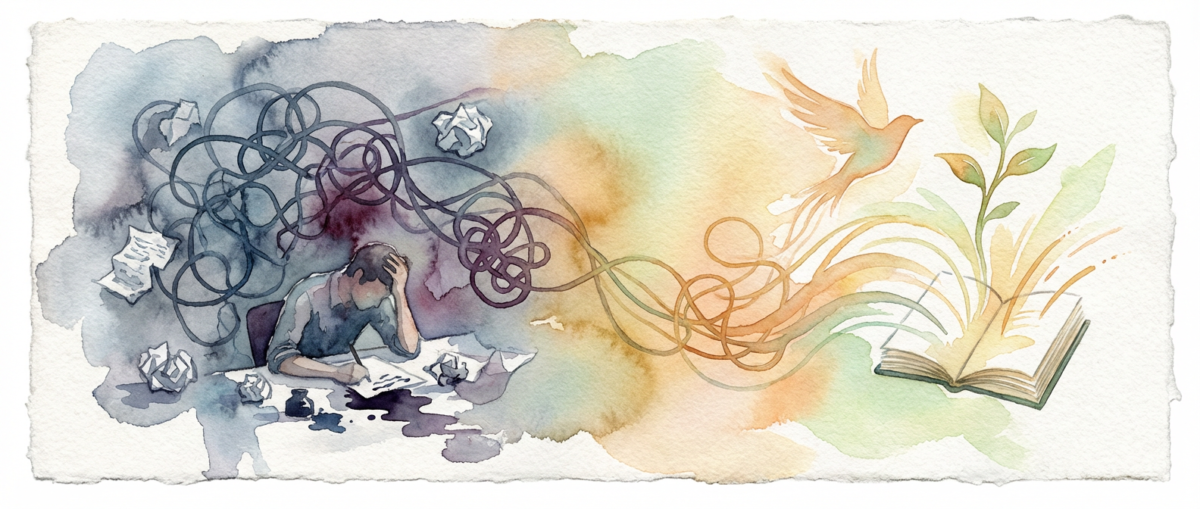
I’ve been staring at my “Creative Projects” folder for twenty minutes now, and honestly, it’s a bit overwhelming. There’s the half-written novel that petered out at chapter three when I realized I had no idea what my protagonist actually wanted. The watercolor series where I attempted to paint every sunset for a month but gave up after day twelve when they all started looking like orange smudges. The podcast I recorded exactly two episodes of before deciding my voice sounded terrible and my interview skills needed serious work.

The Beautiful Mess of Half-Finished Dreams

For the longest time, I thought this collection of abandoned experiments was evidence of my creative failure. Each unfinished project felt like a personal indictment, proof that I lacked the discipline and vision of “real” artists. But something shifted last month when I was helping my friend Sarah clean out her studio space. She pulled out box after box of what she called her “learning projects” — sculptures that didn’t quite work, paintings she’d painted over multiple times, sketches that never made it past the initial idea. “This is where the real work happened,” she said, holding up a lopsided ceramic bowl. “Not in the pieces that made it to galleries.”

That conversation made me realize I’d been looking at my creative experiments all wrong. These weren’t failures. They were my education. The novel taught me about character development by showing me what happens when you don’t have it. The watercolors revealed my impatience with detail work and my tendency to rush through the parts that felt difficult. The podcast experiment exposed my assumptions about what makes good conversation and forced me to confront my relationship with my own voice.

Illustration for The Beautiful Mess of Half-Finished Dreams

The Mythology of Creative Success

We’re fed this story that creative success looks like lightning strikes and overnight breakthroughs. The artist who painted their masterpiece in a burst of inspiration. The writer who penned their novel in three months of fevered productivity. The musician who wrote their hit song in their garage and changed everything. These stories are seductive because they make creativity feel magical and accessible, but they’re also incredibly damaging. They make the actual work of creative development feel like evidence of inadequacy.

The reality is messier and less photogenic. Real creative development happens in the space between ideas, in the experiments that teach you what doesn’t work, in the slow accumulation of skills that only reveals itself in retrospect. My friend Marcus spent two years learning to make furniture by building increasingly complex birdhouses. Not because he wanted to become the world’s premier birdhouse craftsman, but because each one taught him something about joinery, wood selection, and finishing techniques that he couldn’t learn any other way.

When I look at my own creative experiments, this makes perfect sense. The photography project where I tried to take one meaningful photo every day for six months taught me more about composition and light than any workshop could have, precisely because I had to work through so many terrible photos to occasionally stumble onto something good. The failure was the point, not an unfortunate byproduct.

What I’m Learning About Process Right Now

I’m in the middle of what I’m calling “The Great Collage Experiment of 2024.” It started when I found a box of old magazines at a yard sale and had the impulse to cut them up and see what happened. Three weeks in, I have about forty small collages scattered across my dining room table, and maybe three of them are what I’d call successful. The rest range from interesting failures to complete disasters.

But here’s what I’m noticing. The disasters teach me about color relationships in ways that the successful pieces never could. When I put that bright yellow next to the deep purple and it made my eyes hurt, I learned something visceral about complementary colors that I’d never internalized from reading about color theory. When I tried to incorporate text and it overwhelmed the visual elements, I discovered my own tendency to over-complicate things when I get excited about an idea.

I’m also learning about my creative rhythms. I work best in the late afternoon when the light is golden and I’m not trying to solve any major problems, just playing with shapes and textures. I need music, but not anything with lyrics that might compete with the visual processing happening in my brain. I work in bursts of twenty to thirty minutes before my decision-making gets cloudy and I start second-guessing every choice.

These insights feel small and personal, but they’re the foundation of everything else I’ll make. Understanding how I work best, what conditions support my creativity, and what my particular strengths and challenges are — this is the real curriculum of creative experiments.

The Permission to Begin Badly

One of the most liberating realizations has been giving myself permission to begin badly. Not just accepting that my first attempts won’t be perfect, but actively embracing the badness as necessary and valuable. There’s something powerful about starting a project with the explicit intention of making something imperfect, something that exists purely for the learning it will provide rather than the result it will produce.

This shift in mindset has changed everything about how I approach creative work. Instead of spending weeks planning and preparing and trying to anticipate every potential problem, I dive in with whatever materials I have available and see what happens. The collage project started with a pile of magazines and a pair of scissors. No grand vision, no artistic statement, just curiosity about what would emerge if I started cutting and pasting.

This approach has revealed creative possibilities I never would have discovered through planning alone. Some of my favorite collages happened when I ran out of the color I thought I needed and had to substitute something that initially felt completely wrong but ended up creating unexpected harmony. The constraints and limitations became generative rather than restrictive.

Building Your Own Laboratory

I’m starting to think of creative experiments as building a personal laboratory, a space where you can test ideas, try techniques, and gather data about your own creative process without the pressure of producing something market-ready or exhibition-worthy. The value lies in the exploration itself, in developing fluency with your materials and deepening your understanding of what resonates with you and why.

This doesn’t mean that everything you make in this laboratory will remain private or unpolished. Some experiments will grow into larger projects, some will inform future work in unexpected ways, and some will simply serve their purpose by teaching you something important and then be complete. The key is removing the pressure for every creative act to justify itself through external validation or commercial success.

Right now, I’m planning my next experiment: learning to make simple animations by creating one three-second loop every day for a month. Will any of them be good? Probably not. Will I learn something valuable about movement, timing, and digital tools? Almost certainly. Will I discover something about my own creative interests and working style that I can’t predict right now? I’m counting on it.

What creative experiment are you avoiding because you’re afraid it won’t be good enough? What would change if you gave yourself permission to make it badly, just to see what you could learn? I’d love to hear about your own creative laboratories and the beautiful messes you’re willing to make in service of discovery.

Your Project Failures Are More Valuable Than Your Successes (And You’re Wasting Them)

We’re Addicted to Success Stories That Teach Us Nothing

Every productivity blog, entrepreneurship podcast, and career advice column follows the same tired formula: find someone successful, ask them to reverse-engineer their journey, then package it as a roadmap anyone can follow. The result is an endless stream of sanitized success stories that skip over the most educational parts. We celebrate the entrepreneur who “changed direction three times before finding product-market fit” without digging into what those failed attempts actually looked like, what specific assumptions were wrong, or how they recognized when to quit.

Your Project Failures Are More Valuable Than Your Successes (And You're Wasting Them)
Your Project Failures Are More Valuable Than Your Successes (And You’re Wasting Them)

I’ve been tracking my own projects for six years now, and here’s what I’ve discovered: my failures taught me exponentially more than my successes ever did. When something works, you often can’t isolate why it worked. Was it timing? Luck? A hundred small decisions that happened to align? But when something fails, the cause-and-effect relationships become crystal clear. You can trace the exact moment when your assumptions crashed into reality.

The uncomfortable truth is that we’re culturally programmed to hide our failures and celebrate our wins. This means we’re systematically destroying our most valuable learning opportunities. We treat failure like a dirty secret instead of the rich data source it actually is. This isn’t just unhelpful, it’s actively sabotaging our ability to improve.

Illustration for Your Project Failures Are More Valuable Than Your Successes (And You're Wasting Them)
Illustration for Your Project Failures Are More Valuable Than Your Successes (And You’re Wasting Them)

The Anatomy of Useful Failure Analysis

Most people approach failure analysis like they’re performing surgery with a butter knife. They ask surface-level questions like “What went wrong?” or “What would I do differently next time?” These questions produce generic answers that sound insightful but offer no actionable intelligence. Real failure analysis requires forensic precision and uncomfortable honesty about your own blind spots.

When my content marketing agency collapsed after eighteen months, I spent weeks avoiding the real autopsy. I told myself it was market conditions, bad timing, or difficult clients. The actual failure analysis took three months and revealed something much more specific: I had systematically underestimated the time required for client education and change management. I was pricing projects based on execution time alone, ignoring the substantial overhead of helping clients understand what they actually needed versus what they thought they wanted.

This wasn’t a vague “communication issue” or “scope creep problem.” It was a precise mathematical error in my business model. I was allocating 20% of project time for education and consensus-building when the actual requirement was closer to 40%. This single insight completely changed how I approach any client-based work today. But I only discovered it by drilling down past the comfortable explanations to examine my actual assumptions and decision-making process.

The key is treating failed projects like airplane crashes. The aviation industry investigates every failure with obsessive detail because lives depend on learning from each mistake. Your career and creative projects deserve the same rigor, but most people perform the equivalent of glancing at the wreckage and shrugging.

Why Success Makes You Stupid (And Failure Makes You Smart)

Success is a terrible teacher because it reinforces whatever you were doing without clarifying what actually mattered. When something works, you assume all your decisions were correct, even though success often happens despite your mistakes, not because of your brilliance. This creates false confidence in strategies that may have contributed nothing to the outcome.

I spent two years convinced I was excellent at email marketing because one campaign generated spectacular results. I attributed this to my subject line creativity and timing strategy. When I tried to replicate those results across different audiences and contexts, I failed repeatedly. The original success had nothing to do with my supposed email expertise. The product I was promoting happened to solve an urgent, widespread problem at exactly the moment my audience encountered it. My timing wasn’t strategic, it was accidental.

Failure strips away these comforting illusions and forces you to confront reality. When something doesn’t work, you can’t hide behind correlation. You have to identify the actual cause-and-effect relationships that determine outcomes. This process is uncomfortable because it often reveals that your cherished strategies are ineffective or that you succeeded for reasons completely unrelated to your conscious efforts.

The cognitive benefit goes deeper than just correcting specific misconceptions. Failure analysis develops pattern recognition skills that success stories can’t teach. You start noticing early warning signs in new projects that mirror problems from previous failures. You become better at identifying when your assumptions are untested versus validated. Most importantly, you develop intellectual humility about what you actually know versus what you think you know.

The Practical System for Mining Gold from Your Disasters

Creating a useful failure analysis system requires more structure than most people realize. You can’t just think about what went wrong and expect meaningful insights. You need to document specific data points and force yourself through uncomfortable questions that surface your actual decision-making process.

Start by establishing your original assumptions explicitly. What did you believe about your audience, market, timeline, or required resources when you started? Write these down in concrete terms, not vague generalizations. For each assumption, identify what evidence you had supporting it and what evidence you ignored or dismissed. This reveals your confirmation bias patterns and helps you recognize when you’re making similar mistakes in current projects.

Next, map your decision points chronologically. When did you choose one direction over alternatives? What information were you using? What information was available but ignored? Where did you double down on failing strategies instead of changing course? This timeline often reveals that “sudden” failures actually had warning signs that you rationalized away or failed to recognize.

The final step is testing your insights against other projects. Do the same patterns appear in different contexts? Are you consistently overestimating your abilities in specific areas or underestimating certain types of challenges? This meta-analysis transforms individual failures into a comprehensive understanding of your systematic weaknesses and blind spots.

Building Your Failure Portfolio

The most successful people I know maintain what I call a “failure portfolio” alongside their traditional portfolios. They document their mistakes with the same care they use for their achievements. This isn’t masochistic self-flagellation, it’s strategic intelligence gathering that compounds over time.

My own failure portfolio includes detailed post-mortems of seven major project failures over the past decade. Reading through them reveals consistent patterns I never would have noticed otherwise. I consistently underestimate technical complexity, overestimate my ability to work effectively with certain personality types, and fall prey to the planning fallacy despite knowing about it intellectually. These insights have saved me months of wasted effort on subsequent projects.

The counter-intuitive benefit of maintaining a failure portfolio is that it actually increases your willingness to take intelligent risks. When you understand your failure patterns precisely, you can design projects that account for your known weaknesses or avoid situations where those weaknesses are likely to be fatal. This knowledge makes you more strategic about when and how you take risks, not more risk-averse.

Your failed projects are sitting there right now, full of insights that could transform how you approach everything going forward. The question is whether you’ll treat them as embarrassments to forget or as the most expensive education you’ll ever receive. What failure have you been avoiding analyzing, and what might you discover if you finally performed that autopsy?

The Thing About Personal Productivity Systems That Nobody Talks About

The Beautiful Mess of My Planning Evolution

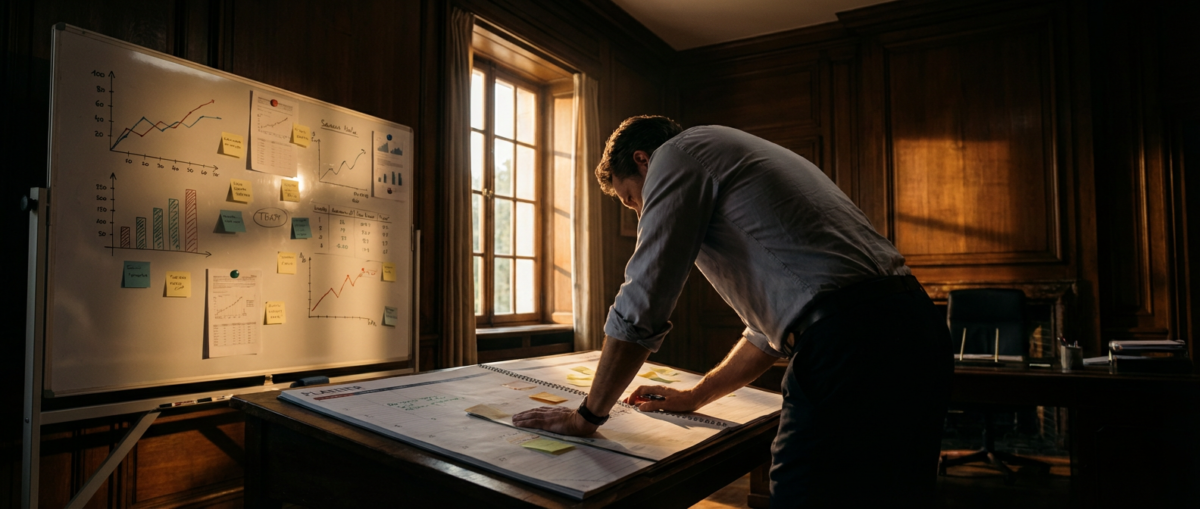
I’ve been staring at my desk for the past ten minutes, looking at three different planning systems scattered across it like archaeological layers of my productivity journey. There’s the leather-bound bullet journal from 2022, filled with elaborate habit trackers that I abandoned by February. Next to it sits my current digital task manager, which honestly works pretty well most days. And then there’s this weird hybrid notebook where I’ve been experimenting with something I can’t even name yet, part brain dump, part project tracker, part emotional processing space.

The Thing About Personal Productivity Systems That Nobody Talks About

This mess got me thinking about something I’ve noticed after years of building and rebuilding personal systems. We spend so much time talking about the perfect productivity method, the ideal app, the optimal morning routine. What we don’t talk about enough is the thing that actually makes or breaks any system: the relationship you have with it.

I realized this when I was explaining my current setup to a friend last week. She asked me why I switched from my perfectly functional bullet journal to a digital system, and then why I started adding this paper component back in. As I tried to explain it, I discovered something interesting about how my needs had shifted. Not just practically, but emotionally.

Illustration for The Thing About Personal Productivity Systems That Nobody Talks About

The Invisible Relationship Layer

Every productivity system is actually a relationship. Think about it. You interact with your planning method multiple times a day, every day. You rely on it to hold your thoughts, track your commitments, and guide your decisions. Like any relationship, it changes based on how you both show up.

My bullet journal phase taught me this the hard way. I loved the Instagram-worthy spreads and the satisfaction of hand-lettering my monthly goals. But after a few months, I noticed something subtle happening. I was spending more time making my journal look good than actually using it to get things done. The system that was supposed to support me had become a performance I was putting on for myself.

The digital switch fixed that problem but created a new one. I could capture and organize thoughts quickly, but I lost something tactile and reflective about the handwriting process. More importantly, my relationship with the digital system felt more transactional. I input tasks, I checked them off, but there wasn’t much space for the messy, non-linear thinking that often leads to my best insights.

That’s when I started noticing how my actual work patterns differed from what any single system could accommodate. Some days I need rapid task capture and execution. Other days I need space to think through complex problems. Sometimes I need accountability structure, and sometimes I need creative freedom. The relationship I needed with my productivity system was more complex than I’d realized.

The Adaptation Paradox

Here’s where it gets interesting: the moment you find a system that works perfectly, you start changing. Not the system. You. Your work changes, your priorities shift, your energy patterns adapt. What worked beautifully six months ago might feel constraining or irrelevant today.

I used to see this as a failure of the system, but now I think it’s actually a sign of growth. The goal isn’t to find the one perfect method that will work forever. The goal is to develop enough self-awareness and flexibility to recognize when something isn’t working anymore, and enough courage to experiment with alternatives.

This shows up in small ways that are easy to miss. Maybe you notice you’re avoiding your weekly review. Or you find yourself creating the same type of task over and over without making progress. Or you realize you’re using your system to procrastinate rather than create clarity. These aren’t signs that you’re bad at productivity. They’re signals that your needs have changed.

The trick is learning to pay attention to these signals without judgment. I spent way too long trying to force myself to stick with systems that had stopped working, convinced that the problem was my lack of discipline rather than a mismatch between my current needs and my current tools.

Building Systems That Breathe

The best productivity approach I’ve found isn’t actually a system at all. It’s a framework for designing systems that can change with you. Instead of committing to specific tools or methods, I’ve started thinking about the core functions I need and staying flexible about how I meet those needs.

For me, those core functions are: capturing thoughts quickly, processing them thoughtfully, tracking progress on meaningful projects, and creating space for reflection. How I do each of these has changed multiple times. But identifying these underlying needs has helped me make more intentional choices about my tools and methods.

This might look like using different approaches for different types of work, or changing your system with the seasons, or even running small experiments to test new ideas before committing fully. The key is building in permission to adapt rather than treating change as failure.

Right now, my weird hybrid approach is working because it acknowledges that I have different kinds of thinking and different kinds of work that need different kinds of support. My digital system handles the logistics: deadlines, recurring tasks, project coordination. My paper notebook handles the exploration: working through complex ideas, processing emotions about work challenges, sketching out possibilities.

The Ongoing Experiment

What I’m discovering is that the most sustainable relationship with productivity isn’t about finding the perfect system. It’s about developing the skills to design and redesign systems as you grow. This means getting comfortable with experimentation, learning to recognize your own patterns and preferences, and accepting that what works will continue to change.

I’m currently three months into my hybrid experiment, and I can already feel it starting to shift again. I’m noticing that I want more visual organization for my projects, and I’m curious about whether there’s a way to better connect my daily tasks with my longer-term goals. Rather than seeing this as instability, I’m treating it as useful data about what I need next.

The productivity industry wants to sell us the fantasy of the perfect system that will solve all our organizational challenges forever. But real productivity is messier and more personal than that. It’s about building a practice of paying attention to what’s working and what isn’t, staying curious about new possibilities, and having the courage to change course when needed.

I’m curious about your own productivity evolution. What systems have you tried and abandoned? What patterns have you noticed in what works for you versus what doesn’t? And what experiments are you currently running with your own approach to getting things done?

The Quarterly Check-In I Almost Skipped (And What I Found in the Wreckage)

The January Optimist vs. The December Realist

I almost didn’t do my quarterly review this time. December hit like a freight train of deadlines, holiday chaos, and that particular brand of exhaustion that comes from realizing you’ve been running on caffeine and good intentions for three months straight. The thought of sitting down with my goal-setting spreadsheet felt about as appealing as organizing my tax receipts while getting a root canal.

The Quarterly Check-In I Almost Skipped (And What I Found in the Wreckage)

But here’s the thing about quarterly reviews that nobody tells you in those glossy productivity articles: they’re not actually about celebrating your wins or flagging your failures. They’re about sitting with the uncomfortable truth of who you actually are versus who you thought you’d become by now. And sometimes that truth is messier than a toddler’s art project.

When I finally cracked open my Q4 goals last week, I found a document that read like fan fiction written by my January self. That person was going to meditate daily, launch two new income streams, read 15 books, and somehow also maintain perfect work-life balance. December me wanted to send January me a reality check along with a strong cup of coffee and a gentle pat on the head.

Illustration for The Quarterly Check-In I Almost Skipped (And What I Found in the Wreckage)

The Goals That Died Quiet Deaths

Let’s start with the casualties, because pretending they don’t exist is like trying to ignore a smoke alarm. My “daily meditation practice” lasted exactly 23 days before it got bulldozed by a client crisis that required me to work weekends. The morning routine I’d carefully crafted crumbled the first time I had to catch a 6 AM flight. And that ambitious content calendar I’d mapped out for my side project? It’s currently a very expensive bookmark in a notebook I haven’t touched since March.

The fitness goal was particularly brutal to revisit. I’d planned to run three times a week and do strength training twice. What actually happened was a lot of walking while talking on the phone and exactly four gym visits that I can document with certainty. The gym membership I bought in a fit of New Year enthusiasm has been getting more use as a very expensive identity card than as an actual access pass to fitness equipment.

But here’s what I’m learning about failed goals: they’re not character flaws, they’re data points. That meditation goal failed not because I lack discipline, but because I tried to bolt a 20-minute practice onto an already packed morning routine without removing anything else. The content calendar died because I underestimated how much energy my day job actually requires and overestimated how much creative juice I’d have left at 9 PM on a Tuesday.

The Unexpected Wins Hiding in Plain Sight

While I was busy mourning my meditation streak, something interesting was happening in the margins of my life. I started having better conversations with clients because I began asking different questions. Not because I’d planned it as a goal, but because a random podcast episode in July made me curious about how I was showing up in meetings. This led to stronger relationships, which led to two contract renewals I hadn’t expected.

I also accidentally became the person my friends call when they’re job hunting. Not because I set out to build a career coaching side hustle, but because I genuinely enjoy helping people think through their next moves. Three friends landed new positions this quarter after what started as casual coffee conversations. No revenue generated, no fancy certification earned, but something meaningful was definitely built.

The reading goal that I completely abandoned in favor of audiobooks during commutes turned into something better. Instead of racing through 15 books to hit an arbitrary number, I ended up deeply engaging with seven books that actually changed how I think about work and relationships. I took notes, had conversations about them, and applied concepts in real time rather than treating reading like a checkbox sport.

The Questions That Actually Matter

Traditional goal review asks “Did you hit your targets?” But I’m finding that question less useful than “What did you learn about how you actually operate?” Because it turns out I’m not the person who thrives with early morning routines, no matter how many productivity gurus swear by them. I’m the person who does my best creative work between 10 PM and midnight, when the house is quiet and my phone has stopped buzzing.

I’m also not the person who can maintain enthusiasm for abstract goals like “build a personal brand” or “increase networking.” But I am the person who will spend hours crafting a thoughtful response to someone’s LinkedIn question about career transitions because helping someone solve a real problem energizes me in a way that generic content creation never will.

The quarterly review that I almost skipped taught me that my actual patterns don’t match my aspirational ones, and that’s not a bug in my system. It’s a feature. Working with my natural rhythms instead of against them has made this quarter more sustainable than any previous three-month period, even though my goal completion rate looks terrible on paper.

Setting Up for Real Life, Not Fantasy Life

So what does Q1 look like for someone who’s learned to distrust their own January optimism? Smaller experiments with built-in reality checks. Instead of “meditate daily,” I’m trying “sit quietly for five minutes when I notice I’m rushing.” Instead of “launch a side business,” I’m committing to “help one person per month with their career questions and pay attention to what energizes me about those conversations.”

The fitness goal has been completely reframed. Rather than gym sessions I’ll inevitably skip, I’m building movement into things I already do. Walking meetings when weather permits. Taking calls while pacing around my office. Parking farther away when I’m running errands. Tiny stuff that doesn’t require superhuman discipline or a complete schedule overhaul.

I’m also building in what I’m calling “reality buffer zones.” If I think something will take an hour, I’m scheduling 90 minutes. If I want to try a new habit five times a week, I’m committing to three. This isn’t pessimism disguised as planning. It’s designing goals that account for the fact that I’m a human being operating in an unpredictable world, not a productivity robot running on optimal conditions.

Maybe you’re looking at your own quarterly review right now, feeling that familiar mix of disappointment and determination. If your goals look like mine, half-finished, completely abandoned, or morphed into something unrecognizable, you’re not broken. You’re just human. And sometimes the most valuable thing we can do is stop trying to optimize ourselves and start paying attention to who we actually are.

The Ugly Truth About Building Output-Focused Habits (And the System That Actually Works)

Why Most Habit Advice Falls Apart When You Actually Try It

I spent three years following every productivity guru’s advice about building habits, and here’s what happened: I built beautiful habit-tracking spreadsheets, downloaded seventeen different apps, and created elaborate morning routines that lasted exactly four days before falling apart spectacularly. The problem wasn’t my willpower or dedication. The problem was that most habit advice focuses on inputs (doing the thing) rather than outputs (getting the result).

The Ugly Truth About Building Output-Focused Habits (And the System That Actually Works)

Here’s the uncomfortable truth I learned after failing repeatedly: input-focused habits feel good because they’re predictable and measurable, but they don’t actually move you toward what you want to achieve. I was tracking “write for 30 minutes daily” while my manuscript sat unfinished. I was checking off “exercise 5x per week” while my fitness goals remained stagnant. I was optimizing for the habit itself rather than the outcome I wanted.

Output-focused habits flip this completely. Instead of committing to write for 30 minutes, you commit to producing 500 words. Instead of exercising for an hour, you commit to increasing your deadlift by five pounds this month. The shift from time-based to result-based thinking changes everything about how you approach consistency. And honestly? It’s messier and more effective than anything I’d tried before.

The Three-Layer System That Actually Stuck

After my spectacular failures with traditional habit systems, I developed what I call the Output Stack: three connected layers that focus on producing results rather than just showing up. The foundation layer is your Minimum Viable Output (MVO), the middle layer is your Process Experiments, and the top layer is your Review and Iterate cycle.

Your MVO is the smallest possible output that still moves you toward your goal. For writing, mine was 150 words of publishable content per day. Not 150 words of journaling or brainstorming, but actual sentences that could appear in a finished piece. For fitness, it was adding one rep to one exercise per week. The key is that your MVO must be output-focused and small enough that you can achieve it even on your worst days.

Process Experiments form the middle layer. This is where most people get it wrong. They try to find the perfect routine and stick to it forever. Instead, I treat everything as a two-week experiment. This week I’m testing whether I write better first thing in the morning or during my lunch break. Next week I might experiment with writing in different locations. The goal isn’t to find the one true way, but to build a toolkit of approaches that work in different circumstances.

The Review and Iterate cycle happens weekly, and it’s the most important part of the system. Every Friday, I look at what I actually produced (not how many days I showed up) and ask three questions: What output did I generate? What experiments helped or hindered that output? What do I want to test next week? This prevents the slow drift away from your goals that kills most habit systems.

When This System Works Best (And When It Doesn’t)

This approach is perfect for people who are tired of feeling busy without making progress, especially if you’re working on creative projects, skill development, or long-term goals where showing up isn’t enough. It works particularly well for analytical types who get frustrated with vague advice like “just be consistent.” If you like data, iteration, and seeing concrete evidence of improvement, you’ll love the clarity this system provides.

It’s also ideal if you have an irregular schedule or demanding life circumstances. Because you’re focused on output rather than specific time blocks, you can adapt to travel, busy periods at work, or family emergencies without feeling like you’ve broken your streak. I’ve maintained writing consistency through job changes, cross-country moves, and having a newborn because I was measuring results, not adherence to a rigid schedule.

However, this system isn’t for everyone. If you’re just getting started with a new skill and need to build basic familiarity through repetition, input-focused habits might work better initially. If you thrive on routine and find comfort in predictable daily rhythms, the experimental nature of this approach might feel chaotic. And if you’re dealing with mental health challenges that make any output feel overwhelming, starting with gentler, input-focused habits could be more appropriate.

The Messy Reality of Implementation

Let me be honest about what this actually looks like in practice, because the gap between theory and reality is where most systems break down. In my first month of output-focused habits, I missed my MVO six times, ran experiments that produced terrible results, and spent one entire week convinced the whole system was garbage. This is normal and expected, not a sign of failure.

The messiness comes from the fact that you’re constantly adjusting based on real data from your life rather than following someone else’s blueprint. Some weeks you’ll discover that your MVO was too ambitious and you need to scale it back. Other weeks you’ll find approaches that work so well you’ll want to immediately increase your targets. The temptation to optimize prematurely is enormous, but resist it. Give each experiment at least two weeks before making changes.

You’ll also face the psychological challenge of feeling less productive on days when you meet your MVO but don’t exceed it significantly. Our culture teaches us that more is always better, but output-focused habits work because they prioritize consistency over intensity. I’ve learned to celebrate the days when I write exactly 150 words just as much as the days when I write 1000, because both contribute equally to building the habit.

Your Next Two Weeks

If this resonates with you, start with one output-focused habit and commit to testing it for exactly two weeks. Choose something you’re already working on but not making the progress you want. Define your MVO by asking yourself: what’s the smallest amount of meaningful output I could produce every day for two weeks straight, even if everything else goes wrong?

Pick one process variable to experiment with during these two weeks. Maybe it’s the time of day, the tools you use, or the environment where you work. Track your actual output daily and resist the urge to track anything else. At the end of two weeks, evaluate based solely on whether you produced the results you wanted, not whether the process felt good or looked impressive to others.

I’d love to hear how your first experiment goes, especially the parts that don’t work as expected. The failures often teach us more than the successes, and I’m always collecting data on what makes these systems tick in real-world conditions. Drop me a line and let me know what you’re testing and how messy it gets.

The Creative Work Nobody Warns You About (And Why You Should Do It Anyway)

The Draft That Made Me Quit (For Exactly Three Days)

Last Tuesday, I deleted 3,000 words of what was supposed to be my breakthrough piece. Not moved to trash, not saved in a “maybe later” folder—deleted. Gone. I sat there staring at the blank document, wondering if I’d finally hit the wall that separates people who think they’re creative from people who actually are.

The Creative Work Nobody Warns You About (And Why You Should Do It Anyway)

This is the part of creative work that doesn’t make it into the Instagram posts or the success stories. The brutal math of effort versus output. The way inspiration feels less like lightning and more like trying to start a fire with wet matches. If you’re reading this because you’re considering diving deeper into creative work, writing, art, music, whatever calls to you, I want to tell you about the reality nobody mentions in those “follow your passion” TED talks.

Here’s what I’ve learned after fifteen years of published work, failed projects, and that one piece that went viral for all the wrong reasons: the unsexy, unglamorous parts of creative work aren’t obstacles to overcome. They are the actual work itself. And once you understand that, everything changes.

Illustration for The Creative Work Nobody Warns You About (And Why You Should Do It Anyway)

Why Your First Thousand Hours Will Feel Like Fraud

Every creative person I know has what I call “fraud season.” That extended period where you’re producing work but it feels like elaborate pretending. You’re writing stories that sound like pale imitations of writers you admire. You’re painting landscapes that look like someone described a Bob Ross tutorial over a bad phone connection. This isn’t failure. This is apprenticeship, and it’s supposed to feel uncomfortable.

I spent two years writing short stories that read like literary Mad Libs. Same emotional beats, same carefully crafted “meaningful” endings, same desperate attempt to sound profound. My writing group was polite. My rejection letters were form letters. I was learning craft by copying it, badly, until something shifted. Not overnight, not dramatically, but like developing film in a darkroom. Slowly, then all at once, my actual voice started emerging from the chemical bath of influence and practice.

The antidote to fraud season isn’t confidence or talent. It’s volume. Write bad poems until you accidentally write a decent one. Paint ugly portraits until you understand how light actually works. Create terrible music until your ear develops enough to hear what terrible actually sounds like. The fraud feeling doesn’t disappear because you get better. It disappears because you get comfortable with making bad things on purpose, as research for making good things by accident.

The Economics of Creative Rejection (And Why It’s Actually Good News)

Let me share some numbers that will either terrify you or liberate you. In my first five years of submitting work: 247 rejections, 18 acceptances, and approximately $340 in payment total. That’s $18.89 per acceptance, or about 73 cents per hour if you calculate the time invested. Objectively, this makes no financial sense. Subjectively, it was the best education I never paid for.

Rejection in creative work operates on different math than rejection in dating or job applications. In those contexts, rejection suggests fundamental incompatibility or inadequacy. In creative work, rejection is market research. That story idea that got rejected fifteen times before finding a home? It wasn’t a bad story. It was a particular story looking for particular readers, and most publications weren’t those readers.

The economic reality of creative work isn’t that it pays poorly, though it often does. It’s that it pays inconsistently. You’ll have months where everything you touch turns to gold and months where you wonder if you’ve forgotten how to make anything good. Learning to work consistently through both seasons is the difference between people who dabble in creativity and people who build creative lives.

What Actually Happens When You “Follow Your Passion”

Following your passion sounds romantic until you realize passion isn’t a GPS. It’s more like a weather pattern. Some days it’s sunny and clear, some days it’s raining sideways, and some days there’s no weather at all. The mythology of passion suggests it will sustain you through difficulty, but what actually sustains you is building systems that work even when passion doesn’t show up.

I write every morning from 6 to 8 AM, not because I’m always inspired at 6 AM, but because I’ve learned that inspiration is more likely to visit a writer who’s already writing. My best ideas come in the middle of drafts, not before them. My breakthrough insights happen during the process, not in preparation for it. Passion is the spark, but craft is the engine, and craft only develops through repetition that often feels mechanical.

The unglamorous truth about following your passion is that it leads you to discipline. You follow passion long enough and you discover that what you actually love isn’t the moment of creation. It’s the accumulated satisfaction of having created, consistently, over time. You love having written more than writing. You love having painted more than painting. And that’s not settling or compromise. That’s the real thing.

The Permission You Don’t Need (But Should Give Yourself Anyway)

If you’re waiting for permission to call yourself a writer, artist, or musician, you’re going to be waiting forever. There’s no licensing board for creativity, no certification process, no moment when someone official hands you a badge that says “Real Creative Person.” You become a writer by writing, regularly and with intention. You become an artist by making art, including art that doesn’t work. The title comes from the practice, not the other way around.

But here’s the permission I think you actually need: permission to be bad at it for a while. Permission to make work that doesn’t match your vision. Permission to feel frustrated and confused and like you’re not improving fast enough. These aren’t signs you’re not cut out for creative work. These are signs you’re doing creative work.

The creative life isn’t for everyone, and that’s not elitist gatekeeping, it’s honest assessment. It’s for people who find meaning in the process itself, who get energized by problems that don’t have obvious solutions, who are willing to trade certainty for possibility. If that sounds like you, if you’re already making things and want to make them better, if you’re curious about what you might discover about yourself through sustained creative practice, then welcome to the most challenging, frustrating, occasionally transcendent work you’ll ever love.

I’m still figuring this out too, still writing drafts that don’t work, still learning what my voice actually sounds like when I’m not trying so hard. If you’re just starting this journey or thinking about starting, I’d love to hear what you’re working on and what questions you’re wrestling with. The creative life is solitary work made bearable by shared experience.

The Creative Routine That Broke Down in March (And What I Built From the Wreckage)

When My Morning Pages Met Reality

I had it all figured out in January. Wake up at 6 AM, write three pages longhand, coffee, then straight into deep work until lunch. The routine felt bulletproof for exactly 73 days. Then my daughter got sick, my partner’s work schedule shifted, and suddenly my precious morning ritual became a source of guilt rather than fuel. I’d catch myself at 10 AM, still in pajamas, staring at a blank notebook and feeling like I’d already failed the day.

Here’s what nobody tells you about building creative routines: they’re not fragile because you lack discipline. They’re fragile because life is a moving target, and what works in winter doesn’t always survive spring. The real challenge isn’t creating the perfect routine. It’s building something that can actually bend without snapping.

The Myth of the Unbroken Chain

For months, I’d been tracking my creative habits in a simple notebook, marking X’s for completed sessions like Jerry Seinfeld supposedly did with joke-writing. The chain grew longer, and I felt smugly accomplished. Then March happened, and suddenly my neat rows of X’s looked like a broken fence. I spent two weeks trying to restart the exact same routine, failing each time, convinced I’d lost some creative spark I couldn’t get back.

The breakthrough came when I stopped trying to rebuild the old routine and started asking different questions. Instead of “How do I get back to my 6 AM writing?” I wondered “What does creative work actually need from me right now?” The answer surprised me: consistency of attention, not consistency of schedule. Some days that meant voice memos during my commute. Other days it was fifteen minutes of sketching while dinner cooked. The work got done. Just not when or how I’d planned.

I started tracking inputs instead of outputs. Rather than marking “wrote 500 words,” I noted “spent 20 minutes with project.” This shift removed the pressure to produce and refocused me on just showing up. Even on days when I only managed to read a few pages of research or jot down a single idea, the X still went on the calendar. The chain stayed intact. It just looked different than I’d expected.

The Equipment That Actually Mattered

My desk setup used to be elaborate: specific pens, particular notebooks, the right lighting, a certain playlist. When my routine crumbled, so did my attachment to these tools. Suddenly I was writing in waiting rooms on my phone, sketching on napkins, recording ideas while walking the dog. The constraints forced creativity, and I discovered something liberating: the work cared less about my environment than I did.

Now my creative toolkit fits in a small bag. A single notebook that works for everything from grocery lists to project planning. A pen I can buy at any drugstore. My phone with a simple voice recorder app. This isn’t minimalism for its own sake. It’s practicality born from failure. When your routine can collapse overnight, you need tools that travel light and set up fast.

The most important piece of equipment turned out to be a kitchen timer. Not a fancy productivity app or a meditation bell. Just a cheap plastic timer from the dollar store. Twenty minutes became my default creative session. Short enough to fit into almost any day, long enough for meaningful work. I stopped romanticizing four-hour writing marathons and started celebrating the accumulated power of brief, focused bursts.

What Flexibility Really Costs

Adaptive routines come with a price that productivity blogs rarely mention: decision fatigue. When your schedule is rigid, you don’t have to think. When it’s flexible, every day requires micro-decisions about when, where, and how to work. Should I write now or after lunch? Voice notes or text? This project or that one? The mental overhead is real, and some days the choosing exhausts me before I begin.

I’ve developed shortcuts to minimize this tax. Three preset creative sessions: Morning Burst (20 minutes, whatever’s urgent), Afternoon Deep Dive (60 minutes, focused project work), and Evening Cleanup (10 minutes, organizing notes and planning tomorrow). I don’t do all three every day, but having the options removes the decision paralysis. When life gets chaotic, I default to Morning Burst. When I have space, I reach for Afternoon Deep Dive.

The other cost is the loss of ritual. There’s something powerful about always writing in the same chair, with the same coffee, at the same time. Flexibility sacrifices that psychological trigger for practical sustainability. Some days I miss the ceremony of it, the way routine can feel like putting on work clothes for the mind. But I’ve found new rituals in the transitions themselves: the moment I open my notebook, the first sip of whatever I’m drinking, the pause before I begin.

The Questions I Ask Now

Instead of planning elaborate creative schedules that look impressive but crumble under pressure, I’ve started designing around disruption. Each week, I ask myself three questions: What’s the minimum viable creative work I can commit to? What would have to break for even that to become impossible? What’s my backup plan for that scenario?

This isn’t pessimistic planning. It’s realistic preparation. Last month, when I traveled for work, I knew my normal routines wouldn’t survive airports and hotel rooms. Instead of pretending they would and feeling guilty when they didn’t, I planned a travel-specific version: voice memos during layovers, reading during flights, fifteen minutes of journaling each evening no matter how tired. The work continued, adapted but unbroken.

The hardest lesson has been accepting that sustainable creative routines look boring from the outside. They’re not Instagram-worthy morning rituals or impressive displays of discipline. They’re messy, practical, and often invisible. But they’re also stronger under stress rather than weaker. So what does your creative work actually need to survive the unpredictability of real life, not just the fantasy of perfect conditions?

The Thing About Career Pivots Nobody Talks About: They Start Way Before You Think They Do

The Moment I Realized I’d Already Started

I was sitting in my car after another soul-crushing marketing meeting when it hit me. Not the lightning bolt moment of “I need to change careers”—that had happened months earlier. This was different. I realized I’d been unconsciously preparing for my pivot to UX design for almost two years before I even admitted I wanted out of marketing.

The Thing About Career Pivots Nobody Talks About: They Start Way Before You Think They Do

The evidence was everywhere once I started looking. Those random design articles I’d been bookmarking “for later.” The way I’d volunteered to redesign our team’s presentation templates when nobody asked me to. How I’d somehow become the person colleagues came to when they needed help making their slides “look better.” I’d been testing the waters of a new career while still fully committed to my old one, and I hadn’t even noticed.

This discovery completely changed how I think about career transitions. Most pivot stories focus on the dramatic moment of decision, the leap of faith, the before and after. But the real story happens in that murky middle ground where you’re neither here nor there, where you’re quietly experimenting with becoming someone new while still showing up as who you’ve always been.

Illustration for The Thing About Career Pivots Nobody Talks About: They Start Way Before You Think They Do

The Stealth Phase of Career Change

I started paying attention to other people’s pivot stories differently after this realization. When my friend Sarah told me about her move from finance to photography, I asked her about the time before she “decided” to make the switch. Turns out, she’d been taking photos obsessively for three years. Had already built a small client base. Was spending every weekend at photography meetups. Her “sudden” career change had been brewing for longer than some people spend in their entire first jobs.

My neighbor Tom’s transition from corporate law to woodworking followed the same pattern. Before he ever set foot in a workshop class, he’d been watching YouTube tutorials for months, had reorganized his garage twice to make space for theoretical tools, and couldn’t stop talking about joinery techniques at dinner parties. The career pivot everyone saw as impulsive was actually the end result of a very long, very thorough exploration process.

What struck me most was how none of us recognized this stealth phase while we were in it. We weren’t consciously preparing for career changes. We were just following curiosity, scratching itches, solving problems that felt interesting. The pivot mindset came later, once we had enough evidence that this new thing might actually work.

When Side Interests Become Something More

The tricky part about this stealth phase is figuring out when a hobby or side interest has crossed the line into something that could become a career. I’ve had dozens of passing fascinations over the years that never went anywhere. I went through a brief obsession with urban beekeeping that lasted exactly until I got stung for the first time. There was my short-lived attempt to learn pottery that ended when I realized I have absolutely no patience for centering clay.

But the UX design interest felt different from the beginning, though I couldn’t explain why at the time. It wasn’t just that I enjoyed it—I enjoyed beekeeping too, until I didn’t. I kept coming back to it without forcing myself to. When I had twenty minutes between meetings, I’d find myself sketching wireframes. When I couldn’t sleep, I’d read about user research methodologies. When friends complained about frustrating apps or websites, I’d automatically start thinking about how to fix the experience.

The biggest indicator, though, was that I started seeing my regular job through this new lens. I began noticing every friction point in our internal systems, every time a colleague struggled with a poorly designed interface, every opportunity to make something work better for the humans using it. My marketing work hadn’t changed, but I was experiencing it completely differently because I was developing new eyes for problems and solutions.

The Messy Reality of Testing Waters

Once I recognized that I was already in the middle of a potential career transition, I decided to get more intentional about it. This is where every career change article tells you to “start building your skills” and “create a portfolio,” as if it’s a neat, linear process. The reality was much messier and way more uncertain than that.

I signed up for online courses and promptly fell behind in half of them. I joined design communities and felt like an imposter lurking in conversations where everyone seemed to know what they were talking about. I attempted to redesign terrible websites as practice projects, but most of my early attempts were also terrible, just in different ways. I reached out to working designers for informational interviews and got ignored by about 70% of them.

But here’s what nobody tells you about this phase: the failures and false starts are actually data. Every abandoned course taught me something about how I learn best. Every awkward networking conversation helped me figure out what questions to ask next time. Every terrible design attempt showed me exactly where my skills needed work. I wasn’t failing at becoming a UX designer. I was learning how to become one, which turns out to be a completely different process than I expected.

The breakthrough came when I stopped trying to prove I was already ready and started getting curious about what ready might look like. Instead of hiding my beginner status, I started leading with it. I asked if I could shadow user research sessions at work, explicitly as someone trying to learn. I offered to help with small design projects for friends’ side businesses, making it clear that I was practicing, not positioning myself as an expert.

What I Actually Learned About Career Pivots

The conventional wisdom about career changes focuses on the moment of decision and the steps that follow. But most successful pivots I’ve observed start much earlier, in that unconscious exploration phase where you’re just following what feels interesting. The people who navigate career transitions best seem to be the ones who get comfortable with this extended period of not knowing, of trying things without immediately needing them to become something bigger.

My marketing-to-UX transition took almost three years from first unconscious stirring to actually changing job titles. That felt impossibly slow while I was living it, especially when I’d read about people who seemed to make dramatic career switches in a matter of months. But looking back, I needed that time. Not just to build skills, but to build confidence in my own judgment about what kind of work energized me and what kind of problems I wanted to spend my days solving.

The most valuable part of the process wasn’t any particular course I took or portfolio piece I created. It was learning to pay attention to my own patterns of engagement and curiosity. Once I developed that skill, I could trust myself to navigate not just this career transition, but whatever changes might come next.

I’m curious about your own experience with career changes, planned or accidental. Have you noticed this stealth exploration phase in your own story, or in the stories of people around you? What signs have you learned to watch for when a side interest might be trying to become something more?

Why I Ditched Annual Resolutions for Quarterly Reviews (And You Should Too)

The Great Resolution Graveyard of January 15th

Let me paint you a familiar picture: It’s January 3rd and I’m sitting at my kitchen table with a fresh notebook, three different colored pens, and the unshakeable conviction that this year will be different. I’m mapping out twelve months of transformation with the confidence of someone who has never met themselves before. Fast forward to mid-January, and that same notebook is buried under a pile of bills while I’m stress-eating leftover Christmas cookies and wondering why I thought I could completely overhaul my life in 365 days.

Sound familiar? Here’s what I learned after years of spectacular January failures: the problem wasn’t my goals, it was my timeline. Annual goal setting is like trying to navigate a cross-country road trip with a map from 1987 and no GPS. Too much can change, too much goes wrong, and by the time you realize you’re lost, you’re so far off course that starting over feels impossible.

This is why I want to tell you about quarterly goal setting and review. Not because it’s trendy or because some productivity guru told me to, but because it genuinely changed how I approach getting things done. If you’re someone who starts strong but fizzles out, who has great intentions but terrible follow-through, or who’s tired of feeling like a failure every February, this system might be exactly what you need.

The Magic of Three-Month Chunks

Quarterly goal setting works because three months is the sweet spot of time management. It’s long enough to make meaningful progress on something substantial, but short enough that you can actually hold the entire timeline in your head. When I tell myself I’m going to write a book this year, my brain immediately goes into overwhelm mode and starts calculating word counts and publication timelines. When I tell myself I’m going to write 30,000 words in the next three months, suddenly my brain shifts into problem-solving mode and starts figuring out what that looks like per week.

The quarterly system also acknowledges something that annual planning completely ignores: you’re going to change. The person you are in January has different energy, different priorities, and different circumstances than the person you’ll be in July. Quarterly reviews let you course-correct based on who you actually are and what’s actually happening in your life, not who you thought you’d be when you were high on New Year’s optimism.

I started using this system three years ago after a particularly brutal year where I accomplished approximately none of my ambitious January goals. Now, looking back at my quarterly reviews, I can see steady progress across areas that matter to me, along with honest acknowledgments of what didn’t work and why. The difference isn’t that I became more disciplined overnight. The difference is that I gave myself permission to be human and built that humanity into the system.

How to Actually Do This (The Messy Truth)

Here’s how quarterly goal setting works in practice, including all the parts that don’t look good on Instagram. At the end of each quarter, I block out about two hours to do a review. This isn’t some zen meditation session. It’s me sitting at my desk with coffee and probably some kind of snack, honestly looking at what happened over the past three months.

I start with celebration, because this is crucial and something I used to skip entirely. I write down everything I accomplished, no matter how small. Finished that online course? Goes on the list. Finally organized the junk drawer? Also goes on the list. Had that difficult conversation with my boss? Definitely goes on the list. This isn’t about being impressive. It’s about being accurate. You accomplished more than you think you did, and acknowledging that creates momentum for the next quarter.

Then comes the harder part: honest look at what didn’t work. Not self-flagellation, not shame spirals, just clear-eyed analysis. Did I not exercise consistently because I hate the gym, or because I scheduled workouts at 6 AM despite being decidedly not a morning person? Did I not write regularly because I lacked motivation, or because I never actually blocked time for it in my calendar? This is detective work, not a character assassination.

Finally, I set goals for the next quarter based on what I learned. These goals are specific, time-bound, and usually number between three and five. Any more than that and I’m setting myself up for the same overwhelm that annual planning creates. I write them down by hand because something about the physical act makes them feel more real, though I know plenty of people who swear by digital systems.

The Uncomfortable Truth About Goals That Actually Stick

Here’s what nobody tells you about goal setting: the goals that actually happen are usually smaller and more boring than the ones you initially want to set. When I started quarterly planning, I wanted to set goals like “build a successful side business” or “get in the best shape of my life.” The goals that actually worked were things like “send one cold email per week for twelve weeks” or “go to yoga class every Tuesday for three months.”

The unsexy truth is that sustainable goals are almost always about consistency rather than intensity. They’re about showing up regularly rather than showing up perfectly. This was hard for me to accept because it felt like I was aiming lower, but what I discovered is that consistent small actions compound in ways that sporadic big efforts never do.

The other thing about quarterly goals is that some of them will fail, and that’s actually part of the system working correctly. Last quarter, I set a goal to read twelve books in three months. I read four. But here’s what the review process revealed: I was choosing books that felt like homework rather than books I actually wanted to read. So this quarter, my goal is to read six books that I’m genuinely excited about. That’s information I wouldn’t have had without the failure and the review.

Who This Works For (And Who It Doesn’t)

Quarterly goal setting is particularly powerful if you’re someone who gets paralyzed by big, long-term thinking. If annual planning makes you feel overwhelmed before you even start, or if you find yourself abandoning goals because they feel too abstract or too far away, the three-month framework might be exactly what you need. It’s also great for people who like to see progress but struggle with the delayed gratification of yearly goals.

This system works well if you’re in a season of life where things change frequently. New parents, people changing careers, students, or anyone dealing with major life transitions will find that quarterly check-ins let them adjust course as their circumstances shift. It acknowledges that flexibility isn’t the enemy of goal achievement. It’s actually essential to it.

However, if you’re someone who thrives on massive, long-term vision and finds shorter timelines limiting rather than focusing, this approach might frustrate you. Some people genuinely work better with the expansiveness of annual planning, and that’s perfectly valid. The key is knowing yourself well enough to choose the system that matches your actual working style, not the one you wish you had.

I’m curious about your experience with goal setting. Do you find yourself stuck in the annual resolution cycle, or have you discovered other approaches that work better for your life? If you decide to try quarterly planning, I’d love to hear how it goes. The best part about this system is that it’s forgiving enough to experiment with, and three months from now, you’ll have real data about whether it’s worth continuing.

Your “Failed” Projects Are Actually Your Best Teachers (And You’re Probably Ignoring Them)

We Celebrate Success Stories Because They’re Easier to Stomach

Here’s what nobody wants to admit: we’re addicted to success porn. Every blog post, every case study, every conference talk focuses on the triumphant moment when everything clicked. The overnight sensation that took ten years. The pivot that saved the company. The breakthrough that changed everything.

But here’s the uncomfortable truth I’ve learned after watching my own projects crash and burn more times than I care to count: your failures teach you more in six months than your successes will teach you in six years. Yet we treat failed projects like embarrassing relatives at a family reunion. We acknowledge they exist, maybe share a sanitized version for humility points, then quickly move on to what worked.

I spent three years building a community platform that never gained traction. Not “slow growth that eventually picked up” but genuine, spectacular failure. Twelve users total after eighteen months of effort. The conventional wisdom says I should extract a few palatable lessons, frame it as “market validation,” and move on. Instead, I want to argue that this failure was worth more than any success I’ve had since. Not because it led to something better (though it did), but because failure strips away all the noise and shows you exactly what you don’t know.

Failure Reveals Your Actual Decision-Making Process

Success stories are unreliable narrators. When things work out, we retrofit logical explanations onto what was probably a messy combination of timing, luck, and half-decent decisions. We convince ourselves we saw it coming all along. But failure? Failure is a brutal fact-checker that exposes every assumption you didn’t realize you were making.

That community platform I mentioned taught me I had been making decisions based on what I thought should work rather than what my actual users needed. I spent months building features that made perfect sense in my head but solved problems that existed nowhere except in my own wishful thinking. Success would have let me continue believing my intuition was reliable. Failure forced me to confront the fact that I had been operating on gut feelings dressed up as strategy.

The most valuable lesson wasn’t “validate your ideas earlier” or any other startup platitude. It was recognizing that my decision-making process was fundamentally broken. I was optimizing for feeling productive instead of being effective. I was solving problems that would make me feel clever rather than problems that would make users grateful. No amount of success would have revealed this pattern because success would have validated the very thinking that was actually holding me back.

The Mythology of “Failing Fast” Misses the Point Entirely

Silicon Valley gave us “fail fast,” and like most Silicon Valley wisdom, it sounds profound until you try to actually apply it. The problem isn’t the speed of failure. The problem is that we’re not actually learning from our failures because we’re too busy trying to fail fashionably.

Real failure isn’t fast. It’s slow and uncomfortable and messy. It’s watching your carefully laid plans dissolve over months while you desperately try fixes that don’t work. It’s the growing realization that the thing you’ve been pouring your energy into might be fundamentally wrong. Fast failures are just experiments. Slow failures are education.

I’ve watched people run dozens of “lean startup” experiments, failing fast and pivoting quickly, without ever sitting with their failures long enough to understand what went wrong. They collect failure badges like merit patches, but they’re not actually learning because they’re not letting themselves feel the full weight of what didn’t work. They’re treating failure like a networking event instead of a masterclass.

The real value comes from the failures that hurt. The ones where you invested enough time and energy and hope that the collapse actually teaches you something about yourself. Those teach you not just what doesn’t work in the market, but what doesn’t work in your approach to problems. That’s where the actual education lives.

Your Failed Projects Are a Mirror, Not Just Data Points

This is the part that makes people uncomfortable: your failed projects aren’t just market feedback. They’re a reflection of how you think, how you prioritize, how you make decisions under uncertainty. They reveal your blind spots, your biases, your secret fears about what you’re actually capable of.

That community platform failure taught me I was afraid of talking to users because I was terrified of hearing that my ideas weren’t as brilliant as I hoped. So I built in isolation, convincing myself I was being efficient when I was actually being cowardly. The project failed not because the market wasn’t there, but because I was too scared to find out what the market actually wanted.

Every failed project since then has revealed something similar. The mobile app that never launched because I kept adding “just one more feature” taught me I was using perfectionism to avoid the vulnerability of putting imperfect work into the world. The consulting business that never gained traction taught me I was pricing based on my own insecurities rather than the value I was providing. The online course that sold three copies taught me I was creating what I wished existed rather than what my audience actually needed.

These weren’t market failures. They were personal failures disguised as market failures. The market was fine. My approach to the market was broken. Success would have let me continue believing the market was the variable. Failure forced me to confront the fact that I was the variable.

The Uncomfortable Truth About Learning From Failure

Here’s what I wish someone had told me earlier: learning from failure isn’t about extracting lessons and moving on. It’s about sitting with the discomfort long enough to understand what it’s trying to teach you about yourself. Most people rush through this part because it’s genuinely unpleasant. But the discomfort is the point.

The projects that succeeded taught me tactics. The projects that failed taught me strategy. More importantly, they taught me the difference. Success validates what you already believe about yourself and your approach. Failure challenges everything you thought you knew and forces you to rebuild from more honest foundations.

I’m not suggesting you should seek out failure or celebrate it when it happens. Failure sucks, and anyone who tells you otherwise is selling something. But if you’re going to fail anyway (and you are, because everyone does), you might as well extract every ounce of education from the experience. That means being honest about what went wrong, uncomfortable about what it reveals about your thinking, and patient enough to let the lessons sink in before rushing to the next thing.

What failure has taught you that success never could? I’m genuinely curious about your own experiences with projects that didn’t work out as planned, and what you discovered about yourself in the process.