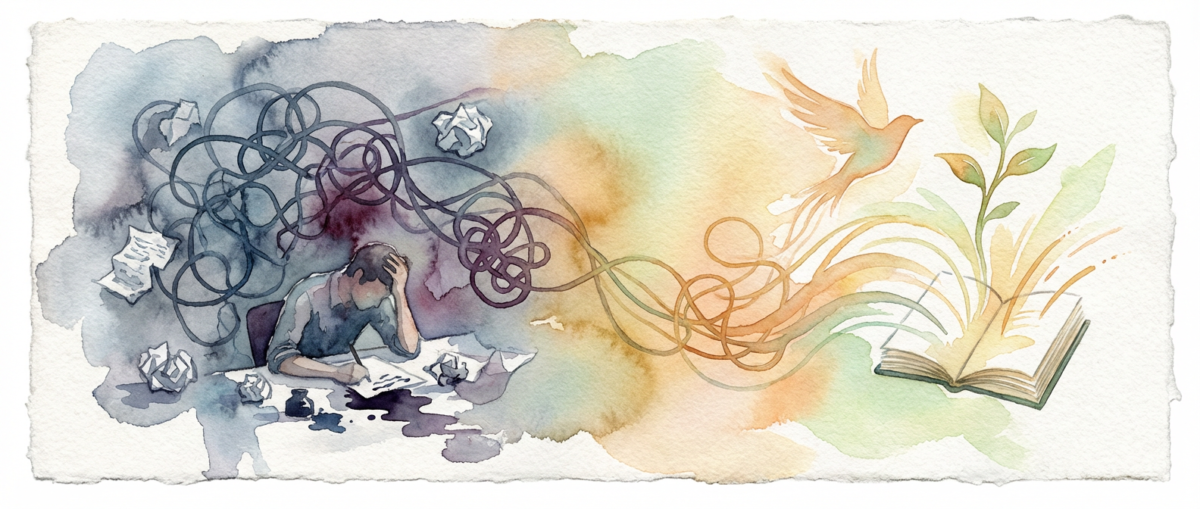
The Draft That Made Me Quit (For Exactly Three Days)
Last Tuesday, I deleted 3,000 words of what was supposed to be my breakthrough piece. Not moved to trash, not saved in a “maybe later” folder—deleted. Gone. I sat there staring at the blank document, wondering if I’d finally hit the wall that separates people who think they’re creative from people who actually are.
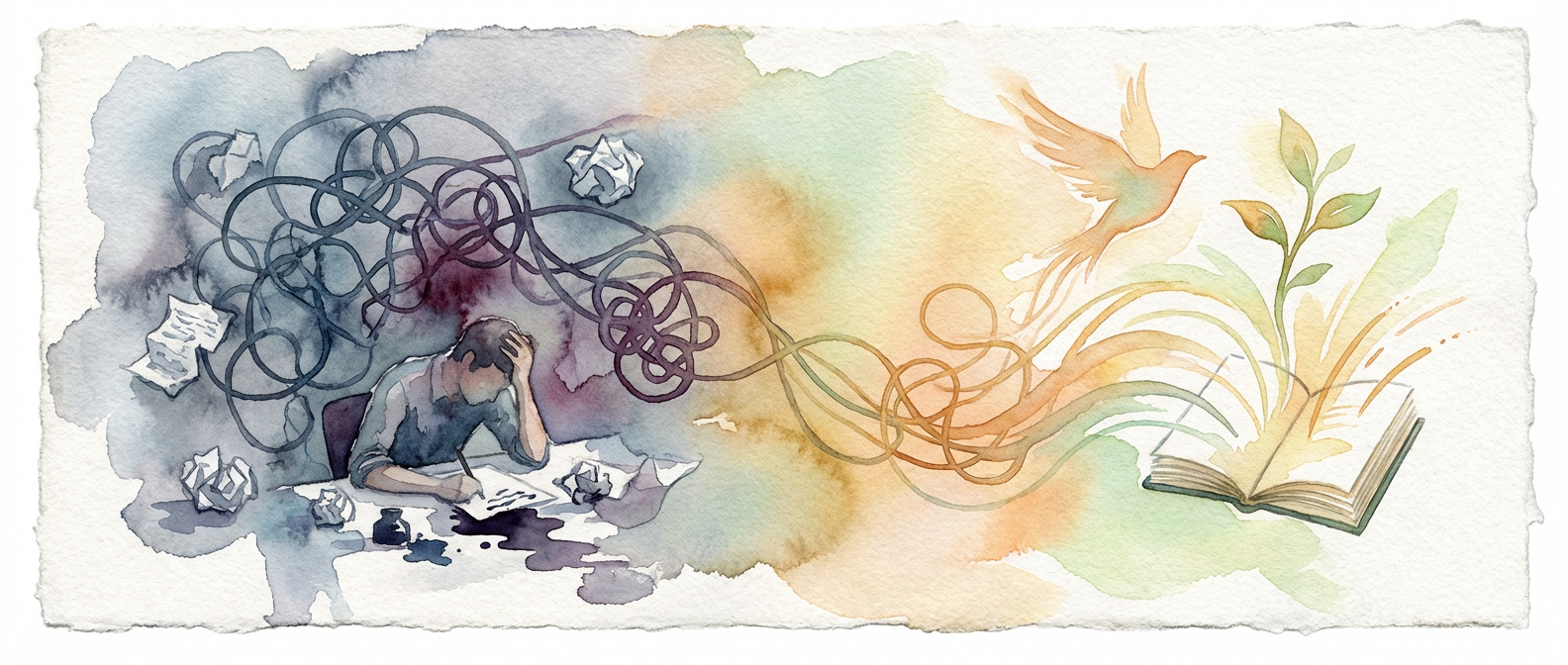
This is the part of creative work that doesn’t make it into the Instagram posts or the success stories. The brutal math of effort versus output. The way inspiration feels less like lightning and more like trying to start a fire with wet matches. If you’re reading this because you’re considering diving deeper into creative work, writing, art, music, whatever calls to you, I want to tell you about the reality nobody mentions in those “follow your passion” TED talks.
Here’s what I’ve learned after fifteen years of published work, failed projects, and that one piece that went viral for all the wrong reasons: the unsexy, unglamorous parts of creative work aren’t obstacles to overcome. They are the actual work itself. And once you understand that, everything changes.

Why Your First Thousand Hours Will Feel Like Fraud
Every creative person I know has what I call “fraud season.” That extended period where you’re producing work but it feels like elaborate pretending. You’re writing stories that sound like pale imitations of writers you admire. You’re painting landscapes that look like someone described a Bob Ross tutorial over a bad phone connection. This isn’t failure. This is apprenticeship, and it’s supposed to feel uncomfortable.
I spent two years writing short stories that read like literary Mad Libs. Same emotional beats, same carefully crafted “meaningful” endings, same desperate attempt to sound profound. My writing group was polite. My rejection letters were form letters. I was learning craft by copying it, badly, until something shifted. Not overnight, not dramatically, but like developing film in a darkroom. Slowly, then all at once, my actual voice started emerging from the chemical bath of influence and practice.
The antidote to fraud season isn’t confidence or talent. It’s volume. Write bad poems until you accidentally write a decent one. Paint ugly portraits until you understand how light actually works. Create terrible music until your ear develops enough to hear what terrible actually sounds like. The fraud feeling doesn’t disappear because you get better. It disappears because you get comfortable with making bad things on purpose, as research for making good things by accident.
The Economics of Creative Rejection (And Why It’s Actually Good News)
Let me share some numbers that will either terrify you or liberate you. In my first five years of submitting work: 247 rejections, 18 acceptances, and approximately $340 in payment total. That’s $18.89 per acceptance, or about 73 cents per hour if you calculate the time invested. Objectively, this makes no financial sense. Subjectively, it was the best education I never paid for.
Rejection in creative work operates on different math than rejection in dating or job applications. In those contexts, rejection suggests fundamental incompatibility or inadequacy. In creative work, rejection is market research. That story idea that got rejected fifteen times before finding a home? It wasn’t a bad story. It was a particular story looking for particular readers, and most publications weren’t those readers.
The economic reality of creative work isn’t that it pays poorly, though it often does. It’s that it pays inconsistently. You’ll have months where everything you touch turns to gold and months where you wonder if you’ve forgotten how to make anything good. Learning to work consistently through both seasons is the difference between people who dabble in creativity and people who build creative lives.
What Actually Happens When You “Follow Your Passion”
Following your passion sounds romantic until you realize passion isn’t a GPS. It’s more like a weather pattern. Some days it’s sunny and clear, some days it’s raining sideways, and some days there’s no weather at all. The mythology of passion suggests it will sustain you through difficulty, but what actually sustains you is building systems that work even when passion doesn’t show up.
I write every morning from 6 to 8 AM, not because I’m always inspired at 6 AM, but because I’ve learned that inspiration is more likely to visit a writer who’s already writing. My best ideas come in the middle of drafts, not before them. My breakthrough insights happen during the process, not in preparation for it. Passion is the spark, but craft is the engine, and craft only develops through repetition that often feels mechanical.
The unglamorous truth about following your passion is that it leads you to discipline. You follow passion long enough and you discover that what you actually love isn’t the moment of creation. It’s the accumulated satisfaction of having created, consistently, over time. You love having written more than writing. You love having painted more than painting. And that’s not settling or compromise. That’s the real thing.
The Permission You Don’t Need (But Should Give Yourself Anyway)
If you’re waiting for permission to call yourself a writer, artist, or musician, you’re going to be waiting forever. There’s no licensing board for creativity, no certification process, no moment when someone official hands you a badge that says “Real Creative Person.” You become a writer by writing, regularly and with intention. You become an artist by making art, including art that doesn’t work. The title comes from the practice, not the other way around.
But here’s the permission I think you actually need: permission to be bad at it for a while. Permission to make work that doesn’t match your vision. Permission to feel frustrated and confused and like you’re not improving fast enough. These aren’t signs you’re not cut out for creative work. These are signs you’re doing creative work.
The creative life isn’t for everyone, and that’s not elitist gatekeeping, it’s honest assessment. It’s for people who find meaning in the process itself, who get energized by problems that don’t have obvious solutions, who are willing to trade certainty for possibility. If that sounds like you, if you’re already making things and want to make them better, if you’re curious about what you might discover about yourself through sustained creative practice, then welcome to the most challenging, frustrating, occasionally transcendent work you’ll ever love.
I’m still figuring this out too, still writing drafts that don’t work, still learning what my voice actually sounds like when I’m not trying so hard. If you’re just starting this journey or thinking about starting, I’d love to hear what you’re working on and what questions you’re wrestling with. The creative life is solitary work made bearable by shared experience.
