Why I Joined the 800 Million View Club
If you’ve spent any time on TikTok in the last six months, you’ve probably seen someone arranging their life into color-coded boxes. The dopamine menu trend has officially taken over, and by March 2025, the hashtag had accumulated over 800 million views. It’s the kind of viral wellness thing that makes you skeptical at first, honestly. Another productivity hack? Another framework that promises to fix your brain if you just organize your leisure activities the right way?

But here’s why I decided to actually try it: I was tired. Not the normal tired. I was the kind of tired where scrolling through your phone for forty-five minutes counts as your entire evening because making a decision about what to do felt impossibly hard. I work in a field that demands constant decision-making, and by the time I got home, my brain had completely checked out. The dopamine menu concept grabbed me because it wasn’t asking me to become a different person. It was just asking me to make a list when I could actually think clearly, so I wouldn’t have to think clearly when I couldn’t.
What a Dopamine Menu Actually Is
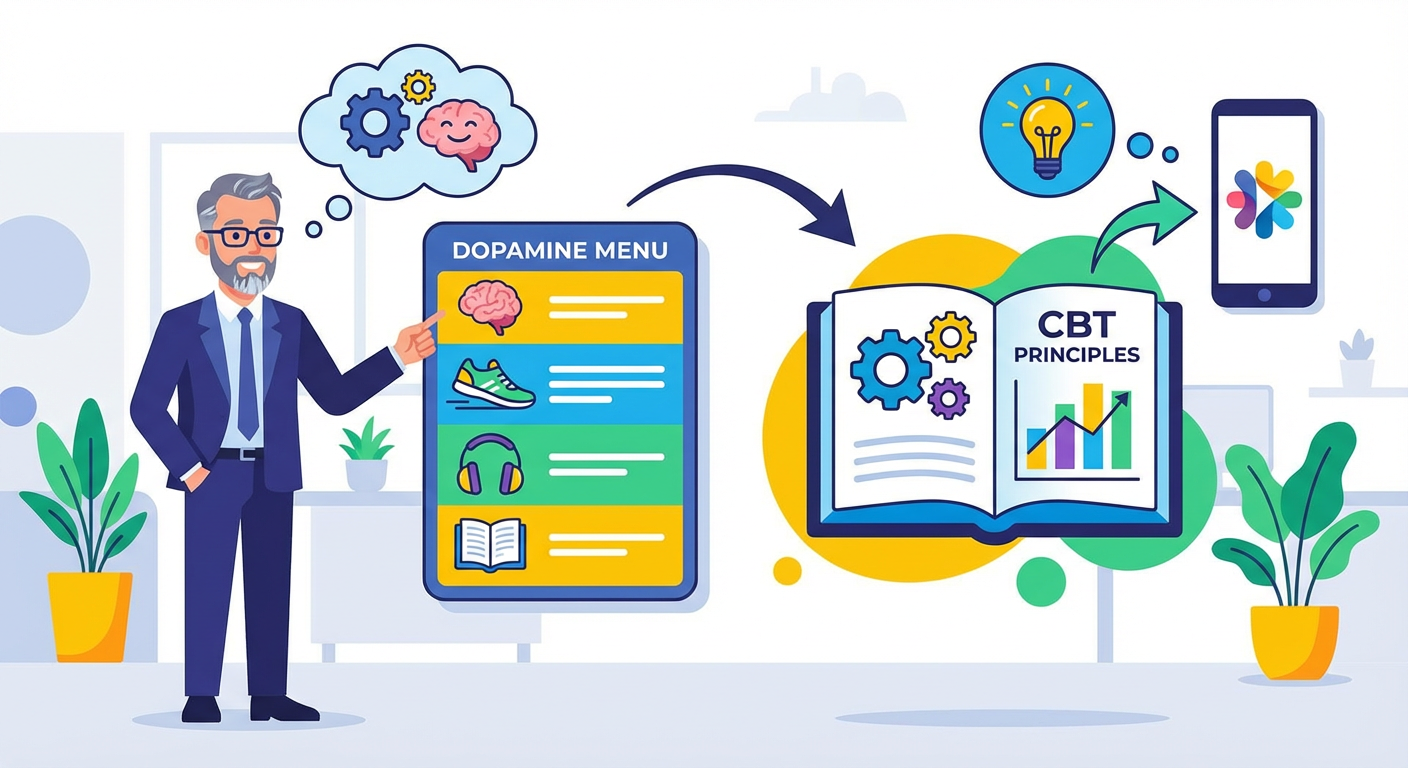
In case you’ve somehow avoided this corner of the internet, the dopamine menu is a structured list of activities organized by how much effort they require and how much reward they give you. Low effort, low reward activities live in one category, medium effort with medium reward in another, and so on. The clever part is that it’s designed specifically to address decision fatigue and the particular way that ADHD brains struggle with dopamine regulation. You’re not creating this list in the moment when your executive function is offline. You’re creating it on a day when you can actually think, then trusting that list when your brain won’t cooperate.
The concept isn’t brand new to psychiatry, though. Dr. Ned Hallowell, who co-authored ADHD 2.0, described this approach as “CBT in meme form” in a recent interview about the trend. The underlying principles come from behavioral activation therapy, which is legitimate clinical stuff. What’s different now is that people are actually doing it, and sharing it, because it showed up as a TikTok trend rather than in their psychiatrist’s office. According to a 2025 CHADD survey of over 3,200 adults, 44 percent of respondents tried some form of structured leisure planning specifically because they saw it on social media. Of those who tried it, 61 percent reported measurable reductions in decision fatigue. Those numbers matter because they suggest this isn’t just feel-good vibes. It’s actually helping people function better.
Eight Weeks In: Where the Embarrassing Part Comes In
I made my dopamine menu on a Sunday afternoon with an embarrassing amount of enthusiasm. I grabbed my laptop, opened a Notion template (Notion reported that dopamine menu templates became the second most downloaded wellness template in late 2024, right behind habit trackers), and started listing everything I could think of that brought me even a small amount of joy.
Low effort, low reward: scrolling, watching TikTok, standing in the kitchen eating things directly from containers. Medium effort, medium reward: calling a friend, taking a walk, listening to a podcast I actually care about. High effort, high reward: painting, cooking something ambitious, writing something just for myself. I felt so smart. I felt so organized. I felt ready to finally understand what I actually wanted to do with my free time.
Then I started using it. And here’s where I learned something that genuinely embarrassed me: almost nothing I listed actually showed up in my real life. I kept reaching for the low effort stuff, obviously, because that’s what decision-fatigued brains do. But what shocked me was how rarely I actually wanted to do the medium and high effort things. I’d look at my menu and think, “I could call someone,” and then I wouldn’t. I’d consider painting and feel this weird resistance that I didn’t expect. I’d scroll instead. Always scroll.
After about three weeks of this, I realized my dopamine menu wasn’t a reflection of what I actually enjoy. It was a reflection of what I think I should enjoy, what I believe a person like me is supposed to want to do. That’s the embarrassing part. I’d created an idealized version of my own leisure preferences and then felt like a failure when I didn’t want to live up to it.
What Actually Changed After I Fixed It
So I started over. This time, I tracked what I actually reached for over a week without judgment. The real list was messier. It included more phone time, more passive entertainment, more sitting in my apartment doing very little. It also included some things I hadn’t put in the first version because they felt too small or too silly: organizing things in my closet, making spreadsheets about random topics, watching the same comfort shows I’ve watched a hundred times. These things weren’t aspirational. They were just what I actually wanted.
When I restructured my menu to match reality instead of my self-image, something shifted. I stopped feeling like I was failing at leisure. The menu became genuinely useful because it wasn’t asking me to be someone else. On a bad day when my executive function was completely offline, I could look at my realistic low-effort list and actually do something from it. On a better day, I wasn’t surprised that I wanted the medium-effort stuff because I’d finally admitted to myself what I actually enjoyed. The high-effort category became less about things I “should” do and more about things I actually cared about enough to spend energy on.
Eight weeks in, the real benefit of the dopamine menu for me wasn’t that it magically fixed my brain or made me more productive. It was that it forced me to be honest about myself. That’s not very trendy. That’s not the kind of thing that gets 800 million views because it’s not particularly fun to admit that you’ve been lying to yourself about your own preferences for years. But it’s true.
Who Should Actually Do This
Here’s my genuine recommendation: if you struggle with decision fatigue, this is worth trying. If you have ADHD or suspect you might, this could legitimately help. If you’re exhausted by the end of your workday and can’t figure out what to do with yourself, this addresses that directly. The Lancet Psychiatry ADHD prevalence meta-analysis estimated that about 366 million adults globally have ADHD in 2025, and most of them didn’t get diagnosed until recently. If you’re part of that group discovering this about yourself later in life, structured planning tools like this can actually feel revolutionary because nobody taught you these strategies when you were supposed to be learning them.
But go in knowing that the real work isn’t in the organizing. It’s in being honest about what you actually want, not what you think you’re supposed to want. That’s harder than making a pretty template, and it takes longer than eight weeks probably should take. Still worth doing. You can read more about the clinical backing for this in ADDitude Magazine on dopamine menus, where actual experts discuss how this connects to real behavioral science.
Have you tried making a dopamine menu? I’m genuinely curious what you discovered about yourself when you actually did it, especially if you had the same awkward realization I did. Share your messy truth in the comments. That’s what this corner should be for.
